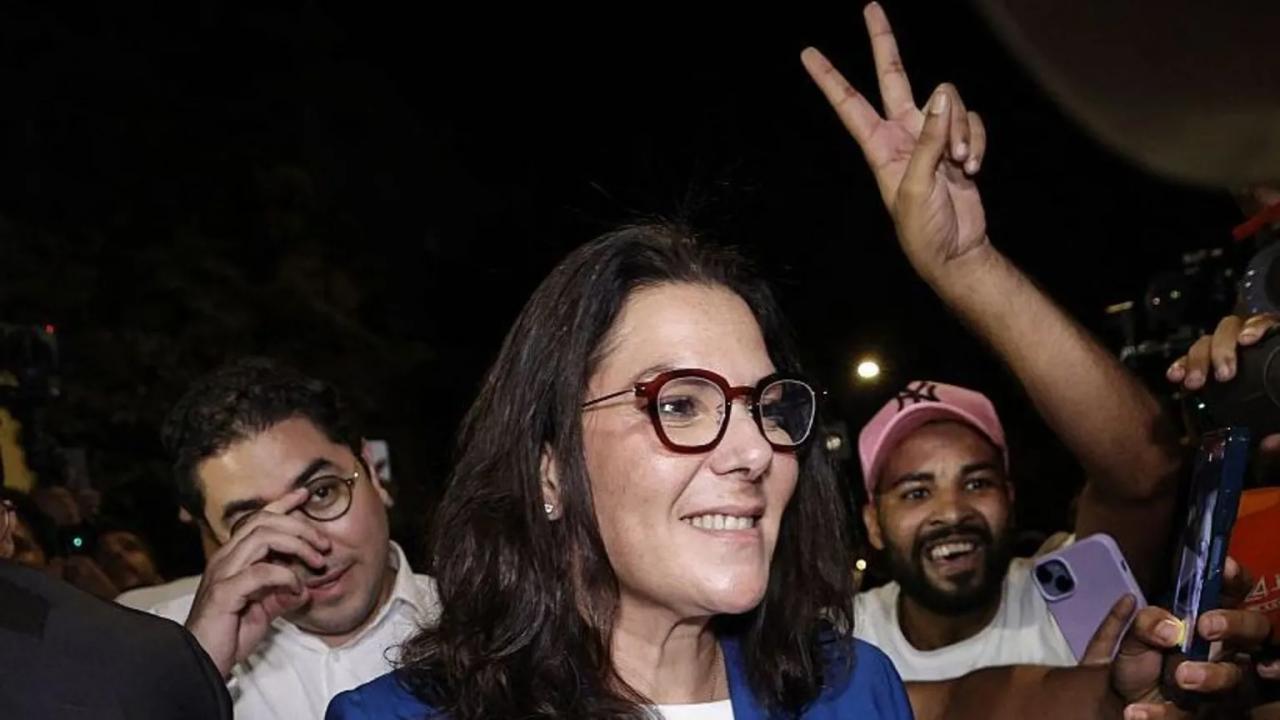
Fatima Zahra El Mansouri became Morocco’s first female prime minister after her party, the Authenticity and Modernity Party (PAM), won the most seats in last week’s parliamentary elections. The 50-year-old was appointed by King Mohammed VI, who chose her over Fouzi Lekjaa, the country’s football chief and a senior PAM politician.
El Mansouri is only the second woman to lead a government in the Arab world, following Tunisia’s Najla Bouden. She has been mayor of Marrakesh for years and served as a minister for national territory planning, urban planning, housing, and city policy under former prime minister Aziz Akhannouch.
At a press conference after PAM’s election victory but before her appointment was announced, she was asked if Morocco’s religious ceremonies, including Friday and Eid prayers where men and women pray separately, would change to accommodate her role. She did not answer directly but praised King Mohammed VI as “the biggest advocate for women” in Morocco. “His Majesty is the holder of wisdom… If I am entrusted with the responsibility of head of government, it will be a great honour,” she said.
El Mansouri has a legal background. She studied at Mohammed V University in Rabat, then continued her education in France and the US, focusing on business and corporate law. She entered politics after PAM was founded in 2008 and became the first woman to serve as mayor of Marrakesh in 2009. She returned to the same post after the 2021 elections.
In February 2024, El Mansouri became co-ordinator of PAM’s leadership coalition. The party has been run by a collective leadership since then, rather than a single secretary general. This meant the king had to choose between her and Lekjaa for prime minister, a choice that was not automatic, unlike past appointments where the party leader typically took the job.
PAM won 97 seats in the 395-member House of Representatives, falling short of the 198 needed for a majority. The party must now form a coalition to govern. It has fallen out with the National Rally of Independents (RNI), which led the outgoing government and had PAM as a junior partner.
The Islamist Justice and Development Party (PJD) increased its seats from 13 to 54, helped by the return of Abdelilah Benkirane, a former prime minister. Benkirane said the PJD would remain in opposition and would not partner with PAM.
El Mansouri has rarely spoken publicly about women’s rights or gender inequality despite ongoing debates in Morocco about banning polygamy and equal inheritance rights for men and women. In 2021, she told PAM’s magazine that she was not an “iron woman” but a “free activist.”
Morocco is a constitutional monarchy where the king holds most power. The constitution says the king appoints the head of government from the party that wins the most seats, but the king’s choice can be influenced by internal party dynamics and the need to form a coalition.
El Mansouri’s appointment is a rare moment for female leadership in the Arab world. Her career blends local government experience as Marrakesh mayor with national roles in planning and housing. The next challenge is securing a coalition that can command a majority in parliament. How she will balance her party’s ambitions, the king’s authority, and Morocco’s political realities remains to be seen.
According to Joy Online.