George Padmore was born in Trinidad, organised in London and Moscow, and died in London in 1959. He was buried in Accra.
Padmore, born Malcolm Nurse in 1903, was one of the most important Pan-Africanists of the twentieth century. He worked with the Communist International in the early 1930s, broke with it, and settled in London, where he wrote books and articles attacking colonialism. He helped organise the Fifth Pan-African Congress in Manchester in 1945, where a young Kwame Nkrumah was one of the organisers.
Nkrumah’s adviser
Padmore and Nkrumah became close. After Ghana’s independence in 1957, Padmore moved to Accra to serve as Nkrumah’s adviser on African affairs, helping to organise the All-African People’s Conference held in Accra in December 1958, which brought together liberation movements from across the continent.
Death and burial
Padmore fell ill and died in London in September 1959. His body was cremated, and his ashes were brought to Ghana. Nkrumah gave him a state funeral, and the ashes were interred at the Osu Castle, then the seat of government.
The library
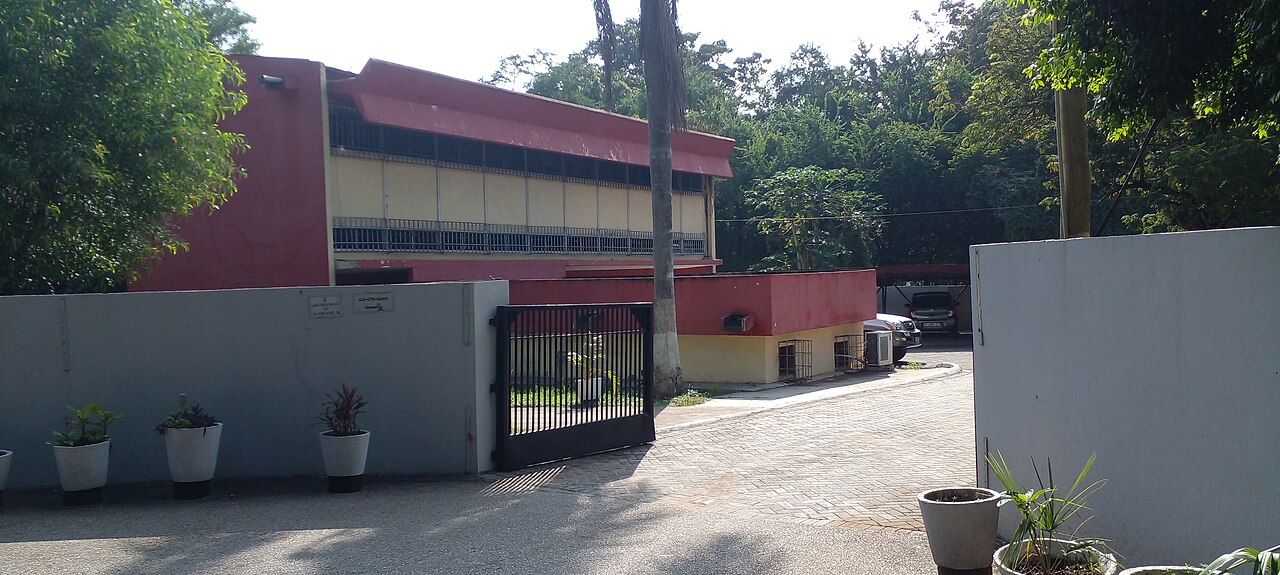
In 1961, the government opened the George Padmore Research Library on African Affairs in Accra. It was meant to be a centre for the study of Africa and the diaspora, holding books, periodicals, documents and papers on African history and politics. The library is now part of the Ghana Library Authority.
Researchers, students and visitors use its collections, which include material on the independence era, Pan-Africanism and Nkrumah’s government.
A forgotten figure
Padmore is less well known in Ghana than Nkrumah or W. E. B. Du Bois, who also died in Accra and is buried there. Yet his influence on the independence movement and on Nkrumah’s thinking was deep. His books, including Pan-Africanism or Communism, argued for African unity and independence from both Western and Soviet control. Earlier titles, How Britain Rules Africa and Africa: Britain’s Third Empire, were read closely by young nationalists across the colonies.
Visiting
The library welcomes researchers and members of the public. It is worth combining a visit with the W. E. B. Du Bois Centre in Cantonments, which tells the story of another diaspora intellectual who chose to end his life in Ghana.
Padmore lived in Accra for only about two years. The city still keeps his books, and the castle keeps his ashes.