
Climate-driven temperature changes are on track to cause about 430,000 additional deaths every year by 2050, with 10 times more deaths occurring in poor countries than in richer ones. Ghana, a low-income country in West Africa, is among the countries projected to see significant heat-related deaths, with over 4,000 additional heat-related deaths expected by 2050.
Heat Trap in Africa
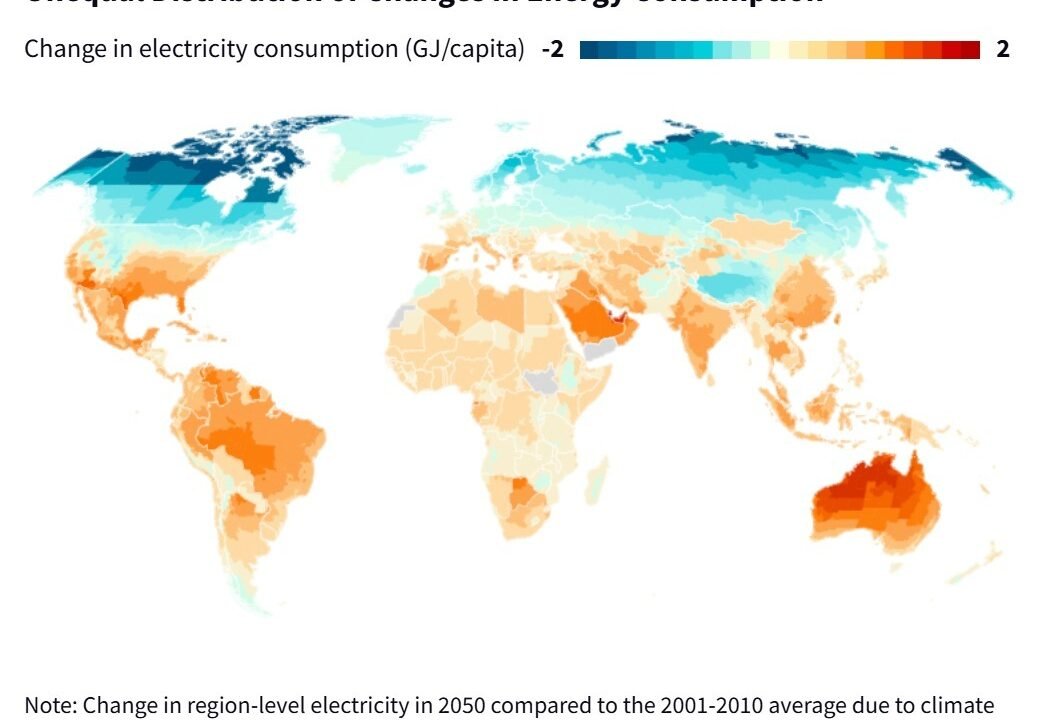
The Climate Impact Lab has warned that many countries in Africa will not be able to respond to the increasing temperatures in the same way as wealthier countries. In fact, the report finds that only the world's richest have the resources needed to power cooling, and as temperatures rise, many middle-income countries are expected to expand their electricity supply and use more power for cooling. However, low-income countries like Ghana are projected to see little increase in electricity supply, leaving millions without access to cooling technologies.
Electricity and Cooling in Ghana
Ghana is among the countries caught in what researchers call a "heat trap" – where temperatures are rising, but electricity supply is not growing fast enough to help people stay cool through fans, air conditioners, and other cooling technologies. About a third of the population live in these tricky, high-risk areas, and the country could record more than 4,000 additional heat-related deaths every year by 2050. The report highlights the need for improved energy access, early warning systems, and targeted social programs to protect people from heat.
The Gap Between Rich and Poor
The report highlights the stark contrast between wealthier and poorer countries in their ability to cope with climate change. For example, countries across the Gulf like Bahrain, Kuwait, and Saudi Arabia are equally as hot as sub-Saharan Africa but consume much more electricity for cooling and are projected to have big increases, leading to far fewer deaths. In Niger, the projected increase in electricity use per person will be 1/9th that of Saudi Arabia, and communities in Niger will lose 27,000 more lives annually in 2050 due to a warmer climate than its wealthier counterpart.
A Global Guide to Help
The Climate Impact Lab is developing a global guide to help countries adapt to the impacts of climate change. Ashwin Rode, a fellow at the Climate Impact Lab and director of scientific research at the Energy Policy Institute at the University of Chicago (EPIC), emphasizes the need for communities to find ways to protect people from heat. "We've identified the places most at risk of seeing more people die from the heat and least able to power up ACs to save them, so people and governments can zero in on saving the greatest number of lives."
What Happens Next
The report's findings are a clarion bell that many countries do not have much time to improve the functioning of their electricity markets so they deliver inexpensive and reliable energy. As temperatures continue to rise, the need for action becomes more pressing. The Climate Impact Lab's global guide will provide a framework for countries to develop effective adaptation strategies. In the meantime, Ghana and other low-income countries must prioritize improving energy access and developing targeted social programs to protect their populations from the devastating impacts of climate change.
Source: Joy Online