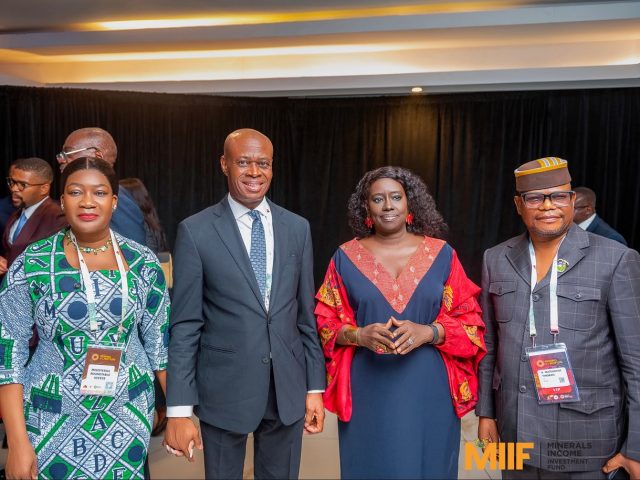
Samuel Nartey George, Ghana’s Minister for Communication, Digital Technology and Innovations, told workers they risk losing their jobs if they fail to adapt their skills to artificial intelligence. His remarks came during the Digital Economy Forum on AI and the Ghana Economy, broadcast on JoyNews on Wednesday, October 21.
“Those who evolve and adapt will survive. Those who fail to evolve and adapt will fall off. It’s the hard reality of artificial intelligence,” Mr George said. The minister described how technology has repeatedly forced workers to learn new skills or face unemployment.
He recalled his aunt’s experience working as a Grade Three stenographer in Ghana’s public service decades ago. She initially used a manual typewriter. As electronic typewriters and computers entered offices, the demands of her job changed.
“If she did not learn with Mavis Beacon, as most people did at that time, how to use the Microsoft Office suite, she would have lost her job because by 2000 you didn’t have any typewriters sitting in the public service,” Mr George said. He used the example to stress the need for continuous learning as AI becomes part of more professional and business tasks.
The minister’s comments come amid growing debate over AI’s impact on employment. As technologies reshape how work is done, workers and businesses face pressure to develop new abilities. Mr George said the pattern will repeat with AI, much like earlier technological shifts.
He did not specify which sectors in Ghana might be most affected, but his example underlined how office jobs that once relied on manual tools had to adapt quickly. The public service, where his aunt worked, moved fully to digital tools by the early 2000s, making old skills obsolete.
The Digital Economy Forum, where Mr George spoke, has focused on AI’s role in Ghana’s economy and workforce. The minister’s warning points to challenges ahead for workers who do not update their skills amid rapid technological change.
AI’s integration into workplaces is expected to alter tasks significantly. The minister’s message to Ghanaian workers was clear: adapting to new technology is no longer optional.
The debate over AI and jobs is global, but Mr George’s example puts it in a local context. The experience of his aunt, who faced losing her job without learning new software, echoes the difficulties many will encounter as AI advances.
The minister’s remarks on October 21 suggest that Ghana’s government is aware of the pressures AI will place on workers. Whether policies will follow to support retraining or skills development remains to be seen.
According to Joy Online.