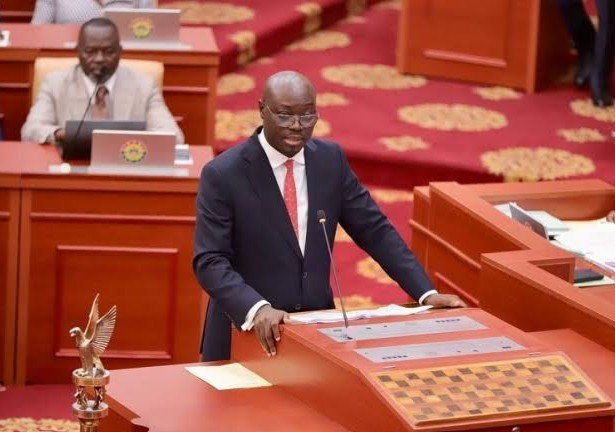
Ghana's creative industry has been left in the dark regarding the GH¢40 million mid-year budget allocation promised to the sector. Finance Minister Dr. Cassiel Ato Forson presented the 2026 Budget last November, announcing a GH¢20 million Film Fund and a GH¢20 million Creative Arts Fund.
The Mid-Year Fiscal Policy Review, which was recently presented to Parliament, has failed to provide any updates on the implementation of these funds. This silence has raised concerns among industry stakeholders who have been calling for transparency and accountability in the allocation of funds.
The Missing GH¢40 Million
The Mid-Year Review provides updates on funding and implementation for several flagship initiatives, including the Big Push Programme, the National Apprenticeship Programme, and Youth Employment interventions. However, there is no mention of the Film Fund and the Creative Arts Fund. This omission is significant, especially for an industry that has been struggling with limited access to financing.
The absence of any information on the funds has left industry stakeholders wondering whether the GH¢40 million has been released. Just days after the Mid-Year Budget Review, President John Dramani Mahama announced that the GH¢20 million Film Fund had already been disbursed and that industry stakeholders were determining how the money should be invested. However, this announcement raises more questions than answers.
Questions on Governance and Implementation
If the funds have indeed been released, why were they omitted from the Mid-Year Fiscal Policy Review? Why has there been no formal public update on their implementation, governance arrangements, or disbursement mechanisms? These questions deserve answers, especially for an industry that has consistently called for transparency and accountability.
The silence surrounding the funds has also raised concerns about the government's commitment to the creative sector. The industry has been waiting for decades for structured public investment, and the promise of the Film Fund and Creative Arts Fund was seen as a major step forward. However, without transparency and accountability, it is difficult to determine whether the funds will be used effectively.
VAT on Foreign Digital Platforms
The Mid-Year Review also raises questions about the government's intention to apply VAT to foreign digital platforms serving Ghanaian consumers. This move appears to be a tax administration measure, but its implications extend far beyond revenue collection. If implemented, important questions arise, such as whether streaming platforms will absorb the additional tax, whether subscription prices will increase for Ghanaian consumers, and whether higher costs will reduce demand for digital entertainment.
A Step in the Right Direction
Not everything in the Mid-Year Review is disappointing for creatives. The government's decision to extend the zero-rating of VAT on locally manufactured textiles until 2028 is welcome news for Ghana's fashion industry. Textile producers, garment manufacturers, and fashion designers stand to benefit from lower production costs and improved competitiveness.
The increase in the VAT registration threshold may also provide some relief for smaller creative businesses, including production houses, photographers, event organizers, designers, agencies, and independent studios. Reducing compliance costs could allow many of these businesses to reinvest more resources into growth.
A Strategic Pillar of National Development
The broader issue is not simply whether the GH¢40 million exists. It is whether Ghana is prepared to treat the creative economy as a strategic pillar of national development rather than an occasional campaign promise. Successive governments have acknowledged the sector's enormous potential, and studies have shown that creative industries generate employment, stimulate tourism, preserve cultural heritage, drive innovation, and contribute significantly to GDP in countries that invest in them.
However, public policy often treats the sector as an afterthought. The Film Fund and Creative Arts Fund present an opportunity to change that narrative. If managed transparently, they could help finance local film productions, strengthen music exports, support theatre and publishing, expand digital content creation, and provide seed capital for creative entrepreneurs.
The promise has been made. Now the industry deserves implementation, transparency, and results.
Source: Joy Online