
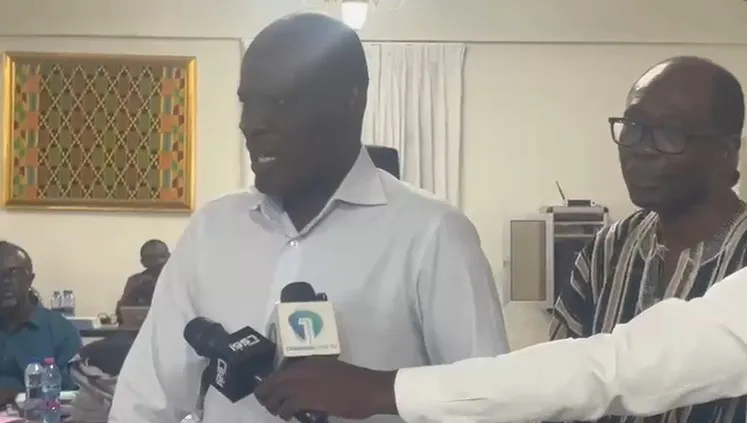
Education Minister Haruna Iddrisu visited a data processing centre on Sunday, October 4, 2026, overseeing the government’s validation of records for 51,000 teachers caught up in the ongoing pre-tertiary teachers’ strike. The exercise aims to clear the way for payment of salary arrears owed to eligible teachers.
Iddrisu said the validation process should conclude by Monday, October 5, ahead of plans to submit the verified records to the Controller and Accountant-General’s Department. This submission will trigger arrangements for supplementary payments. “At least 51,000 would have been ready then we can direct the Controller and Accountant General through the Minister of Finance to get a supplementary payment for the first leg of it,” he said.
The government’s effort to resolve salary arrears follows industrial action by teacher unions, who have raised concerns over unpaid wages and new conditions of service. The strike has disrupted schooling across the country for weeks. Iddrisu appealed to the striking teachers to reconsider their position, acknowledging their demands remain important but urging mutual respect and good faith in ongoing negotiations.
During his visit, Iddrisu questioned why the validation exercise relies on manual processes. “Why are we doing manual? Why should teachers at this age be filling forms? We can do so by using an IT infrastructure system,” he said. He promised to raise the issue to find a more efficient method.
The minister confirmed the first tranche of outstanding payments is expected by October 16, after the Controller and Accountant General receives validated data. He also promised that teachers who have been promoted will be placed on their new grades by October 30. “Failure to meet that deadline would be inexcusable,” he said.
Officials handling the validation have been urged to work with speed and accuracy. The government is under pressure to show progress as teachers continue their strike, which has affected education delivery nationwide.
Iddrisu’s visit is the latest sign of government efforts to address administrative bottlenecks in salary payments. The push to move from manual to digital records comes as part of a broader attempt to improve public sector payroll management.
The strike by pre-tertiary teachers began earlier this year, driven by frustrations over delayed payments and disagreements on a collective agreement. The government has faced repeated calls to resolve the matter swiftly to end disruptions in schools.
The October 5 deadline for validation completion and the October 16 target for initial payments set a tight schedule. How the government manages this process will influence talks and the strike’s future.
The data processing centre will be critical for verifying the identities and claims of teachers before funds are released. Errors or delays could prolong the impasse.
Iddrisu’s comments signal a recognition that current methods fall short of expectations. His critique of manual data handling opens the door for future reforms in how Ghana manages teacher payroll and human resource records.
No further details have emerged on the scale of payments or how many teachers will receive the arrears in the first tranche. The government has not disclosed the total amount owed.
The next two weeks will test whether the government can deliver on its promises. The outcome will affect not only salary payments but also the broader relationship between the state and teacher unions.
According to 3News.