
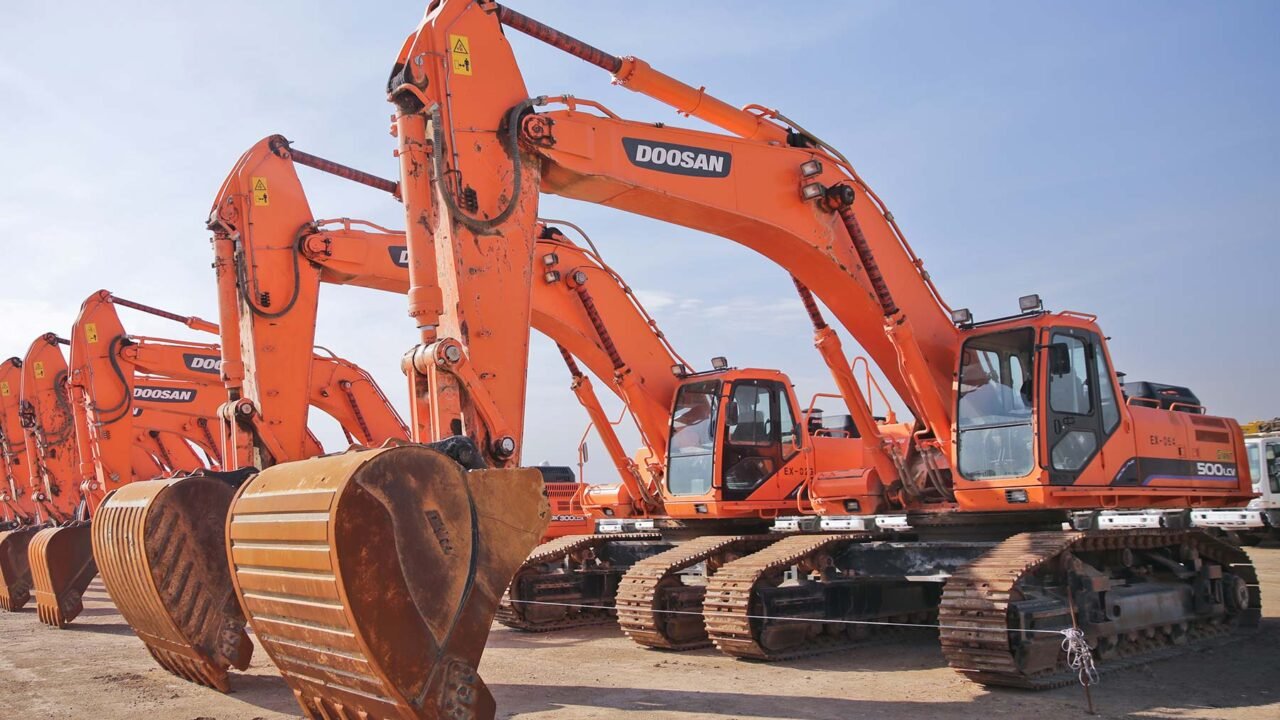
More than 4,000 excavators remain at Ghana's ports as the government tightens controls on the importation and deployment of heavy-duty mining equipment in an effort to prevent the machines from being diverted to illegal mining operations.
The new system requires importers to provide details of the intended owner, end user, and location where each excavator is expected to operate before the equipment can be cleared.
End-User Verification Takes Centre Stage
The Minister for Lands and Natural Resources, Emmanuel Armah-Kofi Buah, said the previous system did not provide sufficient safeguards to establish where imported excavators eventually ended up, creating a gap that could be exploited by illegal mining operators.
He explained that the new arrangement requires importers to complete the necessary documentation before the machines can be released. "Over 4,000 excavators are still sitting, waiting for the owners to begin," he said.
Tracking Devices and Geofencing Technology
The Minerals Commission has established a regulatory presence at the ports to verify the documentation associated with mining equipment before Customs clearance. Importers are expected to identify the person or entity for whom an excavator is being imported, its intended destination, and the operation for which it will be used.
The government plans to subsequently equip approved excavators with tracking devices and use geofencing technology to monitor their movements. The system is expected to enable regulators to detect when a machine moves outside its approved operational area.
Bulk Imports Under Scrutiny
The Minister acknowledged that the system could present difficulties for businesses that import excavators in bulk for resale. Such companies may not always have identified buyers at the time the equipment arrives in Ghana.
However, the government is requiring importers to provide evidence of legitimate orders or identifiable end users before the machines are cleared. "If you are importing 200 excavators, we have to know where those excavators are," he said.
Enforcement and Sanctions
The new controls form part of the government's wider strategy to target the equipment and financing networks that support illegal mining. The effectiveness of the new regime will depend on the government's ability to maintain a verifiable trail from the point of importation through ownership and deployment to the actual location of each machine.
Questions also remain over how breaches of approved operating locations will be detected, which agencies will respond to alerts, and the sanctions that will apply to owners whose equipment is diverted.
A Balanced Approach to Mining Regulation
The dialogue also touched on the need to balance enforcement with fair treatment of legitimate mining investors. IMANI's Franklin Cudjoe urged the Minister to consider providing Adamus Resources with an opportunity to address identified breaches and comply with the requirements of any future agreement.
The Minister indicated that the Ministry was prepared to engage operators that demonstrated a genuine commitment to correcting breaches and preventing their recurrence. The discussions formed part of broader efforts to strengthen regulation of Ghana's mining sector while addressing illegal mining and its environmental impact.
As the government continues to implement this new system, it remains to be seen how effective it will be in preventing heavy equipment from reaching illegal mining sites. One thing is clear, however: the government is committed to taking a tougher stance on illegal mining and protecting Ghana's environment.
Source: Joy Online