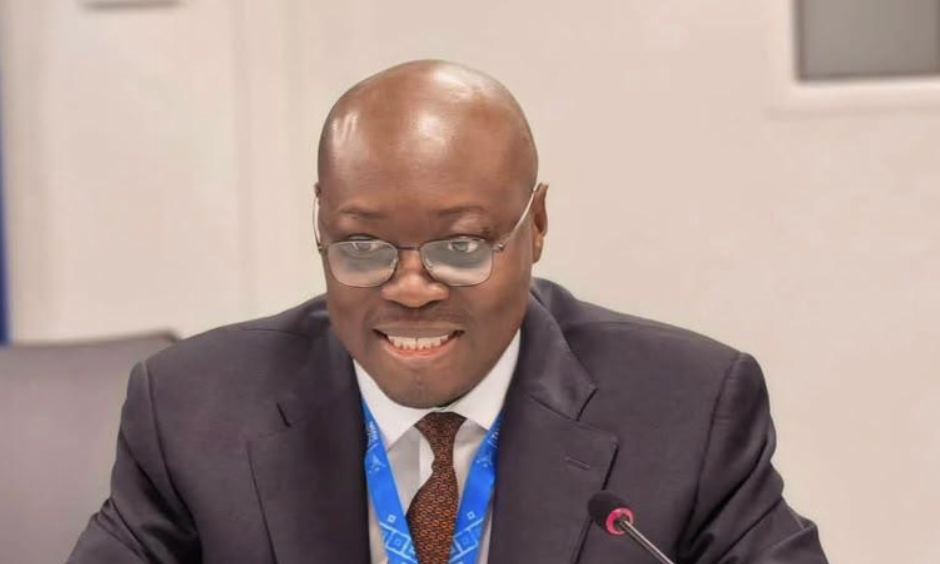
Finance Minister Dr Cassiel Ato Forson has set a new tone for Ghana’s economic future, demanding a break from familiar cycles that have long constrained the country. Speaking on 11 June at the University of Ghana, he framed the moment as one for decisive structural change rather than short-term fixes.
“We have stabilised the present. Now we must secure the future,” Dr Forson said during his New Economy engagement with faculty and students. The phrase captured the shift from managing immediate economic pressures to addressing their root causes.
Ghana’s recent economic stabilisation offers a foundation, but Forson warned that without reform, old problems will resurface. “There are moments when public policy must stop managing symptoms and start changing structures. This is such a moment for Ghana,” he said.
His remarks placed structural transformation at the centre of the government’s New Economy agenda. The goal is to move beyond stabilisation to build a more productive economy that creates decent jobs and raises incomes. Forson outlined the challenge as producing more at home, adding value to Ghana’s agricultural and mineral resources, and expanding opportunities for businesses and workers.
“History does not wait for countries that are afraid to decide,” he said, signalling that Ghana faces a test of political will. The country must break with economic patterns that have restrained its growth.
The minister did not specify exact reforms but made clear that the next phase requires tough choices. His message came amid ongoing efforts to stabilise Ghana’s economy after a period of fiscal strain, inflation, and currency pressure.
Ghana’s economy has faced significant hurdles in recent years. Inflation peaked at 37.2% in July 2022, before easing to 16.1% in May 2023. The government secured a $3 billion Extended Credit Facility agreement with the International Monetary Fund in May 2022 aimed at restoring fiscal discipline and macroeconomic stability.
Forson’s call for structural change suggests the government intends to shift focus from short-term fixes like subsidies and borrowing to longer-term reforms that improve productivity and economic resilience. The emphasis on adding value to commodities aligns with efforts to reduce dependence on raw exports and increase industrial output.
The minister’s remarks came at the University of Ghana, a hub for economic research and policy debate. Engaging with faculty and students, Forson positioned the New Economy agenda as a national project involving multiple sectors.
Ghana’s economic trajectory remains uncertain. The government faces pressure to deliver growth and jobs amid global economic challenges and domestic demands. Forson’s appeal for bold decisions signals recognition that incremental adjustments cannot resolve deep-rooted issues.
The call to “secure the future” reframes economic policy as a matter of intergenerational responsibility. It challenges Ghana’s policymakers to look beyond immediate political cycles to the long-term effects of their choices.
Forson’s emphasis on structural change came without specific timelines or policy announcements. The next weeks and months will test whether the government can translate this vision into concrete action.
For now, stabilisation has bought time. The challenge will be whether Ghana can use that breathing space to break with old economic patterns and lay the groundwork for lasting prosperity.
According to Joy Online.