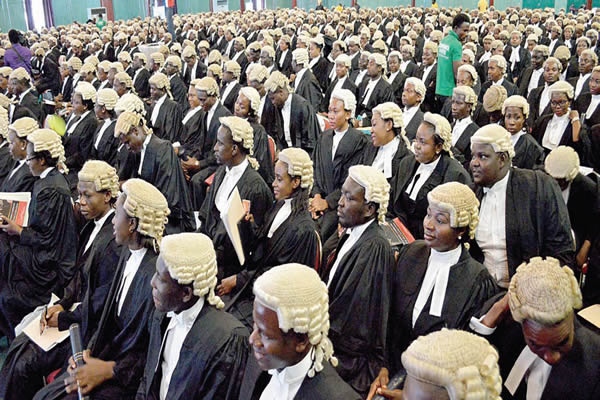
On October 9, 2026, the General Legal Council of Ghana enrolled 1,568 individuals onto the roll of lawyers. This is the largest number of new lawyers ever called to the bar in Ghana since the country began training its own legal professionals.
The new lawyers shared photos with family and friends, sparking renewed debate about the size of Ghana’s legal profession and the job market’s capacity to absorb them. Comparisons have been drawn between the numbers of lawyers and other professionals such as engineers and doctors, questioning which fields best support national development. There is also concern about the heavy presence of lawyers in Ghanaian politics, and the perception—often unfair—that lawyers and politicians are skilled in bending the truth.
Globally, lawyer-to-citizen ratios vary widely. In the UK, with a population around 70 million and a lawyer population of approximately 217,000, the ratio stands at one lawyer per 440 citizens. The United States, with roughly 350 million people and 1.37 million lawyers, has one lawyer for every 240 citizens, one of the highest densities worldwide. China, with a population of 1.4 billion and 830,000 lawyers, has a ratio of about one to 1,700. Nigeria’s 242 million people share around 225,000 lawyers, giving a ratio of one to 2,000.
West African neighbors have notably lower lawyer densities. Benin, with 14 million people, has roughly 500 active lawyers (one per 32,000 citizens). Togo’s 8.6 million population counts 350 lawyers (one per 30,000). Ivory Coast has about 800 lawyers for 32 million people, a ratio near one per 40,000 to 50,000. Burkina Faso’s 23 to 24 million population has around 300 to 400 lawyers, or one lawyer per 65,000 to 75,000 citizens. Liberia, with around 5.5 to 6 million people, has between 600 and 900 lawyers, a ratio between one per 7,000 and 9,000.
Ghana’s population of 35 million is served by nearly 10,000 lawyers, according to the Ghana Bar Association, yielding one lawyer for every 4,000 citizens. The average income for lawyers is estimated at GHS 180,000 annually, approximately $15,000 USD. Ghana’s GDP stands at $77 billion, below Nigeria’s $290 billion and far behind the US and China.
Legal services in Ghana cluster mainly in Accra, Kumasi, and Takoradi. Many regions and secondary cities remain underserved. There are about 500 courts nationwide, but 130 of these operate without judges. Only qualified lawyers can be appointed as judges, but the Ministry of Finance must approve funding for new appointments. The Judicial Service Staff Association attributes the shortage of judges not to a lack of qualified lawyers but to budget constraints. This judicial gap causes frequent adjournments and delayed cases, frustrating litigants.
The question arises: if Ghana struggles to fund 130 more judges, what happens to the 1,500 lawyers called to the bar annually?
The legal profession in Ghana extends beyond courtroom litigation. Some new lawyers work as litigation counsel, representing clients in civil, criminal, land, and human rights cases across all court levels. Others enter corporate and commercial practice, advising on governance, mergers, and compliance. Intellectual property law is another option, involving trademarks, copyrights, patent registrations, licensing, and disputes.
Many lawyers serve as in-house counsel or legal officers in banks, telecommunications, mining, and fintech companies. Company secretaries manage governance for corporate boards under the Companies Act. State attorneys work within the Attorney-General’s Department and Ministry of Justice, prosecuting state cases and drafting legislation. Others join the Judicial Service as magistrates or registrars.
Lawyers also work at regulatory bodies like the Bank of Ghana, Securities and Exchange Commission, National Communications Authority, and Environmental Protection Agency. Alternative dispute resolution offers careers as arbitrators or mediators. Academia employs legal lecturers and researchers at the University of Ghana, Kwame Nkrumah University of Science and Technology, Ghana Institute of Management and Public Administration, University of Professional Studies, and Ghana School of Law. Public interest law, policy consulting, and human rights advocacy attract some lawyers to NGOs and think tanks.
Despite this range of opportunities, the pressure on Ghana’s legal market is palpable. The influx of over 1,500 lawyers annually contrasts sharply with the shortage of judges and limited court resources. The concentration of lawyers in major cities leaves rural areas underrepresented. The legal profession’s growth outpaces the economy’s ability to provide meaningful jobs at current funding levels.
October 9’s record intake of 1,568 new lawyers intensifies questions about the balance between Ghana’s legal education output and the country’s capacity to absorb these professionals into the workforce.
According to Joy Online.