

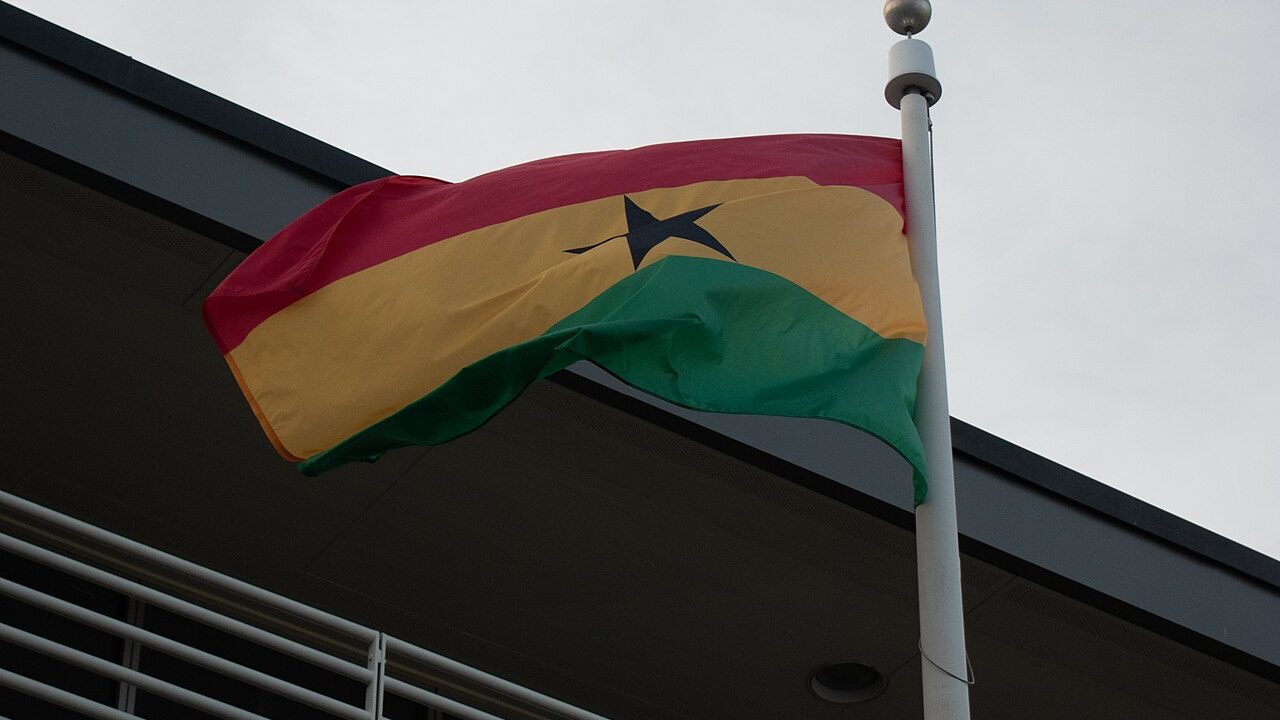

Every Ghanaian schoolchild learns the words: “God bless our homeland Ghana, and make our nation great and strong.” Fewer know that the anthem once had different lyrics, and that the current ones were written by a secondary school student.
Adoption and the first lyrics
Ghana adopted its national anthem in 1957, when the country became independent from Britain. The music was composed by Philip Gbeho, a musician and educator from the Volta Region. The original words were written by Emmanuel Pappoe-Thompson and began “Lift high the flag of Ghana”. These were used as the anthem during Kwame Nkrumah’s presidency. After the coup that overthrew Nkrumah in February 1966, the new government sought to change symbols associated with his rule. A competition was held to choose new lyrics.
The winning lyrics were presented by Michael Kwame Gbordzoe, then a student at Bishop Herman College in Kpando. His words, beginning “God bless our homeland Ghana”, replaced the original lyrics and have been in use since the 1970s. Gbordzoe has spoken publicly about writing them.
Gbeho's music and the pledge
The music did not change. Philip Gbeho’s composition, with its steady, dignified melody, is still played at state events, schools and sports matches. The anthem has three verses, though the first is the one most often sung. It asks God to bless the nation, to help the people defend freedom and to fill them with the spirit of unity.
In schools, the anthem is followed by the national pledge: “I promise on my honour to be faithful and loyal to Ghana my motherland.” Many Ghanaians recite both from memory.
At matches and a legacy
For many people, the anthem is most emotional before Black Stars matches, when players and supporters sing it together. Singing it abroad, at a World Cup, can feel especially powerful. Surveys and street interviews often show that some adults struggle to remember all the lines. Teachers and public figures regularly call for the anthem to be taught more carefully.
Many national anthems were written by famous poets. Ghana’s current words came from a student in a competition. Every time the anthem is sung at a stadium or school assembly, a young person’s words are carried by the whole nation.