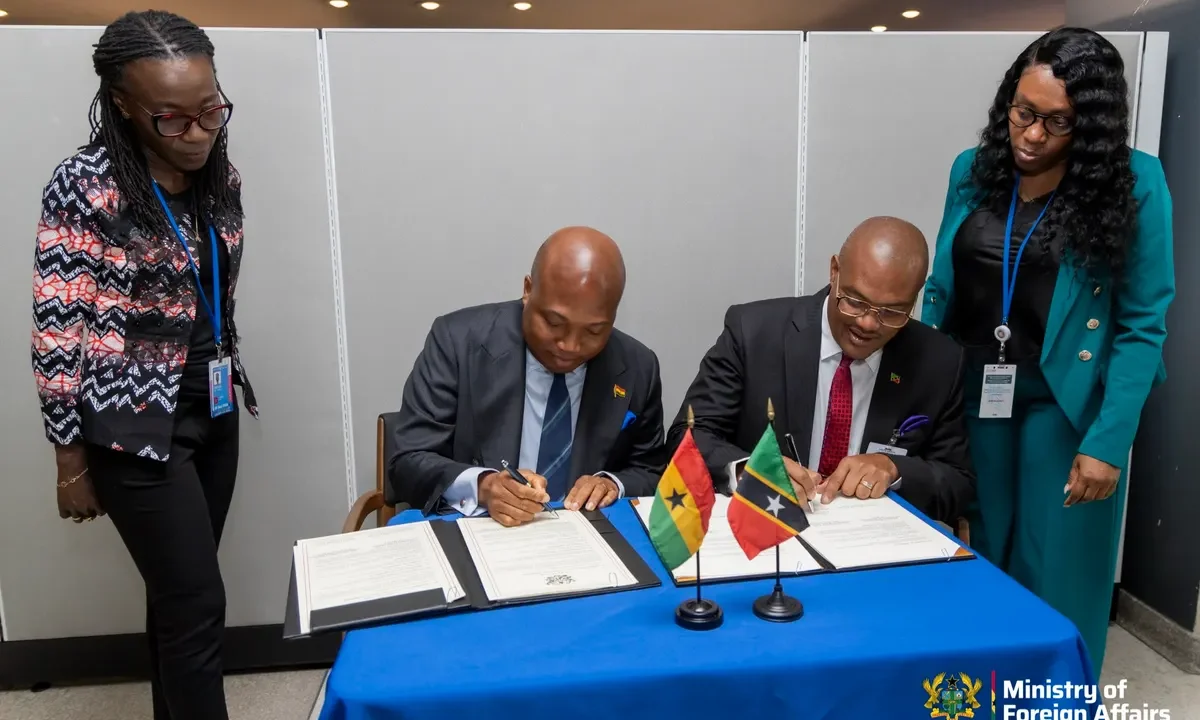
Ghana and Saint Kitts and Nevis have signed a new bilateral labour agreement that guarantees better pay and benefits for Ghanaian nurses working in the Caribbean nation. The deal was signed by Ghana’s Minister of Foreign Affairs, Samule Okudzeto Ablakwa, and Saint Kitts and Nevis Deputy Prime Minister Dr Geoffrey Hanley during the United Nations General Assembly in New York.
Under the agreement, Ghanaian nurses deployed to Saint Kitts and Nevis will receive legally protected enhanced salaries, health insurance, rent allowance, and end-of-service benefits. These measures aim to improve the working conditions and welfare of Ghanaian health professionals abroad.
Mr Ablakwa praised Ghanaian nurses for their contributions abroad, saying their skills and dedication continue to make Ghana proud. He also reaffirmed Ghana’s commitment to diplomacy that benefits its citizens. “Ghana will continue to pursue impactful diplomacy which benefits the people we serve,” he wrote on Facebook. He added, “Long live our excellent Ghana-Saint Kitts and Nevis relations.”
The agreement comes amid ongoing global demand for Ghanaian nurses, who are recognized for their expertise and professionalism. Many countries seek to recruit them to fill gaps in healthcare services, especially in the wake of the Covid-19 pandemic.
This new deal builds on existing relations between Ghana and Saint Kitts and Nevis, providing clearer protections and benefits for Ghanaian nurses. It aims to provide a fair framework that supports their welfare while working abroad.
The agreement is part of a broader effort by the Ghanaian government to secure better terms for its professionals overseas. It also reflects the increasing importance of labour diplomacy in protecting the rights and interests of Ghanaian workers in foreign countries.
With this agreement, Ghanaian nurses heading to Saint Kitts and Nevis will have legal protections that cover more than just their salaries. Health insurance and rent allowances will help ease the cost of living, while end-of-service benefits offer financial security after their contracts end.
Details on the exact salary scales or benefit amounts were not disclosed at the signing. The agreement was described as an additional bilateral labour pact, suggesting it supplements earlier arrangements between the two countries.
The timing of the signing at the UN General Assembly allowed the two countries to formalize the deal on the global stage. It also signals Ghana’s ongoing efforts to protect its citizens working internationally.
Mr Ablakwa’s comments on social media stressed the value Ghana places on its diaspora professionals. He positioned the agreement as part of Ghana’s wider diplomatic agenda to serve its people through international partnerships.
Saint Kitts and Nevis, a federation in the West Indies, is one of the smaller nations recruiting foreign health workers. This pact may encourage more Ghanaian nurses to consider opportunities there, knowing their rights and benefits are assured.
The move follows a pattern of Ghana signing bilateral agreements to regulate labour migration and protect workers abroad. Such agreements aim to reduce exploitation and ensure fair treatment.
As global demand for nurses continues, Ghana’s government appears focused on securing better pay and conditions for its skilled workforce overseas. The deal with Saint Kitts and Nevis is a concrete example of this strategy in action.
The impact of this agreement will be clearer as Ghanaian nurses begin working under the new terms. For now, it sets a formal standard for salaries and benefits that other countries might consider in their recruitment of Ghanaian health professionals.
According to 3News.