Seven Ghanaian traders were shot dead in northern Burkina Faso in February 2026, a stark reminder that Ghana’s security cannot be measured by what happens inside its borders alone. The victims were among 18 traders who had travelled to Titao, a town in Burkina Faso, to buy tomatoes when suspected Islamist militants attacked. Ghana’s Interior Minister, Mohammed Mubarak Muntaka, said the attackers separated men from women before opening fire. Some traders survived with injuries, while others escaped unhurt.
The incident exposed the limits of thinking about terrorism only as attacks inside national territory. Families and traders regularly cross borders for business, and violence in neighbouring countries can have immediate effects on Ghanaian lives and livelihoods. Ghana has so far avoided the wave of terrorist attacks many of its neighbours face, but the deaths of these traders show that the threat remains close.
Major General Timothy Baa-Taa-Banah, director of Ghana’s National Counter-Terrorism Fusion Centre, told a forum in Accra in July 2026 that over 2,000 terrorist attacks had caused more than 8,000 deaths across the Sahel and West Africa. Fatalities had risen by 14% in the first half of the year. He warned Ghana was not immune just because it has not become a primary target. The groups behind the violence operate across the region but in different areas. Jama’at Nusrat al-Islam wa al-Muslimin (JNIM), linked to Al-Qaeda, is entrenched in parts of the Sahel and northern Benin. Islamic State West Africa Province (ISWAP) operates mostly around Lake Chad, affecting Nigeria and neighbouring states.
These groups’ movements matter when assessing the risk to Ghana. The attack in Burkina Faso is especially significant because trade across the northern border is part of everyday life. Traders and transport operators do not stop moving because there is an international boundary. Markets, families, and routes connect communities across the region. These links bring benefits but also risks when violence erupts nearby.
Ghana faces two challenges: protecting people inside its borders and staying alert to events beyond them. Treating the absence of attacks on Ghanaian soil as proof the threat is gone is unsafe.
Ghana’s counter-terrorism approach has received attention for combining conventional security with community involvement. Researchers Paa Kwesi Wolseley Prah and Timothy Chanimbe, in a 2025 analysis, noted that community engagement, border technology, intelligence sharing, joint training, and media cooperation form the backbone of the strategy.
At the border, the Ghana Immigration Service uses systems like “Immigration 360” to improve passenger processing and data management. Personnel from immigration, police, customs, and intelligence agencies undergo joint training sessions. The goal is to ensure information from one agency can be acted on quickly by another.
Public participation is also part of the approach. The “See Something, Say Something” campaign encourages residents to report suspicious activity. People living or working in communities may notice dangers before authorities do, but their observations need a trusted reporting system and effective follow-up.
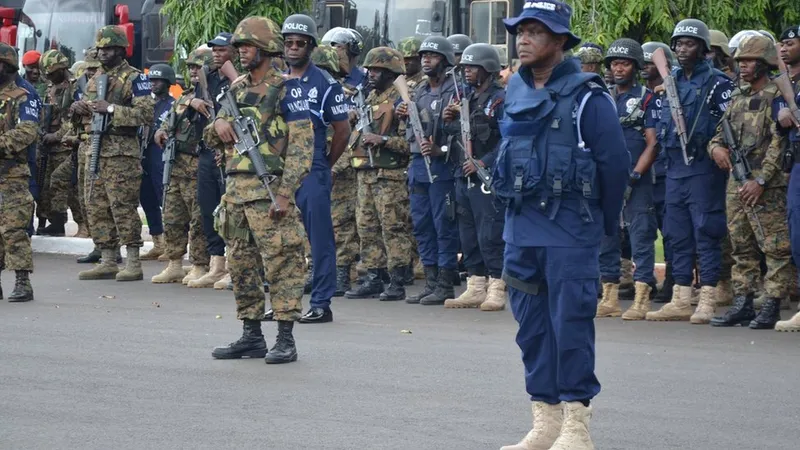
Major General Baa-Taa-Banah described Ghana’s efforts as an “all-of-society approach” involving intelligence gathering, security operations, and public involvement. He suggested preparedness cannot rest on the armed forces or police alone; local leaders, residents, and public institutions also have roles in identifying and reducing risks.
International cooperation has supported Ghana’s efforts. On 22 July 2026, the United States donated 84 pallets of equipment worth about US$4 million to the Ghana Armed Forces. The shipment included medical supplies, GPS devices, night-vision gear, unmanned aerial systems, and radios. Ghanaian military officials said the equipment would boost operational readiness in border security, intelligence, and counter-terrorism.
These measures show Ghana is investing in prevention. No single programme or device guarantees safety, but having multiple layers of defence and improving them as threats change is essential.
Technology cannot monitor borders on its own. Ghana’s northern frontier includes communities whose social and economic ties cross official lines. The deaths of the tomato traders in Burkina Faso underline the reality that violence anywhere in the region can have consequences inside Ghana.
According to 3News.