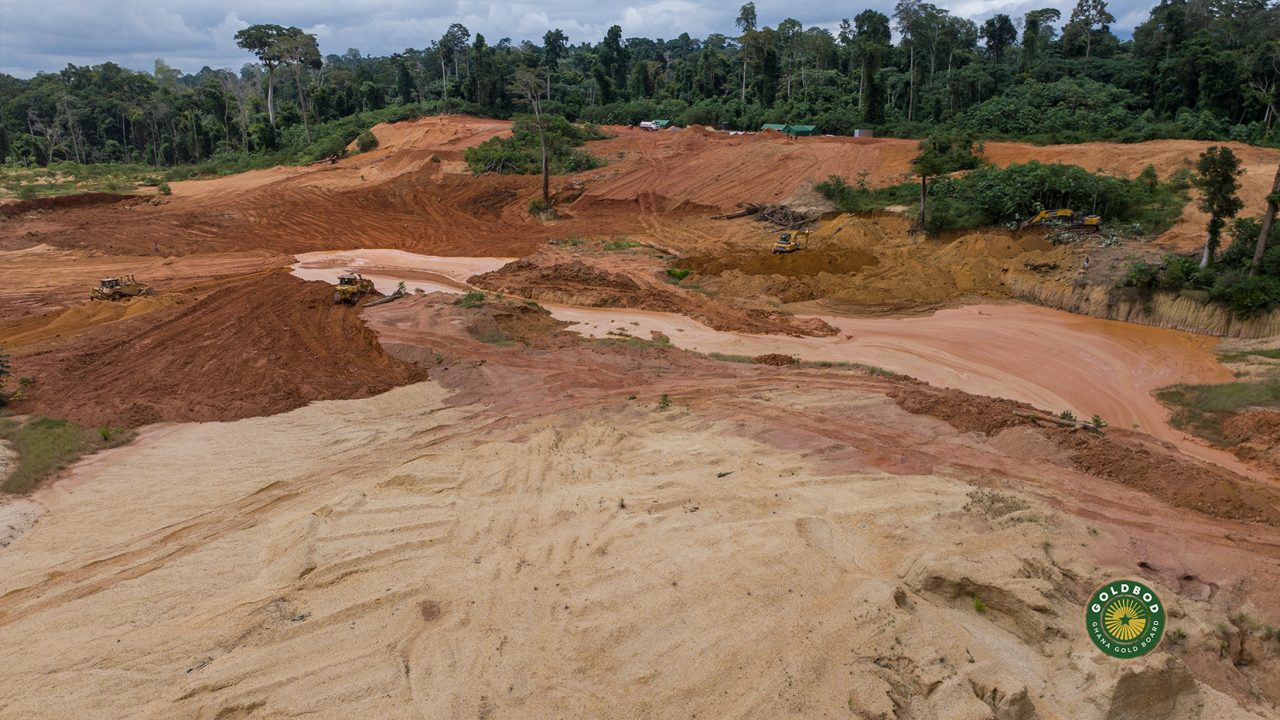
The Ghana Gold Board (GoldBod) is investing GH¢35 million to restore 200 hectares of forest land damaged by illegal mining at the Tano Nimri Forest Reserve near Samreboi, Western Region. The effort targets a swath of land degraded between 2021 and 2024, according to a GoldBod field report that recorded 192.4 hectares destroyed.
The project is part of GoldBod’s National Reclamation and Environmental Restoration Programme and falls under its Environmental, Social and Governance commitments. GoldBod is working with the Ghana Armed Forces and the Forestry Commission to rehabilitate the area. Military engineers are close to completing civil engineering works in Compartment 161, after which the Forestry Commission will take over for afforestation and ecological restoration.
The engineering team has filled in 10 major mining pits, drained waterlogged excavations, stabilised soil, levelled the land, and reshaped damaged terrain. GH¢27.9 million of the budget is allocated to civil engineering, with GH¢7.2 million set aside for afforestation over the next 10 years.
Samuel Danso, Sustainability Manager at Samartex Timber and Plywood Company, described the damage as extensive. He noted the depth of the mining pits made recovery difficult without significant reclamation work.
GoldBod CEO Sammy Gyamfi said the restoration is a national responsibility, despite the damage occurring before the Board’s establishment. “The programme reflects our commitment to responsible resource management and environmental protection,” he said.
Forestry Commission Chief Executive Dr Hugh Brown said the project will support biodiversity conservation, watershed protection, and long-term forest sustainability. He appealed to corporate institutions and development partners to back similar initiatives.
Professor Ishmael Quaicoe, Director of Responsible Mining at the United Nations University, confirmed plans to reclaim an additional 100 hectares of degraded forest land next year. He said the Tano Nimri project is expected to pilot future restoration efforts.
The involvement of military engineers in environmental restoration marks a significant expansion of their role beyond security operations. The project’s scope and funding underline GoldBod’s readiness to address environmental damage linked to mining, even when it predates the institution.
Restoring nearly 200 hectares in a forest reserve near Samreboi will test the durability of engineering solutions and ecological interventions in an area heavily scarred by illegal mining. The Forestry Commission’s role in afforestation will be critical to the area’s recovery over the coming decade.
According to Joy Online.