For several weeks before Homowo, Ga towns across Accra fall quiet. Drumming and noisemaking stop. Then the silence breaks, the doors open, and whole communities go out to jeer at hunger.
Homowo comes from two Ga words: homo, hunger, and wo, to hoot or jeer. The festival is the Ga people’s way of remembering a famine that struck their ancestors during their early settlement on the coast, and the harvest that ended it. The Ga are the original people of Accra, and Homowo is the clearest statement of that claim every year.
The famine story
According to Ga oral tradition, crops failed and rain did not come, and the community faced starvation. The people kept planting, and when the harvest finally came it was large enough to feed everyone. Rather than simply give thanks, they mocked the hunger that had tried to destroy them. The festival repeats that act every year.
Planting and the ban on noise
Homowo begins with the planting of maize, the grain that will be used for the festival meal. The ban on drumming and noisemaking follows, observed in the Ga traditional areas, including Ga Mashie, Osu, La, Teshie and Nungua. The ban is meant to give the crops peace to grow. It has also caused regular friction in modern Accra, when churches, nightclubs and events in Ga areas are asked to keep quiet during the period, and traditional authorities and some congregations argue over how far it applies.
Kpokpoi, or kpekple
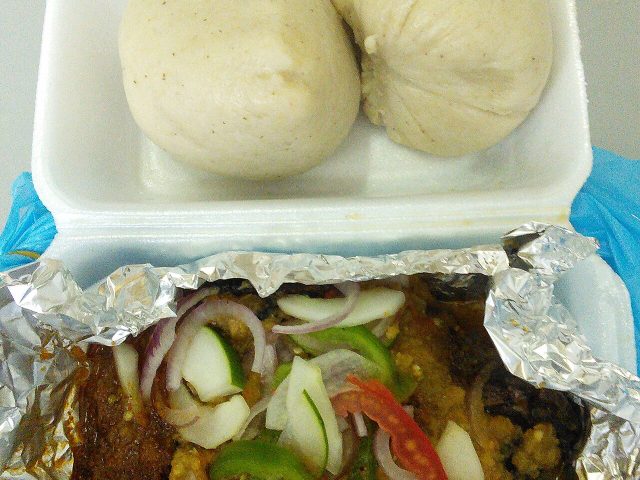
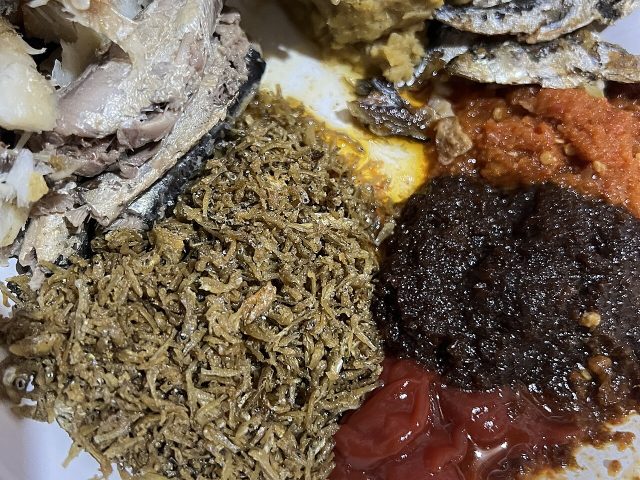
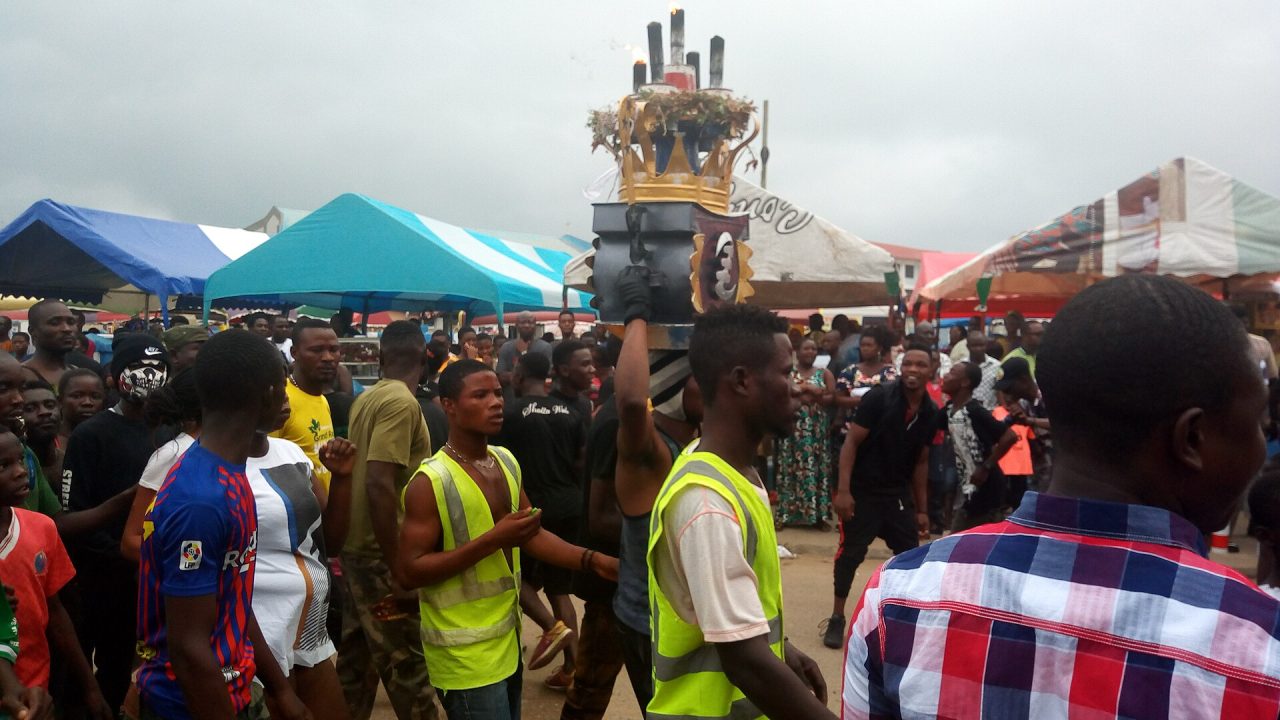
The festival food is kpokpoi, also called kpekple: steamed, fermented maize meal mixed with palm oil, eaten with palm-nut soup and fish. On the main day, chiefs and family heads sprinkle kpokpoi on the ground and at shrines to feed the ancestors, walking through the streets while crowds follow. Families then eat together, and it is common for anyone passing a Ga house on the day to be invited in and fed.
Different towns, different dates
Each Ga town celebrates on its own calendar, so Homowo in Accra is really a season rather than a single day. Towns stage their own processions, durbars of chiefs and twins’ celebrations, since twins hold a special place in Ga tradition. In Teshie and Nungua the celebrations bring back residents who live in other parts of Ghana or abroad, and the streets are packed with people dressed in red, white or family colours.
The festival in a changed city
Accra has grown far beyond the Ga towns that founded it. Much of the city’s population today comes from other parts of Ghana and the wider region, and many residents only notice Homowo when roads are closed for processions. For Ga families, the festival is a reminder that the land under the high-rises and shopping malls has an older history.
On the main day in Teshie, the crowd following the chief with kpokpoi is loud enough to hear from the beach road. The famine the festival mocks is centuries old. The hooting is new every year.