
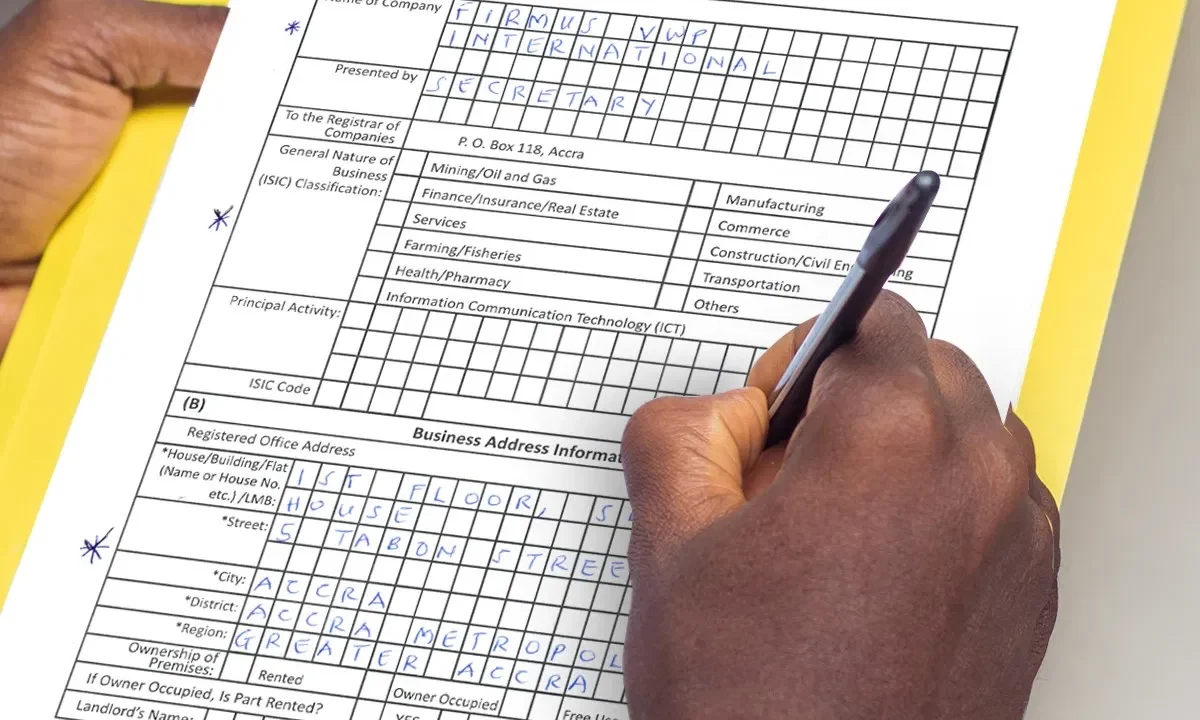
If you are running a business in Ghana, or about to start one, you register it with the Office of the Registrar of Companies, the RGD. Registration makes the business a legal entity you can bank, invoice, and grow under, and it is a step banks, suppliers, and government contracts increasingly ask for.
Here is what the process looks like and how to choose the right type.
First, pick the right structure
The structure you register decides your tax, your liability, and your paperwork, so choose before you file. The common options in Ghana are:
- A sole proprietorship, registered as a business name. It is the simplest and cheapest, suited to one person trading under a name, but the owner and the business are legally the same, so personal assets are exposed if things go wrong.
- A company limited by shares, the standard for a business with owners who want the company to be separate from them personally. It is more paperwork and cost, but it limits liability and looks more solid to banks and partners.
- A partnership, for two or more people going into business together under agreed terms.
Before you file
You will need a Tax Identification Number, which now comes through your Ghana Card, and the personal details of the owners or directors, including their Ghana Card numbers. Have a proposed business name ready, and a backup, because a name already taken will be rejected.
The registration process
RGD registration runs online through the official portal, where you check that your business name is available, fill the forms for your chosen structure, submit the owner and director details, pay the fee, and receive your certificate once it is approved.
For a company you also file details such as the shareholding and the company’s registered address, and you receive registration documents that the company then keeps and produces when asked, for example when opening a corporate bank account.
After you register
Registration is the start, not the end. Depending on the business you may need a tax registration with the GRA, and certain trades need a sector permit or a local assembly’s business operating permit before you can trade legally.
Companies also have ongoing duties, such as filing annual returns, and missing them brings penalties, so put the dates in your calendar from the start.
Common mistakes
People trip on a few things. Choosing a sole proprietorship for something that should be a limited company, and carrying personal liability they did not mean to take on. Picking a name without checking it is free. Skipping the tax and permit steps and getting caught later.
And treating the certificate as the finish line rather than the point where the real obligations begin. Register with the structure you actually need, and keep up with the filings, and the business stands on solid ground.