Hubtel has used artificial intelligence to identify customers suspected of stealing electricity for the Electricity Company of Ghana (ECG). The collaboration emerged from Hubtel’s AI laboratory, which started experimenting with AI in 2022 before formally launching the lab in 2023.
Alex Bram, Hubtel’s CEO, said ECG provided the company with electricity-related data to test its AI capabilities. “I think the biggest one that we announced was ECG. They gave us an opportunity to help them use AI to find people who could be stealing electricity. And that data was very helpful and still very helpful to ECG,” Bram told Accra Posts ahead of the Digital Economy Forum’s second episode.
Electricity theft poses a serious problem for power distributors in Ghana, causing revenue losses and complicating service delivery. AI offers a way to analyse large volumes of consumption and billing data, flagging unusual patterns and accounts for investigation. This approach could allow ECG to target inspections more effectively rather than relying solely on traditional monitoring.
Hubtel’s early AI experiments involved building its own machine learning and neural network models. Bram said the company worked with various businesses to test these systems. “We opened the lab in 2023. We’re very lucky to have gotten an opportunity with some companies to work on their data, to experiment with some of the models that we built. Some were quite successful,” he said.
However, the company faced significant hurdles in recruiting the specialised talent needed to advance its AI work. Bram revealed they initially aimed to hire about 30 machine learning engineers but struggled to find qualified candidates locally. “One, we struggled with manpower. So when we started, we wanted to recruit, I believe, about 30 machine learning engineers. We just couldn’t find 30 in Ghana,” he said.
Even after doubling their recruitment budget, the shortage persisted. “We increased the budget almost twice, and we still couldn’t find machine learning data scientists who were from Ghana. We offered very generous terms. We still couldn’t find, so our tech was a bit behind,” Bram added.
Data access also proved problematic. Attempts to establish data-sharing agreements with other companies were hindered by the absence of a framework governing such exchanges in Ghana. “We realised there’s still no framework in Ghana for sharing data,” Bram said.
Faced with these obstacles, Hubtel shifted away from developing AI models from scratch. By late 2024 and into 2025, the company began using commercially available AI systems, which had become more affordable and sophisticated due to international technology firms.
Bram urged the Ghanaian government to back its planned national AI compute centre with data infrastructure and skilled professionals. “So that data framework is important. If that AI compute centre is to succeed, because when a computer centre is there, without the data, it’s nothing,” he said.
He called for a national data-sharing framework, stronger technical education, and closer collaboration between government and private sector to make AI work in Ghana. Bram stressed that AI investment should lead to practical improvements in business and public services.
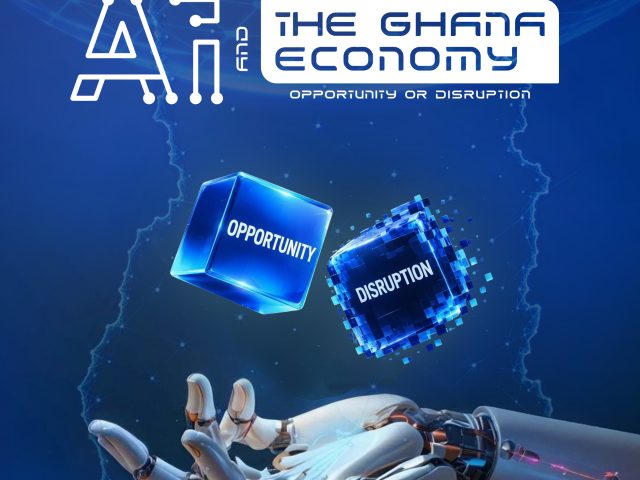
Speaking ahead of the Digital Economy Forum episode titled “AI and the Ghana Economy: Opportunity or Disruption?” Bram joined other speakers, including Minister for Communication Sam George and AI for Ghana founder Adam Watkins. The event will be broadcast live on JoyNews and Joy 99.7 FM on October 21, 2026.
Despite the setbacks, Bram remains optimistic about Ghana’s tech prospects. He envisions AI helping sectors beyond energy, including manufacturing and agriculture. “I want to see more Ghanaians be better designers, be better manufacturers, be better farmer,” he said.
According to Joy Online.