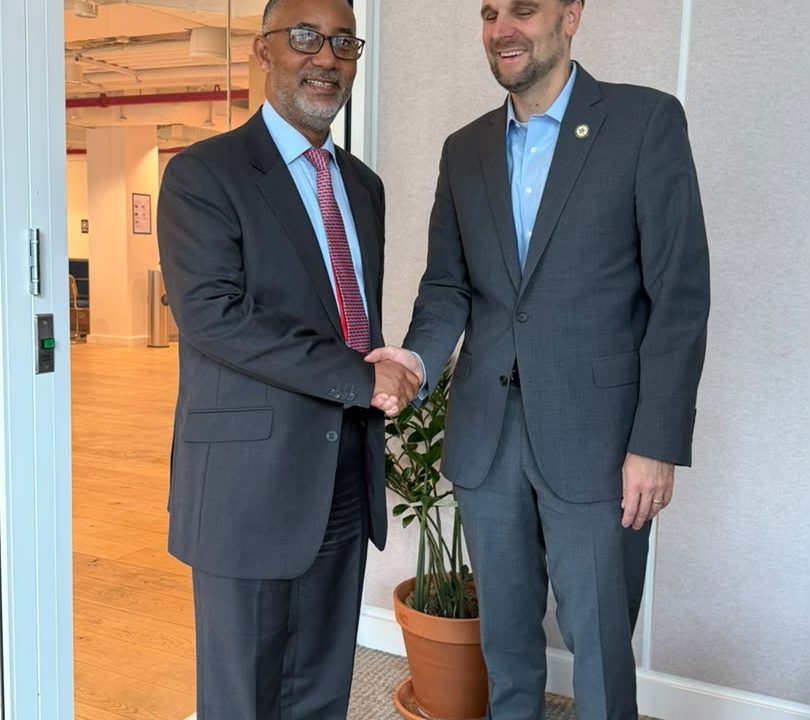
The Millennium Challenge Corporation (MCC) and Ghana’s Millennium Development Authority (MiDA) have started talks about a new phase of development partnership after the completion of two previous MCC-funded projects in Ghana. The discussions, held in New York, brought senior officials from both institutions together to review past work and explore future opportunities, particularly in energy and regional power integration.
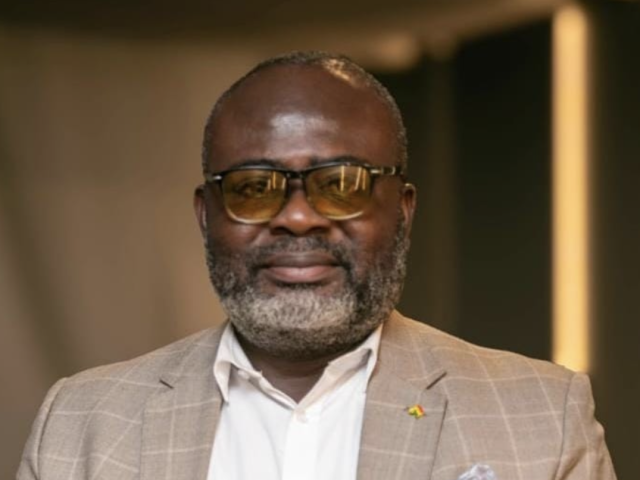
The MiDA delegation was led by Chief Executive Officer Alexander Kofi-Mensah Mould and Board Chairman Charles Abugre. The MCC team included Jason Small, Acting Vice President for Compact Operations, and Senior Policy Advisor Tariq Ahmed. The meeting focused on the legacy of Ghana’s two completed MCC Compacts and the possibility of fresh cooperation.
Mr Small said Ghana’s past performance with MCC will be a major factor in deciding whether the country qualifies for a new compact. He explained that MCC now uses a broader assessment framework that looks beyond traditional development indicators. This includes examining potential for increased U.S. investment, opportunities for U.S. exports, and the development of supply chains for critical materials and minerals.
For Ghana, which has already completed two MCC programmes, MCC will also assess how well previous investments performed and whether Ghana has maintained reforms and investments linked to those programmes. “That assessment could provide Ghana with an opportunity to demonstrate the reforms and institutional improvements made since the challenges that affected the second Compact,” Mr Small said.
The second Compact, known as the Ghana Power Compact, was signed in 2014 and came into force in September 2016 with a budget of $498.2 million. However, after the termination of the Electricity Company of Ghana (ECG) Public-Private Partnership (PDS) concession in 2019, MCC de-obligated $190 million that depended on that concession. The remaining parts of the programme were carried out by MiDA, and the Compact officially closed in June 2022.
Mr Mould said Ghana’s energy sector could be the main entry point for renewed partnership. He pointed to opportunities to improve the electricity grid, boost the performance of distribution companies, and deepen regional power integration across West Africa. “We’re looking at the natural gas that we have, and also Nigeria, to see how we can work together — do the pipeline to ensure that we have gas flowing across the region to generate electricity and also to improve the grid,” he said.
He also mentioned reforms already made in Ghana’s power sector, such as quarterly automatic tariff adjustments and a cash waterfall mechanism to improve revenue distribution in the electricity value chain. Several reforms and projects that could not be completed under the MCC Power Compact have progressed through Ghana’s domestic efforts.
Mr Small recalled that MCC had previously explored regional energy infrastructure projects involving Ghana and its neighbours. These included transmission interconnectors between Ghana and Côte d’Ivoire and between Ghana and Burkina Faso. He said MCC would need to assess if these projects remain viable and whether the energy constraints they aimed to address still obstruct economic growth.
“There’s still an opportunity,” Mr Small said. But he cautioned that MCC would need more analysis before deciding on the sector or nature of future investments. He acknowledged that energy remains a significant challenge given the electricity volume and reliability Ghana will need to support future growth.
The renewed talks reflect the ongoing institutional relationship between MCC and MiDA. Ghana completed two MCC programmes: the first Ghana Compact, which targeted agriculture, transportation, and rural development, and the Ghana Power Compact, focused on electricity infrastructure and power-sector reforms. MCC currently lists both programmes as closed.
While MCC is open to further cooperation, it does not guarantee a new compact. Mr Small said the MCC Board will weigh the evidence before selecting countries for new compacts. This includes Ghana’s progress on reforms, investment climate, and alignment with MCC’s criteria, including potential U.S. economic returns.
The discussions in New York represent a fresh chapter in Ghana’s engagement with MCC, with energy and regional power integration at the centre of the conversation. How these talks evolve will depend on Ghana’s ability to show sustained reform and the potential to attract investment that aligns with MCC’s priorities.
According to Joy Online.