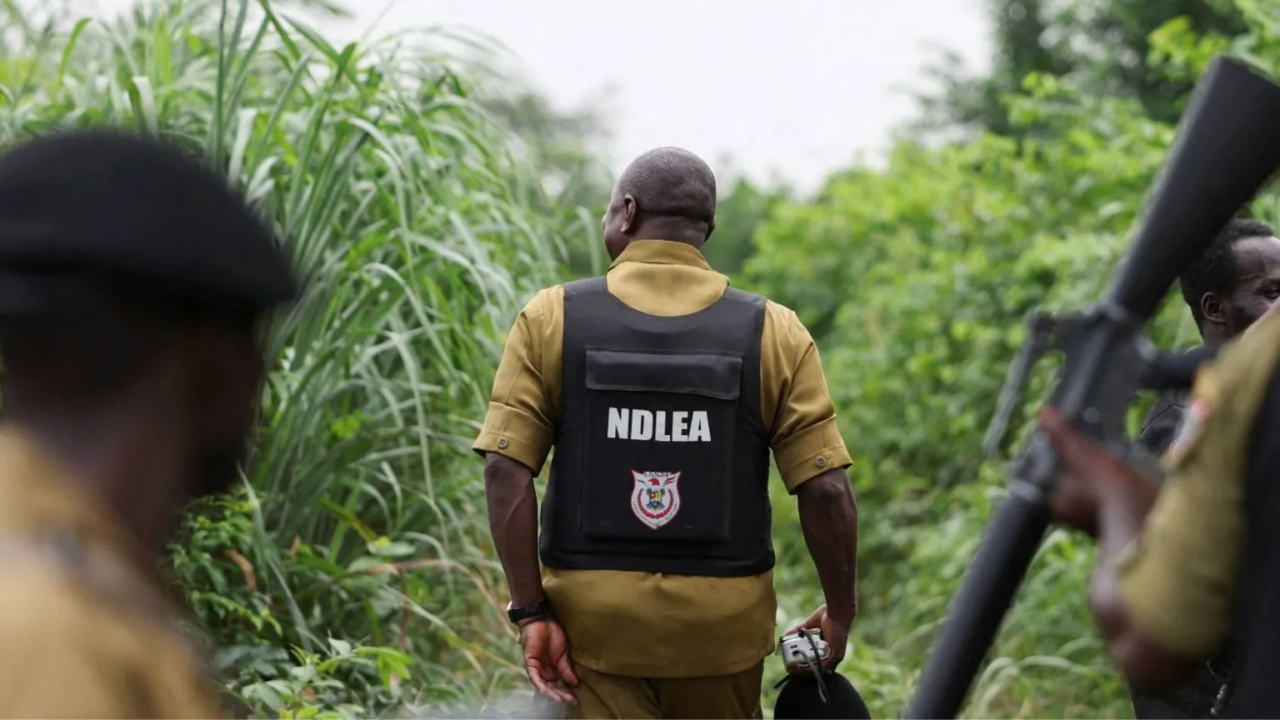
A Nigerian judge formally dressed and lawyers maintaining legal decorum were present at an alleged illicit drug laboratory deep in a forest. The hearing was not in a Lagos courtroom but rather in the makeshift laboratory where three Mexicans and seven Nigerians were paraded in handcuffs.
A Global Synthetic Drugs Trade Unfolds
Methamphetamine production has become increasingly sophisticated, with Mexican specialists in manufacturing methamphetamine often described as "cooks" working alongside locals in laboratories in Europe and Africa. The National Drug Law Enforcement Agency (NDLEA) has described it as the country's largest-ever meth bust, with over two tonnes of the drug worth some $360m (£270m) discovered when the suspects were arrested in May.
The Rise of Nigerian Meth Labs
Mexican specialists in manufacturing methamphetamine, often described as "cooks", are increasingly being found working alongside locals in laboratories in Europe and Africa. According to James Griego, who leads counter-narcotics operations for US-Africa Command (Africom), "Anybody who is looking to consume methamphetamine, understands that the Mexican meth is the best in the world, for that purpose." The first time the NDLEA announced it had discovered a Mexican-linked methamphetamine lab was in 2016, when it described it as a "super lab".
West Africa's Growing Role in the Global Synthetic Drugs Trade
West Africa poses numerous attractive benefits to Mexican syndicates, starting with swathes of forested land which makes well for secluded production sites. According to NDLEA spokesperson Femi Babafemi, "The population is also an attraction for them, especially the huge youth population because with that you get cheap labour and a market for local consumption." There are fears among authorities that methamphetamine consumption will grow in Nigeria, where a 2018 survey found that 14.4% of the adult population had used an illicit drug – more than twice the global average as estimated by the United Nations Office on Drugs and Crime (UNODC).
Intelligence and International Cooperation
Intelligence from Africom and the US Drug Enforcement Administration have linked some of the laboratories to Mexico's two biggest drug cartels: the Sinaloa Cartel and the Jalisco New Generation Cartel. Africom commander Gen Dagvin Anderson alleged that militant groups and narco-traffickers have been working together. "African-based terror groups are financed to an increasing degree by drug cartels, expanding those terror groups' reach and lethality," he told lawmakers.
Methamphetamine's Growing Availability and Risks
Unlike plant-based drugs, such as cocaine or heroin, which can only be grown and processed in certain places, a synthetic drug like meth can be produced anywhere with the right chemicals and expertise, making it easier for organised crime groups to quickly scale up production. Known for its fast and long-lasting effects, methamphetamine delivers a euphoric high, but deeply unpleasant side effects. There is a serious risk of cardiovascular problems, malnourishment through poor diet and, if injecting, blood-borne diseases. Withdrawal from the drug is also very hard as it often includes feelings of anxiety, severe depression, fatigue and intense cravings.
The Threat of Methamphetamine in Nigeria
There are fears among authorities that methamphetamine consumption will grow in Nigeria, where a 2018 survey found that 14.4% of the adult population had used an illicit drug – more than twice the global average as estimated by the United Nations Office on Drugs and Crime (UNODC). The use of the drug has spread across the continent, according to the Global Initiative Against Transnational Organized Crime. In East Africa, it has become widely available in countries like Kenya and Tanzania, and also in southern Africa, like in South Africa where it is known as "tik".
Source: Joy Online