

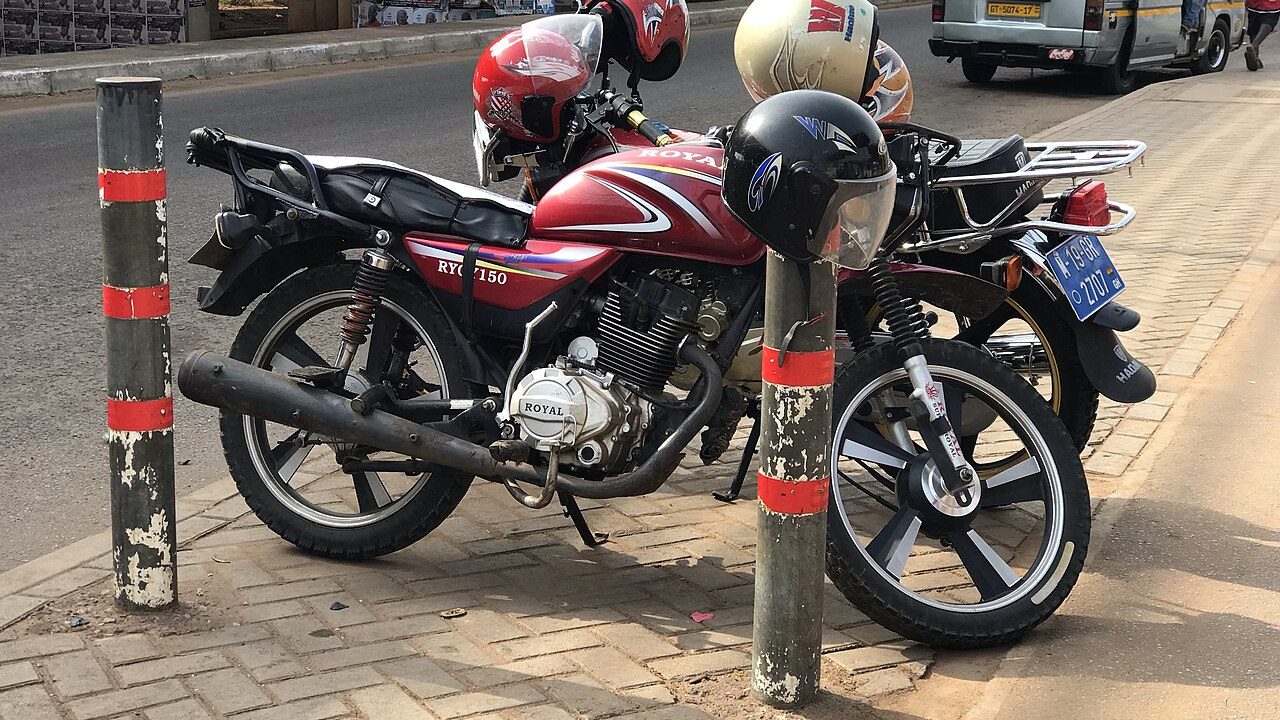
When traffic stops on the roads of Accra, motorbikes keep moving. Riders carry passengers, parcels and sometimes whole families between the cars. Officially, most of these rides are illegal.
Okada is the name used in Ghana and Nigeria for commercial motorbike taxis. The word is often traced to Okada Air, a defunct Nigerian airline, a joke about how fast the bikes move. The Road Traffic Regulations of 2012 prohibit the use of motorbikes for commercial passenger transport in Ghana. Despite the ban, okada services have spread across Accra and other cities.
Why people use them and the jobs
Okada are fast. In Accra’s congested traffic, a motorbike can cut a long journey dramatically. They reach neighbourhoods poorly served by trotros and taxis, and they are relatively cheap. Ride-hailing apps have added motorbike options in some areas. For many young men, okada riding is a source of income. Unemployment is high, and buying or renting a motorbike can quickly create work. Riders’ associations say hundreds of thousands of people depend on the business across the country.
Safety and politics
Motorbike accidents are a serious concern. Many riders and passengers do not wear helmets, some riders are unlicensed, and accidents often cause severe injuries. Hospitals report large numbers of motorbike-related casualties. Police also link some okada riders to crime, including snatching bags and phones. Legalising okada has been a political issue for years. Some politicians have promised to regulate and legalise the business, with registration, training, licensing and helmet enforcement. Others argue that legalisation would worsen road safety. During the 2020 and 2024 election campaigns, okada was a hot topic, especially among young voters.
Enforcement and regulation
Police periodically carry out operations to seize motorbikes and arrest riders, but enforcement is inconsistent. Riders often return to the roads. Supporters of legalisation point to countries that register motorbike taxis, require helmets for both rider and passenger, set up designated routes and train riders. They say regulation would bring the business into the tax system and improve safety.
Anyone taking an okada should insist on a helmet, agree on the fare before the ride and avoid riders who appear reckless or under the influence. The law says okada should not exist. Accra’s traffic says it cannot do without them. Until the two are reconciled, the bikes will keep weaving between the cars.
.jpg)