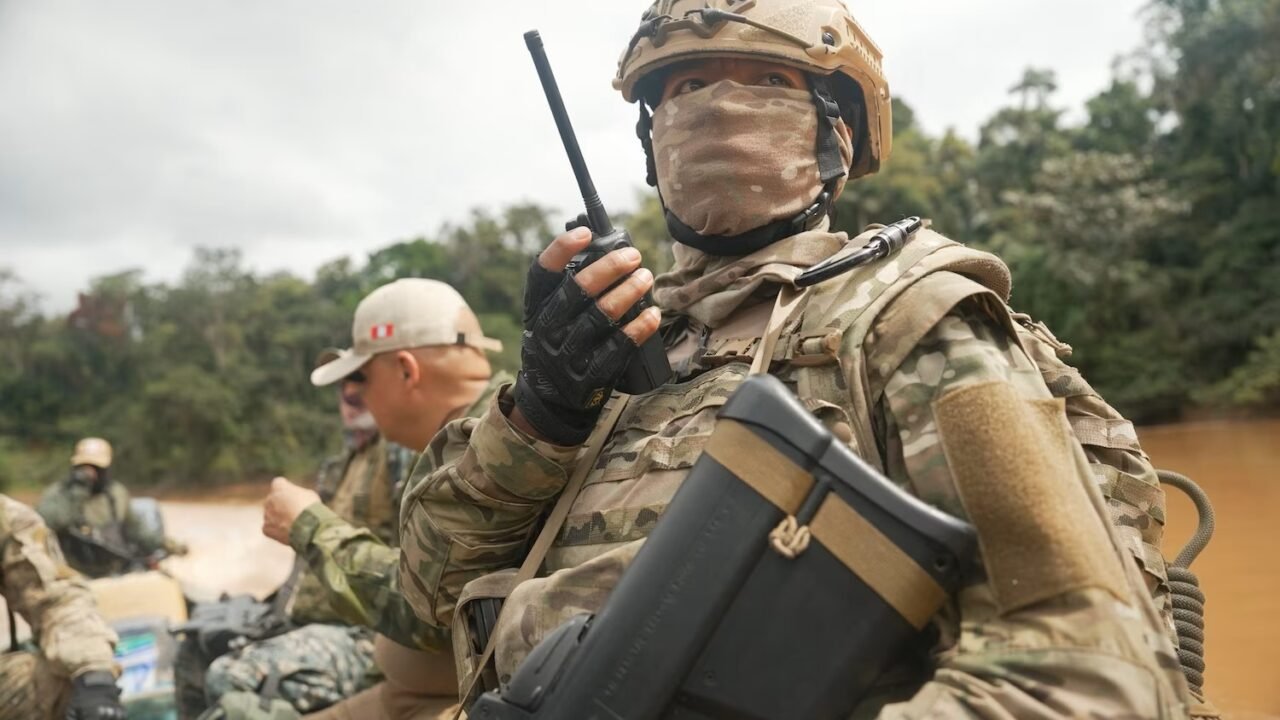
Peru's military launched Operation Mercury 2, a large-scale operation to dismantle illegal gold mining camps in the Tambopata National Park, a UNESCO World Heritage site in the Peruvian Amazon. The operation, which began on Tuesday, involves all branches of the country's military and aims to remove all illegal gold miners from the park.
A Legacy of Deforestation and Pollution
The Tambopata National Park, located in the southeastern Madre de Dios region, has been ravaged by large-scale gold mining. The park, which is visited by an average of 40,000 tourists per year, has seen its rich rainforest destroyed, and its rivers and streams polluted by the mining activities. The Peruvian government has acknowledged the severity of the problem, with authorities stating that gold mining has destroyed nearly 344,000 acres of the Peruvian Amazon by mid-2025.
Operation Mercury 2: A Sequel to a Previous Effort
Operation Mercury 2 is a sequel to a previous campaign launched in 2019, which temporarily reduced mining activities by 90%. However, the price of gold has more than tripled globally since then, making extracting even small amounts of gold increasingly lucrative. The global rise in gold prices has driven the growth of gold mining in the Amazon, with the price increasing from an average of about $1,394 an ounce in 2019 to roughly $4,395 an ounce today.
The Environmental Footprint of Gold Mining
The environmental footprint of gold mining in the Peruvian Amazon has been enormous. A 2021 study found that 71% of people living within mining communities and 80% of people living outside mining communities had hair-mercury concentrations above the U.S. EPA reference level. The mercury used in the gold mining process is poisoning communities, with researchers linking fish consumption to higher mercury levels. Several types of fish have been banned from consumption in the area given their mercury levels, but most fish markets do not abide by these laws.
A Mult-Agency Presence to Prevent Return
The provisional deputy supreme prosecutor, Ronal Ramón Flores Ñañez, accompanied the military on the operation and stated that "This week is just the beginning of Operation Mercury 2 to remove all illegal gold miners from within Tambopata National Park and build a robust, long-term multi-agency presence to prevent their return." The operation is being partly funded by Global Conservation, an international nature conservation group, whose mission is the direct protection of endangered national parks and indigenous territories in developing countries.
A New Era for Peru's National Parks
The Peruvian government has acknowledged that illegal gold mining in national parks is crossing a red line. The operation is a significant step towards protecting the country's national parks and preserving the Amazon rainforest. As Jeff Morgan, executive director of Global Conservation, stated, "We are launching Operation Mercury 2 together to show the world Peru will no longer allow illegal mining in their national parks, polluting the rivers and water supplies for hundreds of thousands of people and wildlife; causing death and sickness for the next hundred years." The success of Operation Mercury 2 will be closely watched, not only by the Peruvian government but also by the international community, as a test of the country's commitment to protecting its natural heritage.
Source: Joy Online