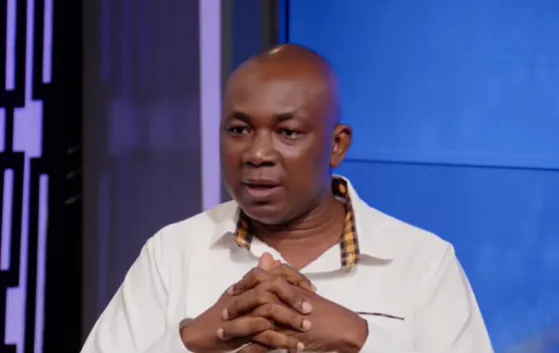
Professor Godfred Bokpin, a renowned economist and professor of finance, has sounded the alarm on the state of free speech in Ghana. He believes the country's democracy is under threat, and it's time for a broader national conversation to address the issue.
Speaking on JoyNews' Newsfile on Saturday, August 8, Prof Bokpin emphasized that the debate over whether Ghana's democracy is under threat should not be reduced to accusations and counter-accusations between the two major political parties.
A Call for Objectivity
Prof Bokpin argued that there is a need to examine the evidence objectively and determine whether there are emerging patterns that could undermine the country's democratic institutions. He posed a question to his audience: "Is it possible that we can go beyond 'I do you, you do me' and all of that, and begin to look at whether there's an element of truth in this?"
A Pattern of Behavior
Prof Bokpin noted that Ghana has accumulated enough experience under successive NDC and NPP governments to critically examine how both parties behave when they are in opposition and when they assume power. He pointed out that the country has seen how the NDC behaves when they are in opposition and how the NPP behaves when they are in power.
The Influence of Social Media
Prof Bokpin expressed concern that political interests increasingly influence public discourse, particularly through social media and other platforms where citizens express their opinions. He noted that political narratives now extend beyond the traditional political class to ordinary citizens using platforms such as TikTok and Facebook. "If you look at the entire value chain, you see the politics all the way through to TikTok, Facebook, comments that people make and all of that," he said.
The Threat to Objective Debate
Prof Bokpin expressed concern that political loyalties could increasingly determine how citizens interpret events and institutions, potentially undermining objective public debate. He emphasized that Ghana must ensure that political disagreements do not gradually erode the freedoms and institutions that sustain democracy.
As the debate over the state of Ghana's democracy continues, it remains to be seen whether the country will heed Prof Bokpin's call for a broader national conversation. The threat to free speech and the potential erosion of democratic institutions are pressing issues that demand attention and action from all stakeholders.
Source: Joy Online