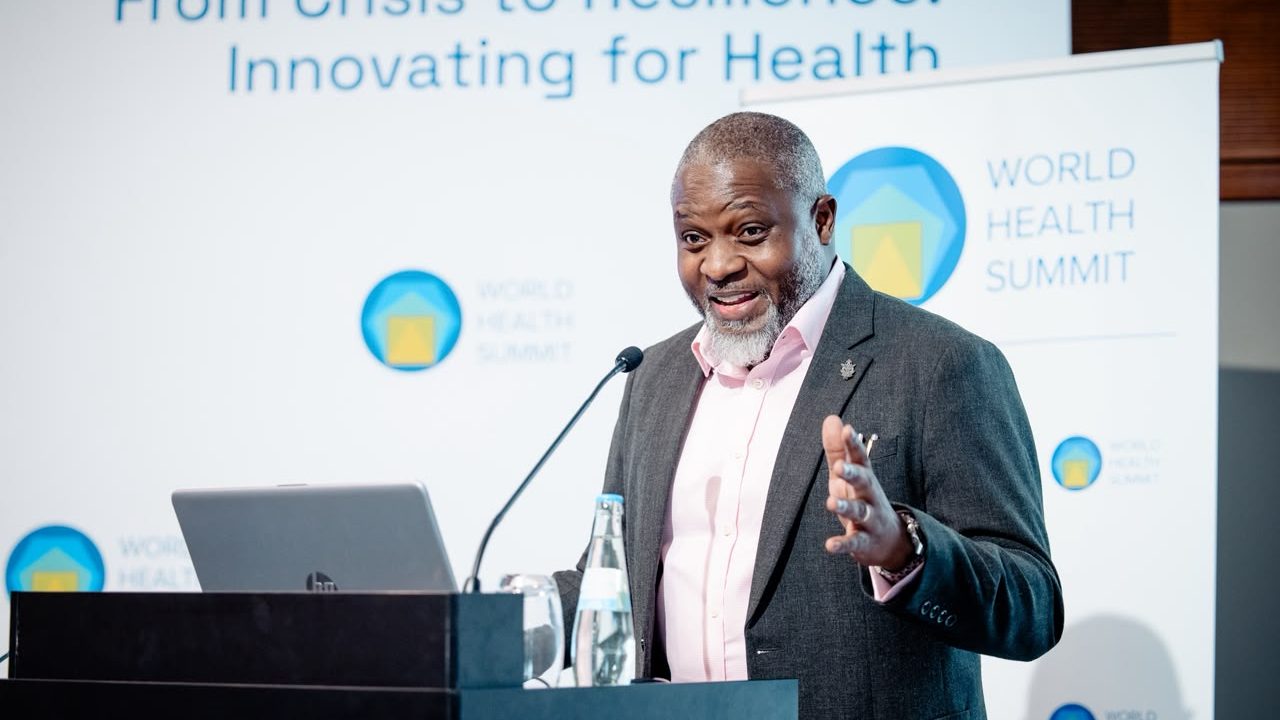
At the World Health Summit 2026 in Berlin on October 19, Professor John H. Amuasi of Kwame Nkrumah University of Science and Technology (KNUST) proposed a different approach to public health. He urged governments to focus on preventing the conditions that cause illness rather than primarily treating diseases after they emerge.
Amuasi’s presentation, “One Health and Upstream Prevention,” was part of a session titled “Ecological Determinants of Resilient Health Systems: Scaling Upstream Prevention to Anticipate, Prevent, and Adapt to Emerging Health Risks.” As Co-Chair of The Lancet One Health Commission, he used a vivid analogy to explain the concept. He compared current health systems to rescuers pulling people out of a river after they have fallen in. While lifesaving, he said, such efforts overlook the importance of understanding why people fall in and stopping it from happening.
The approach Amuasi advocates, known as upstream prevention, targets the root causes of poor health before they manifest as disease or emergencies. He argued that stronger health systems depend on paying more attention to environmental, social, and economic factors that put populations at risk.
Drawing from the Lancet One Health Commission’s work, Amuasi emphasized the interconnectedness of human health, animal health, and the shared environment. “Health cannot be considered in isolation from the natural and social environments in which people live,” he said. He pointed to climate change, pollution, biodiversity loss, and human activities as forces affecting health across borders and communities.
Using issues familiar to Ghana, Amuasi cited illegal mining, food safety, and environmental pollution as examples that show why prevention must start outside hospitals. He detailed the impact of destructive mining on water, soil, and air, along with concerns about the safety and quality of food produced under varying environmental and regulatory conditions.
He also mentioned exposure to polluted air and the environmental consequences of plastic packaging. “Everyday decisions and economic activities can have consequences for health,” he said. Amuasi argued these challenges cannot be addressed by the health sector alone. They require coordinated efforts involving environmental authorities, agriculture, education, industry, and policymakers.
Education featured prominently in his recommendations. Amuasi stressed introducing One Health concepts early in the educational system, from primary school through university. “If we are able to change the way people think about health and help them understand the fundamental interconnectedness of humans, animals and our shared environment, beginning at the earliest levels of education, I believe that in a decade or more, we will begin to reap the benefits,” he said.
He suggested that this understanding could influence value systems across societies and cultures, regardless of academic or professional backgrounds. Amuasi also drew attention to the media’s role, calling for closer collaboration between scientists, educators, and media professionals to communicate health and environmental information effectively.
The Lancet One Health Commission advocates a broader health perspective that includes humans, animals, plants, and the environment. Its framework emphasizes equity, sustainability, and systems thinking, while recognizing different forms of knowledge in policymaking.
Amuasi’s message concluded that while investments in hospitals, medicines, and emergency responses remain necessary, more resources must be devoted to preventing the conditions that lead to illness. His call at the World Health Summit challenges health systems to look upstream, beyond clinics and hospitals, to the social and ecological factors shaping health outcomes.
According to Joy Online.