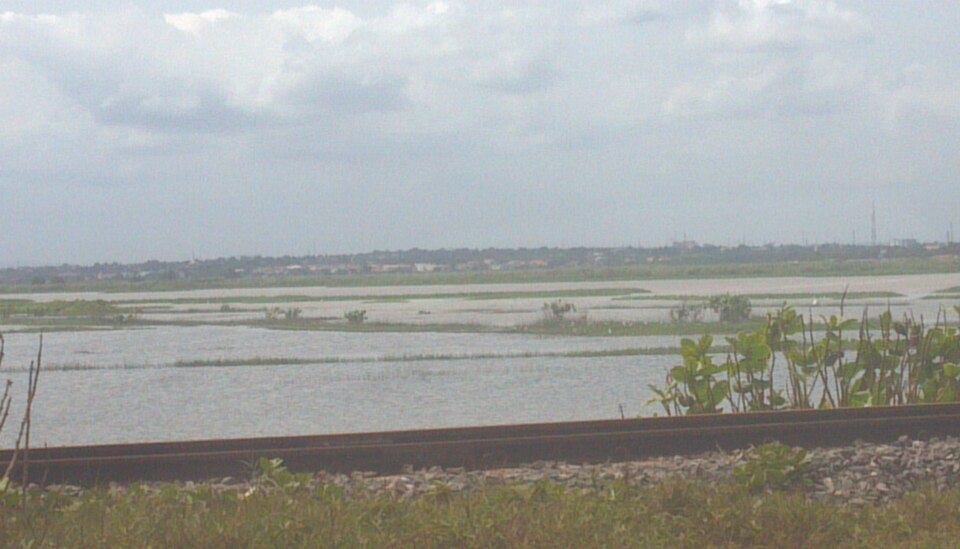
Between Accra and Tema lies one of the region’s most important wetlands, and one of its most fought over. The Sakumono Ramsar Site, around the Sakumo Lagoon, is protected as a wetland of international importance. Yet the Ghana News Agency reported in 2021 that “about 80 per cent of the area had been encroached on by developers.”
Since 2025, the authorities have tried to take it back. Demolitions in 2025 met resistance from residents, and in July 2026 the land agency for Tema announced fresh action against structures and shipping containers on the site.
A wetland for birds and floodwater
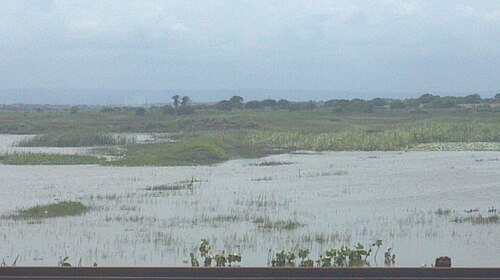
According to a 2021 GNA feature citing the Ramsar Sites Information Service, the site covers about 1,365 hectares within a catchment of 27,634 hectares. The lagoon itself covers about 350 hectares, with about 700 hectares of flood plain around it.
The wetland supports “high counts of water birds, which represent more than one per cent of the coastal population,” GNA reported. Species recorded there include the spotted redshank, common greenshank, sandpipers, curlew, little stint, black-tailed godwit and black-winged stilt.
It also protects people. In 2025, the Director-General of NADMO, Dr Joseph Bikanyi Kuyon, described the site as “a critical habitat for wildlife and acts as a natural buffer against flooding,” MyJoyOnline reported. When wetlands are built over, rainwater has fewer places to go.
Demolitions and resistance
In April 2025, the Tema Development Corporation (TDC) and regional authorities began clearing unauthorised structures. When the second phase resumed in July 2025, it met “fierce resistance from residents,” MyJoyOnline reported. Some residents said their buildings were not in waterlogged areas, and Dr Kuyon said the exercise would continue despite the opposition.
In April 2026, the Greater Accra Regional Minister, Linda Ocloo, announced another round of demolitions, from 28 to 30 April. She said she wished “to send a clear warning to all developers and prospective land users,” MyJoyOnline reported.
In July 2026, TDC said it would begin demolishing illegal structures and shipping containers on the site on 15 July, GNA reported. Its managing director, Courage Kweku Makafui Nunekpeku, explained why the land must be kept clear: “These places are the home for the water to stay.” GNA reported that a businessman had placed more than six 40-foot containers on the wetland in an attempt to claim about 30 acres.
Who owns the land?
Part of the problem is confusion over who can sell or allocate land around the lagoon. TDC says it issued titles only to legitimate developers. The Nungua Traditional Council has said it exercised authority only over Communities 16 and 17 and that documents outside those areas are not valid, according to GNA. In July 2026 the Nungua Mantse said he had never authorised the sale of land within the Ramsar site.
For people who have bought plots in good faith, the result can be devastating, with homes demolished after years of investment.
What buyers should know
Anyone looking to buy land around Sakumono should check carefully whether the plot lies within the protected wetland. Ask the Lands Commission and TDC for a search before paying, and be wary of documents issued by anyone without clear authority over the area.
For the wider region, the stakes are high. Every hectare of the Sakumo wetland that is lost reduces the space for floodwater, and for the birds that rely on it.