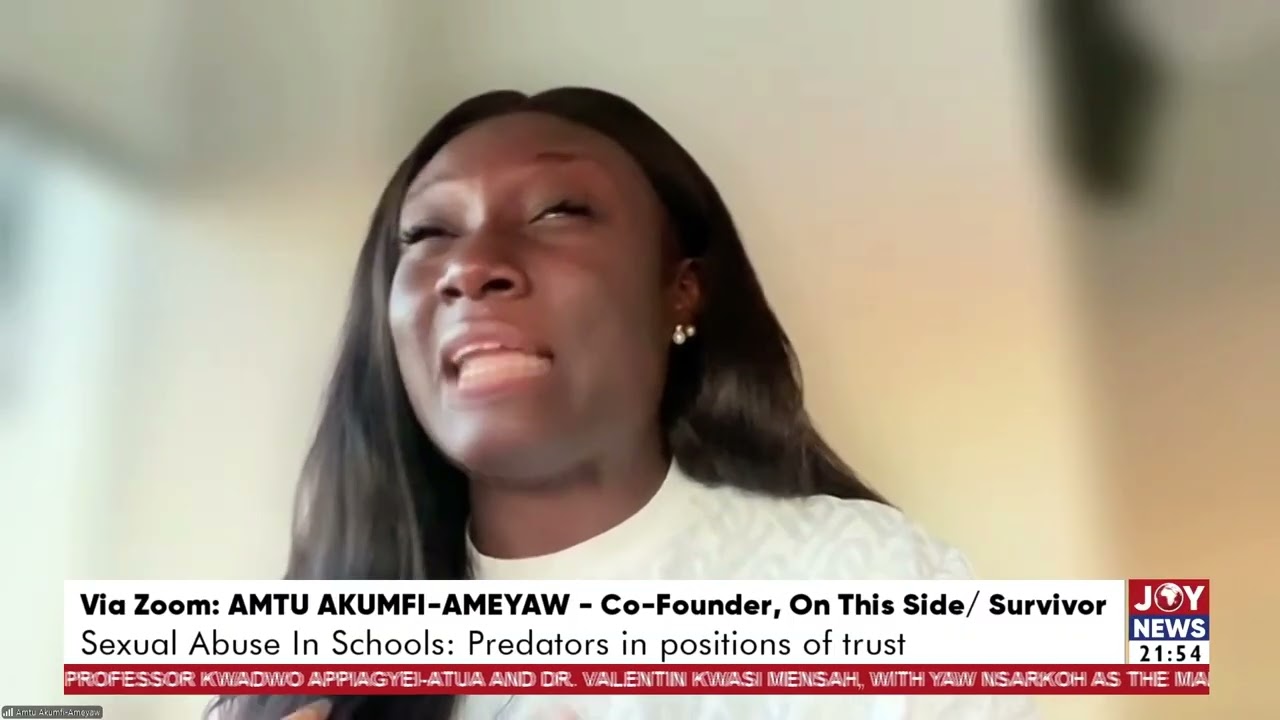
Families must teach boys respect to reduce sexual abuse in Ghanaian schools, Amtu Akumfi-Ameyaw said on October 19. The co-founder of On This Side spoke on Joy News’ PM Express amid allegations of sexual abuse at Obuasi Senior High Technical School.
Akumfi-Ameyaw criticised the common approach of warning girls about their clothing, movements, and social interactions. “We continue to ask and dictate how girls should keep themselves. Oh, don’t do this. Don’t go here. Don’t engage with this person. Don’t wear these clothes,” she said. She argued the focus on girls alone misses the wider problem of educating boys about boundaries and respect.
Her remarks followed the release of a documentary by Manasseh Azure Awuni titled Inside the Dreaded Headmaster’s Bungalow. The film investigates claims of sexual abuse involving female students and the school’s headmaster, Zakaria Abdulai. The allegations have sparked debate across Ghana about how sexual abuse is prevented, reported, and handled within educational institutions.
Akumfi-Ameyaw said society must rethink why the responsibility to avoid abuse falls mainly on potential victims. “We forget that we also have to socialise our men and our boys to be better and responsible human beings of society,” she added. She called for families and communities to raise boys who understand consent, personal boundaries, and accountability.
She questioned the effectiveness of repeated warnings to girls when abuse continues to occur. The approach, she said, risks shielding perpetrators from scrutiny. “The persistence of abuse despite repeated warnings to girls raised questions about whether enough was being done to address the behaviour of perpetrators,” Akumfi-Ameyaw said.
The activist also criticised families who prioritise having male children to carry the family name or act as heirs but neglect teaching those boys respect. “We can’t be having families desire to have male kids to become heirs, but we don’t care about teaching them basic things of respect,” she said.
She urged parents, schools, and communities to take responsibility for instilling appropriate values in boys from an early age. Akumfi-Ameyaw acknowledged that men and boys can also be victims of abuse but noted that data worldwide shows women are disproportionately affected.
She said survivors often face guilt and disappointment, struggling to speak out for fear they will not be believed or supported. Akumfi-Ameyaw called on society to treat sexual abuse seriously rather than trivialising allegations or placing the burden on those who might become victims.
The discussion around Obuasi SHTS continues to draw attention to the broader cultural and institutional failures that allow abuse to persist. Akumfi-Ameyaw’s call for educating boys on respect challenges the prevailing focus on girls’ behaviour in Ghana’s efforts to combat sexual violence.
According to Joy Online.