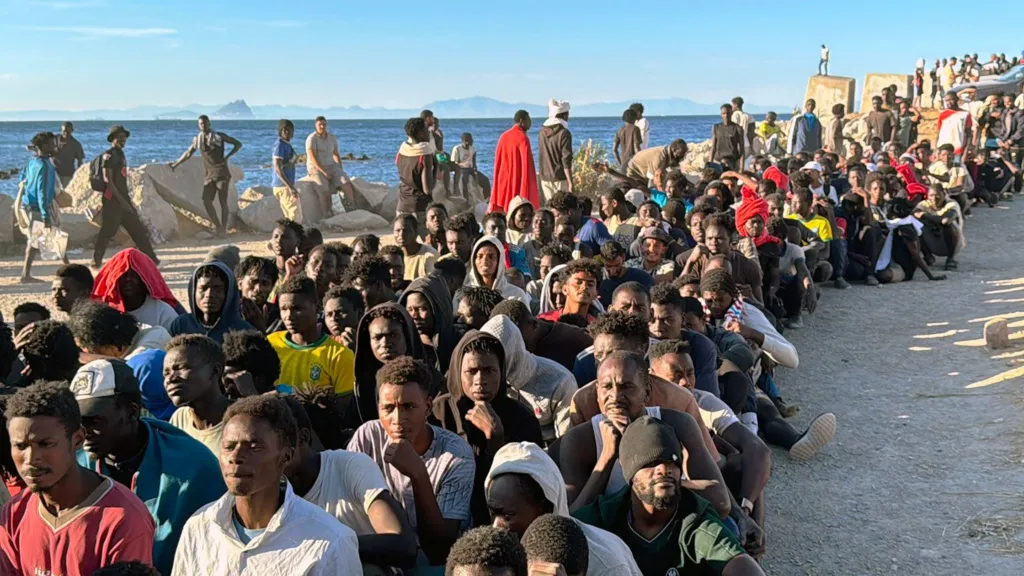
Spain will impose border controls on all air and sea travel from Italy as a row between the two EU countries intensifies. The measures, coming into force at midnight on 7 August and lasting for a month, follow a week of tensions over an influx of about 78,000 migrants from Morocco into the Spanish exclave of Ceuta.
Italy's Checks on Spanish Travelers
Italy introduced similar restrictions on 31 July, citing concerns that migrants who had entered Ceuta could travel on to Italy. The Italian government said that the checks would stay in place until at least 15 August, when Spain "expects a new wave of migration" to hit Ceuta. Rome also maintained that the measures were necessary to prevent migrants from entering the Schengen area.
Spain's Response and Counter-Measures
In response to Italy's checks, Spain demanded that Italy reverse the measures by Sunday. However, Italy refused, saying that the restrictions would remain in place until security and terrorist risks for Italy had been completely eliminated. In a counter-move, Spain announced that it would impose passport, nationality, and visa checks on Italian passengers and visitors from other countries arriving from Italy, citing "persistent irregular migratory pressure".
EU Backing for Italy's Decision
Italy's decision to suspend the Schengen agreement for a month was backed by Finland and Denmark, while the Czech Republic called for Spain's membership to be temporarily suspended. However, it remains unclear exactly why tens of thousands of migrants attempted to cross into Ceuta, but the EU's Migration Commissioner Magnus Brunner has suggested that criminal networks spreading disinformation were to blame.
Ceuta Crisis Deepens
The crisis in Ceuta has pitted Spain's socialist leader Pedro Sanchez against Italy's conservative leader Giorgia Meloni, who has long called for stricter EU migration rules. The number of people swimming to Ceuta at once has raised questions about why Morocco's border guards did not attempt to stop them. The two exclaves have long been a bone of diplomatic contention between Spain and Morocco, which does not recognise Spanish sovereignty over them.
What Happens Next
The temporary suspension of the Schengen agreement is not unprecedented, with Italy also maintaining controls on its border with Slovenia. While most of the migrants who arrived in Ceuta last week were returned within days, nearly 1,400 minors remain in the enclave. Spain has not announced an anticipated second wave of crossings from Morocco, but reports have been fuelled by social media activity by Moroccan users planning another attempt. The Spanish prime minister's office told El Pais that they were monitoring the situation but did not expect a repeat of scenes from last week.
Source: Joy Online