
Look at your payslip and find the line marked SSNIT. Most Accra workers know the money leaves, and few know where it lands. Under Ghana’s pension law, 18.5 percent of your basic salary is set aside every month: 13 percent paid by your employer and 5.5 percent taken from your pay.
That money does not all go to one place. The National Pensions Act, 2008 (Act 766) split it into tiers, and understanding them is the difference between a planned retirement and an unpleasant surprise at 60.
Tier 1: the SSNIT pension
Tier 1 is the basic national social security scheme, run by the Social Security and National Insurance Trust. It receives 13.5 percent of your basic salary. Out of that, 2.5 percent is passed on to the National Health Insurance Authority, which is why formal workers on SSNIT can register for NHIS without paying a premium. SSNIT keeps the remaining 11 percent.
Tier 1 is a defined benefit scheme. Your monthly pension is worked out with a formula based on how many months you contributed and your best years of salary, not on how much money is sitting in an account with your name on it. That is why the number of months you have contributed matters so much.
Tier 2: the occupational scheme
The remaining 5 percent goes into Tier 2. This is mandatory too, but it is managed by private trustees licensed by the National Pensions Regulatory Authority, not by SSNIT. Your employer chooses the trustee. Tier 2 is a defined contribution scheme: the money is invested and what you receive depends on what was paid in and how the investments performed.
Tier 2 benefits are usually paid as a lump sum. Workers who change jobs often lose track of their Tier 2 money when a new employer uses a different trustee. Ask HR for the name of the trustee at every job and keep the statements.
Tier 3: the voluntary part
Tier 3 is optional. Employers, employees or both can pay in, with combined voluntary contributions capped at 16.5 percent of basic salary for tax relief. Tier 3 includes provident funds and personal pension plans. Self-employed people, from traders at Makola to freelance designers in Osu, can use Tier 3 schemes to save for old age.
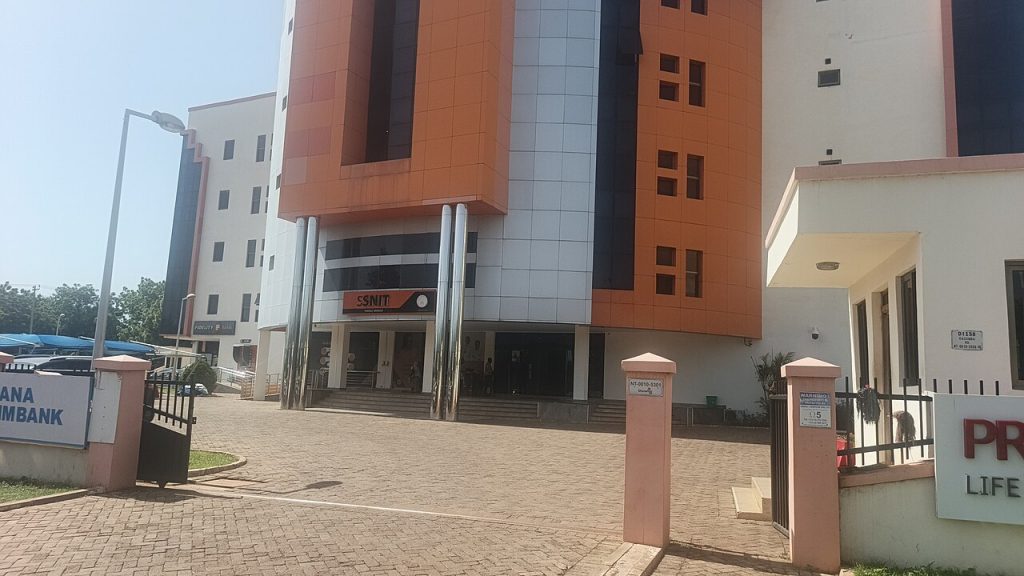
Check your contributions
The commonest complaint SSNIT hears is from workers who discover at retirement that years of deductions from their pay were never paid over by the employer. You can check your contribution statement through SSNIT’s offices and digital channels using your SSNIT number, which is now linked to the Ghana Card.
Look for gaps. A missing month is far easier to chase while you still work for the company than ten years later when it may have closed.
Retirement age and the minimum
The compulsory retirement age is 60. To qualify for a monthly SSNIT pension you need at least 180 months of contributions, which is fifteen years. Early retirement from 55 is possible with a reduced pension. A member who dies before retirement leaves a lump sum to nominated dependants, so keeping your nominee details up to date matters.
The informal sector gap
The weak point of the system is who it leaves out. Most Ghanaians work in the informal sector, and most of them pay nothing into any pension. SSNIT and private trustees have run informal schemes aimed at market women, drivers and artisans, and take-up has stayed low.
For a formal worker in Accra, the practical advice is simple: keep every payslip, know your Tier 2 trustee and check your SSNIT statement at least once a year. The scheme can only pay what it can prove you contributed.