
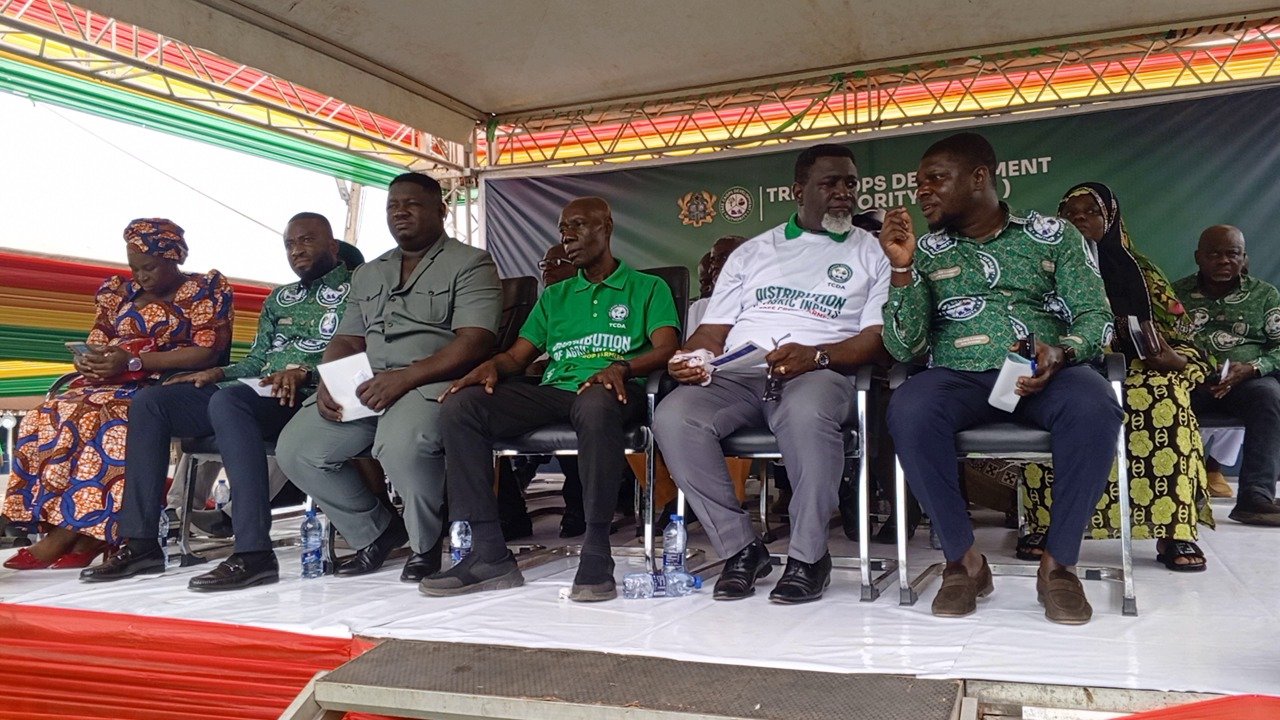
The Tree Crops Development Authority (TCDA) has launched a nationwide distribution of agricultural inputs to tree crop farmers, with a focus on promoting improved and climate-smart farming practices. The initiative was launched at Mampong in the Ashanti Region, aiming to address the challenges confronting Ghana's tree crops sector.
Boost for Tree Crop Farmers
The distribution of inputs, which includes long gloves and Wellington boots, tricycles, motorbikes, and spraying machines, is part of the Authority's broader goal to build a tree crops sector that is productive, resilient, competitive, and inclusive. Speaking at the ceremony, the Chief Executive Officer of the TCDA, Dr. Andy Okrah, said the intervention goes beyond the distribution of farm inputs, describing it as a renewed commitment to building a more productive, resilient, and competitive tree crops industry.
The Authority regulates and promotes Ghana's six strategic tree crops: cashew, coconut, oil palm, rubber, mango, and shea, collectively known as CCORMS. The sector supports approximately 1.6 million households and contributes significantly to rural employment, incomes, agro-industrial development, and export earnings. Dr. Okrah noted that farmers continue to face challenges including ageing farms, pests and diseases, climate variability, limited access to quality planting materials, and market constraints.
Improved Value Chains
The TCDA CEO emphasized the need to develop competitive value chains that move from production at the farm level to processing, manufacturing, branding, and access to higher-value markets. He said the inputs are also intended to address practical challenges faced by farmers, including limited access to seedlings and basic farm equipment. The distribution of the inputs is ongoing across districts in all regions of the country, and beneficiaries will be monitored to ensure that they are used for their intended purposes.
Industry Leaders React
The National Cashew President, Dr. Moses Kyere Nyansaye, welcomed the government's support and called for the provision of boreholes in farming communities to help farmers cope with unreliable rainfall, particularly in remote areas. Dr. Nyansaye owns about 400 acres of cashew farm and earns more than GH¢13 billion annually from his farm. He encouraged the youth to consider cashew farming as a reliable source of income.
The President of the Ghana Shea Association, Rabiatu Abukari, described the provision of long hand gloves and Wellington boots as a potential game changer, particularly in protecting women farmers from snake bites. She said the tricycles would also improve access to remote farming communities and make the sector more attractive to pickers and processors. However, Ms. Abukari called for government intervention on high bank interest rates, which she said are driving businesses out of the industry.
Looking Ahead
The TCDA says its broader goal is to build a tree crops sector that is productive, resilient, competitive, and inclusive, while creating more jobs, increasing farmer incomes, and retaining greater value within Ghana's economy. The Authority believes the 2026 intervention marks not just the beginning of another planting season, but a push to turn Ghana's tree crops from raw commodities into a stronger engine for jobs, industry, and rural prosperity. As the distribution of inputs continues, farmers and industry leaders will be watching closely to see how these initiatives will impact the sector and the lives of the people who depend on it.
Source: Joy Online