
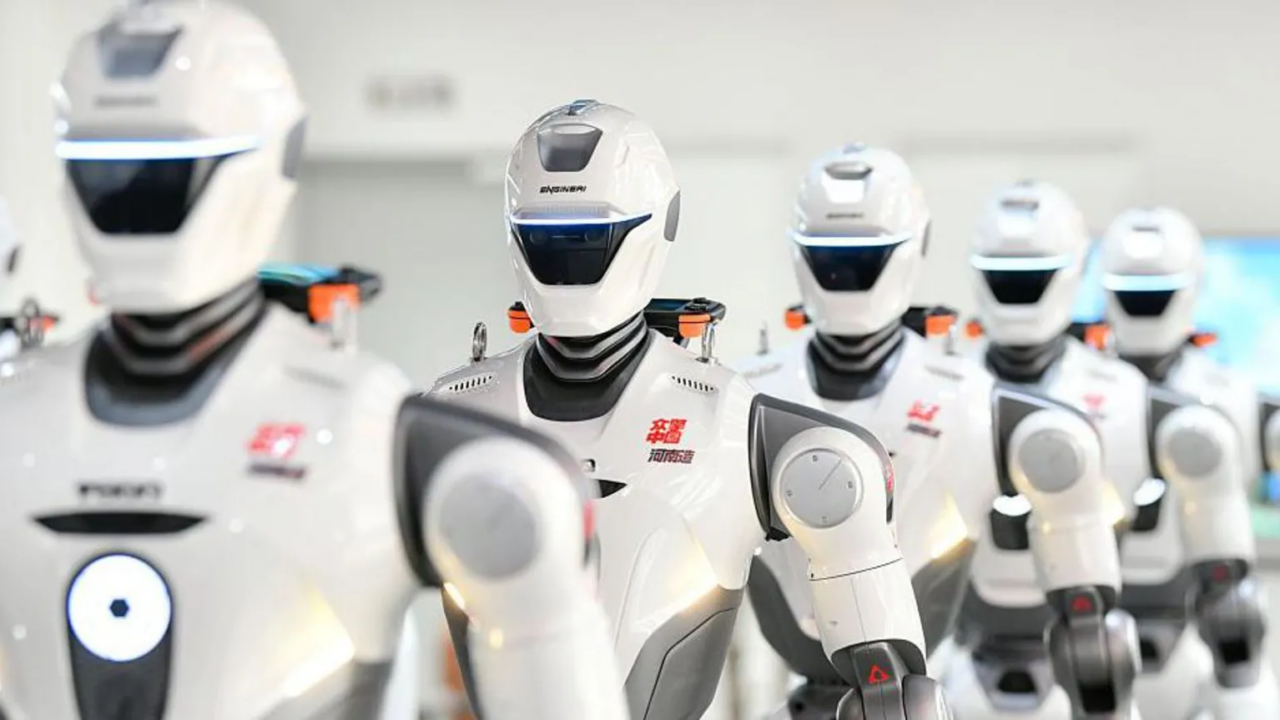
The Trump administration has blocked new foreign-made humanoid robot imports to the US over concerns about national security risks. The ban applies to advanced robots, including humanoid and four-legged machines, starting immediately.
Trump Blocks China's Robot Imports
The move targets robots made in China, which is racing with the US to develop robotics and artificial intelligence (AI). Chinese technology companies have rapidly developed humanoid robots for use in settings including factories and homes. They have also been quick to market their machines to businesses and the public ahead of US humanoid robot rivals like Elon Musk's Tesla and Boston Dynamics.
FCC Chairman Brendan Carr's Reasoning
Federal Communications Commission (FCC) chairman Brendan Carr said the agency was doing its part "to secure America's critical supply chains". The FCC has also banned the import of power inverters – a component used in data centres and solar panels – which it said could also pose a risk to the US economy.
Implications of the Ban
The ban may have significant implications for the global robotics industry, particularly for Chinese companies that have been aggressively marketing their humanoid robots. These robots are being used in various settings, including factories, homes, and even in the public sphere. The move by the Trump administration may be seen as an attempt to limit China's growing influence in the field of robotics and AI.
Industry Reaction
The BBC has contacted the Chinese embassy in Washington for comment on the ban. However, as of now, there has been no official response from the embassy. This move by the Trump administration may be seen as a continuation of the ongoing trade tensions between the US and China.
What Happens Next
The ban on humanoid robot imports is set to have far-reaching implications for the global robotics industry. It remains to be seen how Chinese companies will respond to the ban and whether it will lead to a shift in the global robotics landscape. The Trump administration's move may be a step towards securing America's critical supply chains, but it also raises questions about the future of international cooperation in the field of robotics and AI.
Source: Joy Online