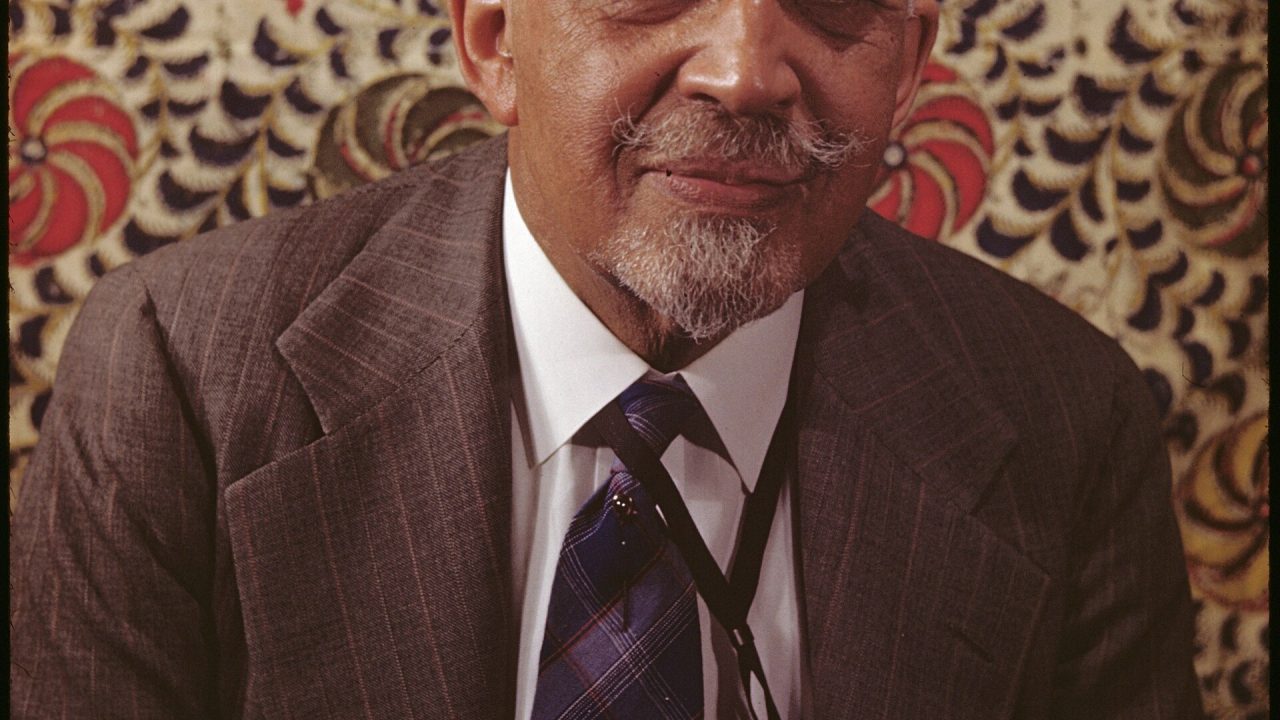
On 28 August 1963, before Martin Luther King Jr. spoke at the March on Washington, the crowd was told that W.E.B. Du Bois had died the day before, in Accra. A quarter of a million people fell silent for a minute.
Du Bois was 95. The sociologist, historian and civil rights leader, the first Black American to earn a PhD from Harvard, a co-founder of the NAACP and the author of The Souls of Black Folk, had spent the last two years of his life in Ghana.
Why Accra
Du Bois had championed Pan-Africanism for decades, organising Pan-African congresses from 1919 onward. Kwame Nkrumah, who admired him, invited him to Ghana in 1961 to work on the Encyclopedia Africana, a project Du Bois had dreamed of for years: a comprehensive record of African history and culture written from an African perspective.
He was frustrated with the United States, which had harassed him during the Cold War and at one point taken away his passport. In Ghana, he found a government that honoured him. He became a Ghanaian citizen in 1963.
The state funeral
When Du Bois died on 27 August 1963, Nkrumah gave him a state funeral, and he was first buried near Osu Castle. In the 1980s his remains were reinterred in the grounds of the house in Accra where he had lived.
His widow, the writer Shirley Graham Du Bois, continued to live and work in Ghana until after the 1966 coup that overthrew Nkrumah.
The Du Bois Memorial Centre
The house is now the W.E.B. Du Bois Memorial Centre for Pan-African Culture. Visitors can see his study, his books and personal items, and the graves of Du Bois and Shirley Graham Du Bois in the grounds. It is one of the main stops for African American visitors to Accra, especially since the Year of Return in 2019, and it hosts lectures and events on Pan-African themes.
The moment in Washington
The timing of his death made it symbolic. The oldest champion of Black freedom died on the night before the largest civil rights demonstration in American history. Roy Wilkins of the NAACP announced it to the crowd, acknowledging that the man who had fought for Black equality for more than half a century had not lived to see that day.
Why Ghana honoured him
For Nkrumah, Du Bois represented the link between the African diaspora and the new African states. Du Bois had presided over the Pan-African Congress of 1945 in Manchester, where a young Nkrumah was one of the organisers. Bringing him to Accra in 1961 was a statement that independent Ghana saw itself at the centre of a global movement, and his citizenship and state funeral sealed that bond.
The Encyclopedia Africana he came to Ghana to write was never finished in his lifetime. His grave in Accra is a short drive from the airport most African American visitors fly into.