
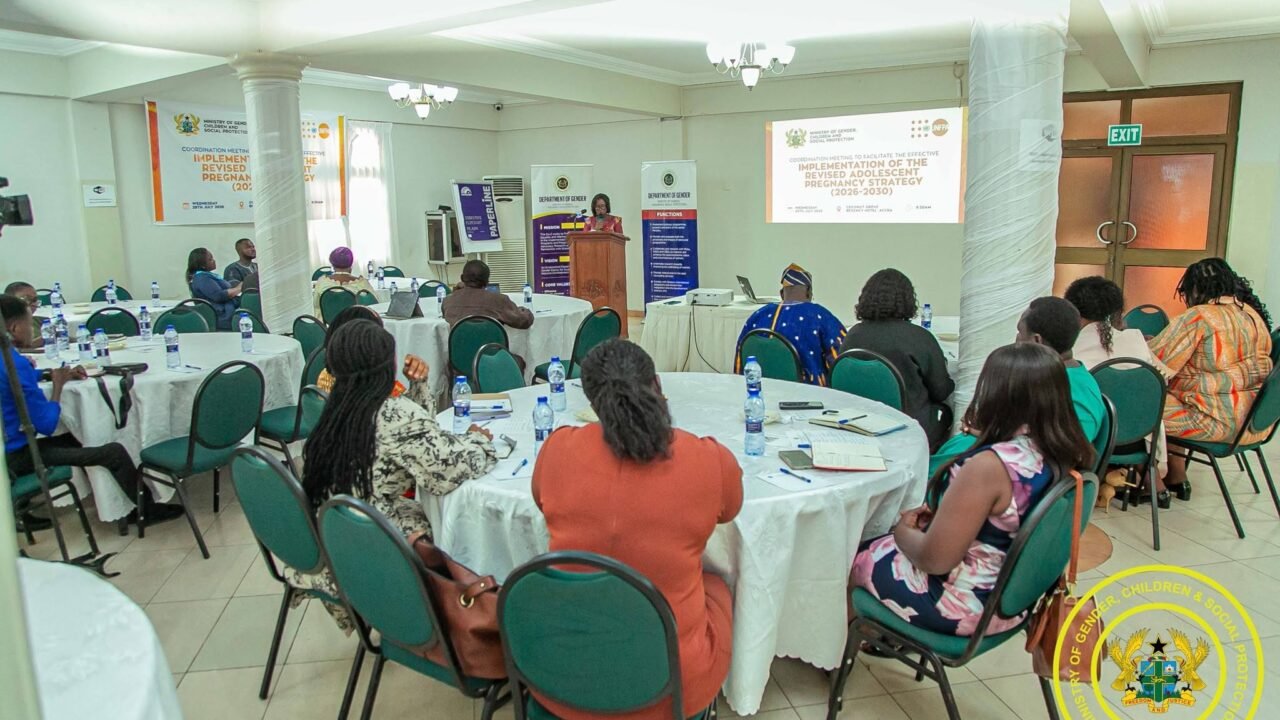
The Ministry of Gender, Children and Social Protection, in partnership with the United Nations Population Fund, has brought together key stakeholders to strengthen coordination for the implementation of the Revised Adolescent Pregnancy Strategy (2026–2030). This meeting aimed to build a shared understanding of the revised strategy, clarify the responsibilities of implementing institutions, and develop practical measures to ensure its successful rollout.
Stakeholders Meet to Strengthen Implementation of Revised Strategy
The stakeholder coordination meeting, organised through the Ministry's Department of Gender, included representatives from government agencies, development partners, civil society organisations, academia, traditional and religious leaders, youth groups, and the media. The engagement focused on improving collaboration among stakeholders, identifying possible implementation challenges, and agreeing on actions to support efforts aimed at preventing adolescent pregnancies and promoting the wellbeing and rights of young people.
Speaking on behalf of the Ministry, the Chief Programme Officer at the Department of Gender described adolescent pregnancy as a major national development concern with implications for education, healthcare, gender equality, child protection, and economic growth. She noted that about 15% of girls aged 15 to 19 have experienced pregnancy, with more than 100,000 teenage pregnancies recorded annually, highlighting the need for coordinated and evidence-based interventions.
Revised Strategy Aims to Prevent Adolescent Pregnancies
The Revised Adolescent Pregnancy Strategy (2026–2030) was developed based on lessons from the implementation of the previous strategy and provides a broader framework for preventing adolescent pregnancies, improving adolescent health, and protecting the rights of young people. According to the Chief Programme Officer, the strategy was developed to address emerging priorities and build on lessons from the 2018–2024 Adolescent Pregnancy Strategic Plan.
A consultant from the University of Ghana, Prof. Stephen O. Kwankye, presented an overview of the strategy, explaining that the document builds on lessons from the previous plan while addressing emerging priorities. He highlighted that one of the key objectives of the revised strategy is to empower adolescents and support efforts to delay early sexual activity as part of measures to reduce unintended pregnancies.
Stakeholders Commit to Sustained Collaboration
The meeting concluded with discussions, group sessions, and presentations, allowing stakeholders to share experiences, identify challenges, and develop recommendations to strengthen the implementation of the Revised Adolescent Pregnancy Strategy (2026–2030). The Chief Programme Officer expressed appreciation to UNFPA and other development partners for their technical and financial support towards the development of the revised strategy, reaffirming the Ministry's commitment to ensuring that adolescents have access to quality education, good health, and opportunities to transition into productive adulthood.
The Ministry's commitment to the revised strategy is a significant step towards addressing the issue of adolescent pregnancy in Ghana. With the support of stakeholders and development partners, the Ministry aims to strengthen coordination and implementation of the strategy, ultimately reducing the number of teenage pregnancies and promoting the wellbeing and rights of young people.
Source: Joy Online