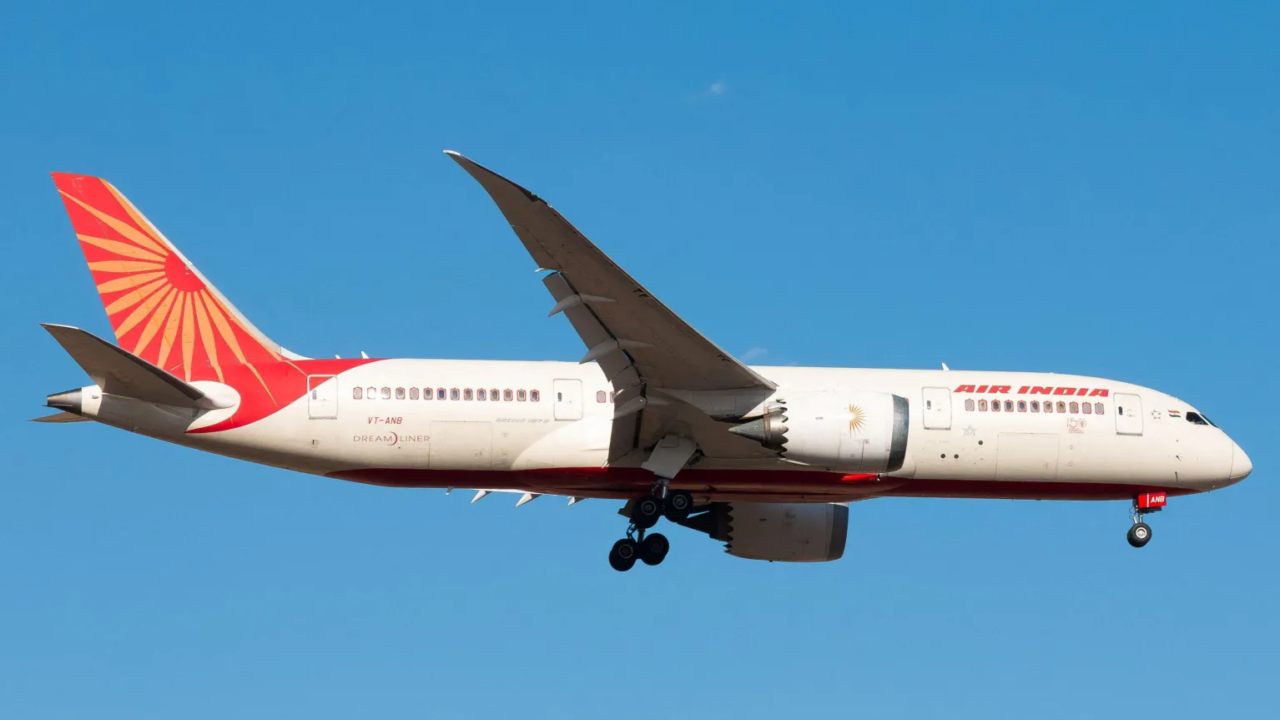
On 4 August, an Air India Airbus A320 flying from Phuket to Delhi suddenly lost about 91m of altitude, injuring 13 passengers and four crew members.
Air India Pilot's Cannabis Test: A Complex Puzzle
Reports that an Air India pilot tested positive for cannabis after a flight sound like the sort of finding that should make an aviation investigator sit up. But the reported result has not been officially confirmed, and even a confirmed positive would not necessarily be the smoking gun it might appear to be.
The incident is under investigation, with both pilots undergoing routine post-flight screening for psychoactive substances. The captain's initial test produced a result requiring "confirmatory testing," and both pilots have been removed from flying duties pending the inquiry.
What We Know About Cannabis and Flying
Studies on cannabis and flying have shown that the drug can interfere with the sort of fine motor control, attention, and complex human-machine interaction that flying demands. A 1976 experiment found that pilots who smoked marijuana performed poorly on a flight simulator, with errors in altitude, heading, and radio navigation.
A 1991 follow-up study found similar results, with pilots showing significant deterioration in several measures, including elevator and aileron control, landing accuracy, and vertical and lateral deviation on approach. Most strikingly, the pilots did not realize that their performance had deteriorated.
The Complexity of Cannabis Testing
Cannabis testing is not as straightforward as it seems. A 2022 randomised clinical trial found that impairment could not be inferred from the THC content of the cannabis, the users' previous experience, or their blood THC concentration. The study's lead author, Thomas Marcotte, said, "Unlike with alcohol where there's a more robust relationship between alcohol concentrations in blood and impairment, the association is much more complex with THC."
The relationship between THC and impairment is dose-dependent, and the effects can last for several hours. When cannabis is ingested, such as in an edible, impairment can last longer – typically six to eight hours, and sometimes more. This is a problem for regulators, as it makes it difficult to determine whether a pilot was impaired at the time of a flight.
The Investigation Continues
The Air India incident is under investigation, and it remains unclear what caused the aircraft to plunge. Investigators are examining the incident more broadly, including technical, operational, medical, and human factors. The outcome of the investigation will determine whether the reported positive cannabis test has any relevance to the incident.
The incident highlights the complexities of cannabis testing and its implications for aviation safety. As the science continues to evolve, regulators will need to adapt to the changing landscape of cannabis use and its effects on pilots.
Source: Joy Online