
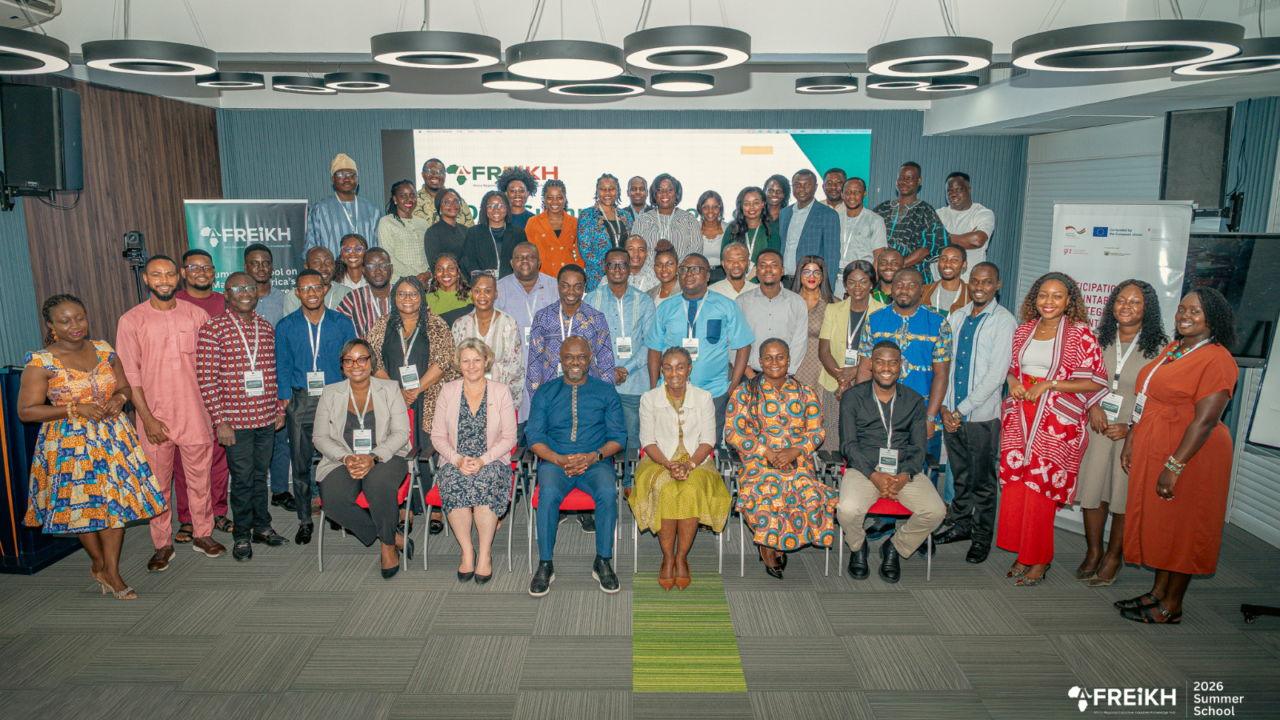
Accra hosts AFREIKH Summer School to unlock Africa's mineral wealth as global demand soars. The 2026 Africa Regional Extractives Industries Knowledge Hub (AFREIKH) Summer School, organized by the Africa Centre for Energy Policy (ACEP) with support from the Natural Resource Governance Institute (NRGI) and GIZ, has kicked off in Accra amidst skyrocketing global demand for transition minerals like lithium, manganese, graphite, nickel, and cobalt.
Africa at a turning point: unlocking mineral wealth for development
The global energy transition is underway, and Africa stands at a historical turning point. This moment could either repeat past resource failures or leapfrog the continent into a sustainable, industrialized future. The summit opened with a blunt assessment of Africa's extractive history, with Benjamin Boakye, the Executive Director of ACEP, stating that crude oil exploration has generated enormous expectation but too often those expectations have not translated into development.
A call for new development outcomes
African leaders are demanding a structural shift away from raw export models. Nafi Quarshie, Africa Director of the Natural Resource Governance Institute (NRGI), challenged participants to actively dismantle the old extractive frameworks. "Our challenge is not simply to extract different minerals; it is to produce different development outcomes," she observed. Quarshie argued that the continent cannot remain energy poor, capitally constrained, and insufficiently industrialized while holding the keys to the global green transition.
Embracing shame to drive future reforms
Benjamin Boakye urged a collective reckoning to drive future reforms, emphasizing the need to turn shame into determination to learn from past mistakes. "We should perhaps embrace some shame collectively about this reality," he stated. "But shame on its own will not change anything. We must turn that shame into determination; determination to bring strong institutions; determination to demand accountability; and above all, determination to think differently."
Capturing greater value from Africa's natural wealth
Magdalena Wüst, Deputy Head of Cooperation at the Embassy of Switzerland, emphasized that natural wealth alone cannot guarantee success. "As global energy systems evolve through the energy transition, rising demand for critical minerals and shifting investment trends, Africa must move beyond being a resource supplier to capturing greater value from its national wealth," she said. Wüst pointed out that a successful transition hinges fundamentally on domestic governance: "A successful energy transition will not only depend on Africa's resources but also on the strength of its institutions and people that command them."
The road ahead: seizing the moment for Africa's development
The Summer School, which runs until August 27, is designed to arm participants with the tools, foundations, and perspectives needed to navigate complex governance and fiscal constraints. While the energy transition presents immense socioeconomic and environmental benefits, organizers warned that corruption risks and severe governance challenges continue to threaten positive outcomes. To seize this moment, resource-rich African countries must adopt appropriate economic policies that integrate the requirements of the transition while ensuring transparent, inclusive governance. As Benjamin Boakye noted, ACEP remains committed to changing this trajectory "through a comity of people willing to learn together, challenge each other remain committed for the long term."
Source: Joy Online