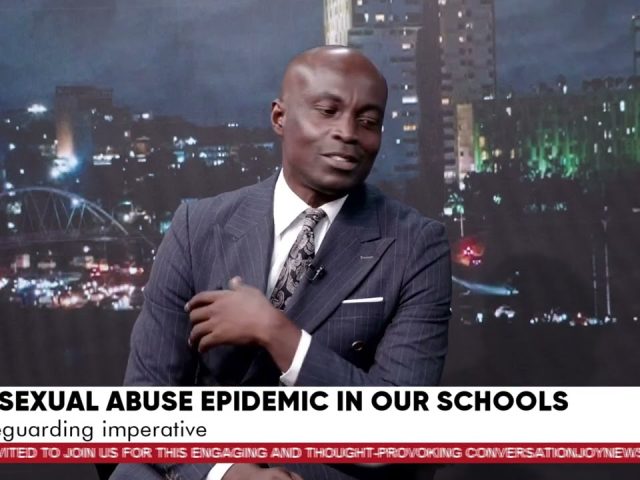

Veteran media practitioner Kwesi Pratt Jnr urged media organisations and journalists to focus on serving the public at the 77th anniversary symposium of the Ghana Journalists Association (GJA) in Accra last Wednesday.
Mr Pratt, the Managing Editor of The Insight and Founder of Pan African Television, stressed that the duty of journalists was to establish what the public needed to know, rather than competing for attention.
The Central Challenge of Contemporary Journalism
Mr Pratt noted that the central challenge for contemporary journalism had shifted from information access to the verification of truth within an oversaturated information environment. He argued that media credibility hinged on five pillars: accuracy, verification, fairness, courage, and investigative scrutiny of influential persons and institutions.
The veteran journalist warned that speed should not override accuracy in the digital era, adding that being first to publish did not guarantee impact. He cited the example of a journalist being the first to publish a story and still being wrong, while another journalist could publish later and produce the most important story of the day.
Shaping Public Consciousness
Mr Pratt said Ghana's journalism tradition was deeply rooted in the country's political and democratic development. He noted that the media had historically played a significant role in shaping public consciousness, and that the GJA, established on August 15, 1949, as the Africa Press Association, emerged at a time when the Gold Coast was undergoing significant political transformation.
The press, he said, was never merely an observer of Ghana's history but had been an active participant in the country's struggle for self-determination. Mr Pratt drew attention to the 1992 Constitution, which guaranteed the freedom and independence of the media while also assigning it the responsibility of holding government accountable to the people.
The Impact of Ownership and Financing on Editorial Autonomy
Mr Pratt interrogated the impact of ownership, financing, advertising, and political affiliations on editorial autonomy. He contended that the absence of state censorship did not equate to freedom from external pressure. He said media houses could not demand fearless journalism from journalists while ignoring the economic and professional conditions under which they worked.
The veteran journalist also criticised some TV stations for demanding a minimum number of Facebook followers from prospective presenters before offering them jobs. He said this practice undermined professional standards and marked a complete affront to journalism as a profession.
The Need for a More Representative Media
Mr Pratt tasked Ghanaian media institutions to reassess representation in national news coverage. He observed that coverage disproportionately featured state officials, corporate executives, and other institutional authorities, whereas key segments of society, including farmers, market women, fishermen, educators, health workers, unemployed young persons, and communities, received inadequate and episodic attention.
He urged journalists to recover what he described as "the responsibility to listen and not only the ability to speak." He said journalists must pay greater attention to citizens who did not hold press conferences and whose experiences are often reduced to economic statistics.
A Call to Action for the GJA
For his part, the GJA President, Albert Kwabena Dwumfour, called for mutual commitment between journalists and leadership of the GJA to jointly uphold the standards that sustained media credibility. He said the association must be a source of professional development, guidance, and protection for journalists.
Mr Pratt's remarks at the symposium have sparked a national conversation about the role and responsibilities of the media in Ghana. As the country continues to navigate its democratic development, the GJA and other media institutions must take seriously the challenge of ensuring that journalism serves the public interest.
Source: Joy Online