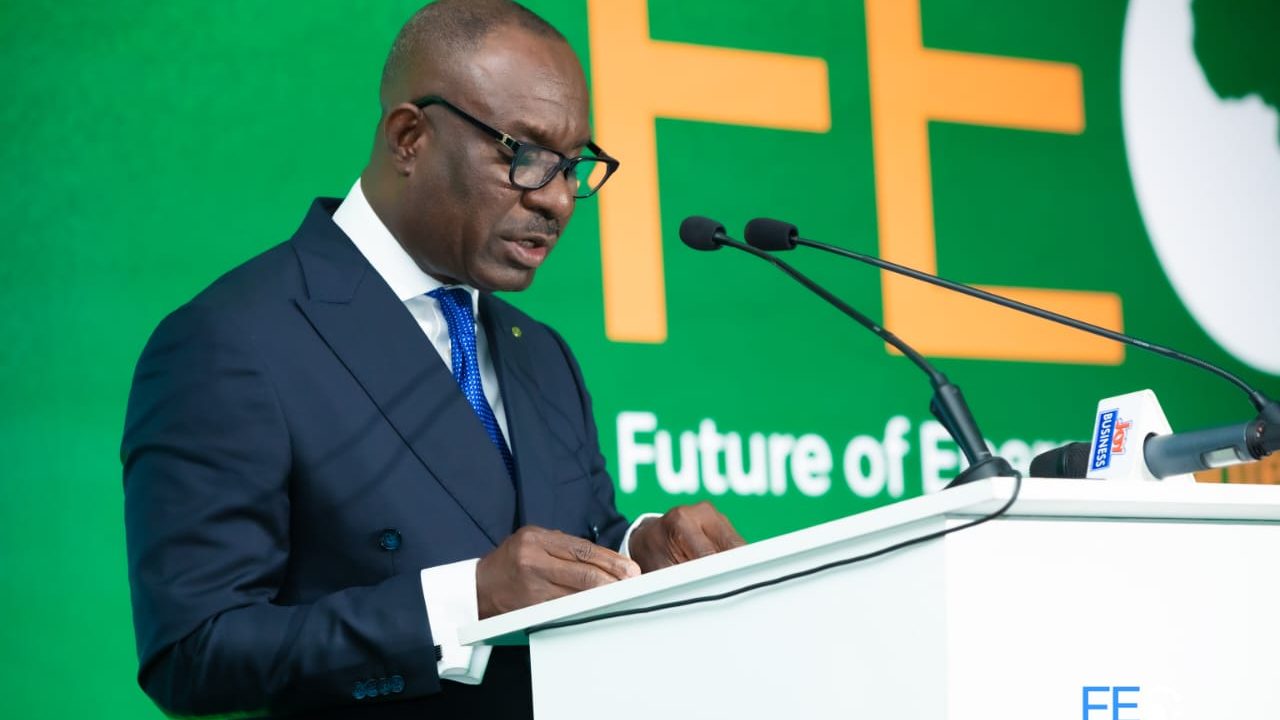
Dr George Nana Agyekum Donkor, President of the ECOWAS Bank for Investment and Development (EBID), delivered a stern warning at the Future of Energy Conference 2026 in Accra: Africa's industrialisation ambitions will remain elusive without adequate, reliable and affordable energy. He pointed out that Africa has supplied the world with raw materials for decades, importing finished products at significantly higher costs, constraining value addition, job creation and economic transformation on the continent.
Africa's Energy Woes Hamper Industrialisation
Dr Donkor said that Africa has lit up other continents while over 600 million of its own people remain in darkness. "Africa cannot industrialise in the dark," he stated, highlighting the need for deliberate policymaking, stronger coordination and substantial investment in energy infrastructure. He stressed that no industrial revolution could take off without a robust and dependable energy system capable of supporting manufacturing and other productive sectors.
A $25 Billion Annual Investment Gap
The African Development Bank (AfDB) estimates that Africa requires about $25 billion annually to achieve universal access to electricity. Dr Donkor said that EBID, recognising energy as central to Africa's industrialisation, has committed more than $1 billion of its resources across the energy value chain as of June 2026. The bank's Growth, Resilience and Optimisation Strategy aims to commit a minimum of $2 billion to the energy sector by 2030.
A Four-Pronged Approach to Addressing Africa's Energy Deficit
Dr Donkor proposed a four-pronged approach to addressing Africa's energy deficit and creating the foundation for industrialisation. This includes strengthening national and regional grid systems, deploying large-scale renewable energy systems, exploiting domestic natural gas resources and expanding embedded generation capacity within industries. He said that effective industrialisation in Africa requires a mixed energy system consisting of reliable electricity, renewable energy, natural gas, regional power pools and distributed energy solutions.
Minerals to Industrial Value Chains
The Africa Mineral Development Centre (AMDC) also underscored the need for Africa to move beyond the extraction and export of raw minerals and develop industries capable of converting its vast natural resources into higher-value products. Interim Director-General Claudine Sigam said that Africa already possesses many of the mineral resources required to participate meaningfully in the global energy transition. She emphasised that the key challenge is to develop the energy, industrial capacity, skills and markets required to transform those resources into materials, competitive enterprises, jobs and sustainable prosperity.
A Call to Action
The Future of Energy Conference 2026, held in Accra, brought together experts and policymakers to discuss the theme "Powering Africa's Industrial Transformation: Energy Systems for Value Addition and Competitiveness". Dr Donkor's warning serves as a reminder that Africa's energy woes are a major obstacle to its industrialisation ambitions. The continent's energy deficit is a pressing issue that requires immediate attention and investment. With the African Development Bank estimating that $25 billion is needed annually to achieve universal access to electricity, the scale of investment required to close the continent's energy deficit is substantial. As Dr Donkor noted, Africa cannot industrialise in the dark – it is time for a concerted effort to address the energy deficit and create a brighter future for the continent.
Source: Joy Online