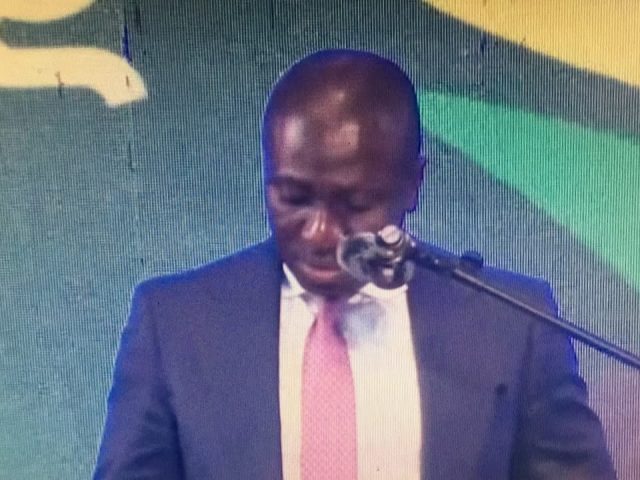
Former Finance Minister Dr Mohammed Amin Adam says the current GH¢2 subsidy on diesel is a temporary fix that falls short of the broader relief measures his party, the New Patriotic Party (NPP), put in place during past fuel price surges.
In a Facebook post on Sunday, September 27, Dr Amin Adam compared the current intervention by the National Democratic Congress (NDC) government with earlier actions taken by the NPP to ease the burden on consumers. He said the NPP’s approach included abolishing the excise tax on fuel and cutting the Special Petroleum Tax twice—from 17.5% to 15%, then down to 13%.
He also pointed to the switch of the Special Petroleum Tax from an ad valorem tax, which is based on the value of the fuel, to a specific tax, which charges a fixed amount per litre. Additionally, the Petroleum Stabilisation and Recovery Levy was zero-rated for long periods under the NPP administration.
“These measures were not merely temporary interventions because they were backed by legislation and their fiscal effects were absorbed through the national budget,” Dr Amin Adam wrote.
He cited the NPP’s Gold for Oil programme as another example of a lasting policy that helped lower fuel prices after they had passed GH¢20 per litre. Dr Amin Adam described the initiative as “revolutionary” because it secured petroleum products while easing some of the foreign exchange pressure involved in importing fuel. He previously chaired the Gold for Oil initiative.
By contrast, Dr Amin Adam said the current GH¢2 relief on diesel is “temporary and worse of all, it is quasi-fiscal as it only cut margins for BOST and UPPF weakening the petroleum sector resilience.” BOST is the Bulk Oil Storage and Transportation Company, and UPPF refers to the Unified Petroleum Pricing Fund.
He suggested the government should explore more far-reaching measures to provide lasting relief to consumers.
Fuel prices in Ghana have been a hot topic over the past year, with pump prices rising sharply due to global energy market swings and local tax policies. The current NDC government introduced the GH¢2 subsidy on diesel to ease the impact on transporters and industries.
Dr Amin Adam’s critique reflects ongoing debates about how best to balance consumer relief with fiscal sustainability and the health of the petroleum sector. The NPP’s approach relied on legislative changes that reduced taxes and levies, while the NDC’s current subsidy cuts margins from key state-related petroleum entities.
The Gold for Oil programme, initiated under the NPP, aimed to trade gold for crude oil supplies, helping to reduce fuel import costs and ease foreign exchange demands. This programme was credited with temporarily stabilising fuel prices when they hit record highs.
Dr Amin Adam’s comments come as Ghana continues to wrestle with inflationary pressures and the fiscal strain of subsidies. His perspective adds to the discussion on whether short-term price cuts like the GH¢2 diesel relief can offer meaningful support without threatening the petroleum sector or the national budget.
According to Joy Online.