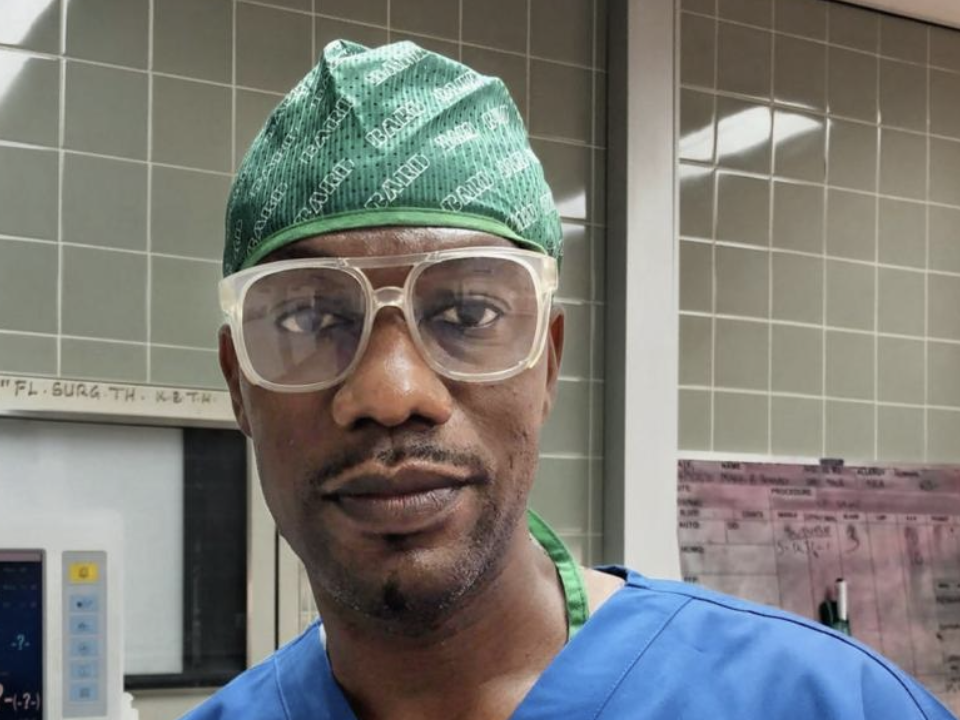
For the first time in a public hospital in Ghana, six patients with brain aneurysms have undergone surgery thanks to support from the Ghana Medical Trust Fund (GMTF). The cost of treating a brain aneurysm by coiling ranges from US$15,000 to US$20,000, an amount beyond the reach of many patients, according to neurosurgeon Dr Hadi Mohammed Abdallah of Korle Bu Teaching Hospital.
Dr Abdallah has treated more than 10 patients supported by the Fund since it began operating a year ago. He said the Fund’s support has not only saved lives but also eased a heavy psychological burden on patients and doctors alike.
Before the Fund’s intervention, patients diagnosed with brain aneurysms faced what Dr Abdallah described as “mental torture” living with the knowledge that they were a “walking time bomb.” The fear that a blood vessel could rupture at any time weighed heavily on their minds. In one emergency case, the Fund stepped in to cover treatment costs, allowing surgery to proceed without delays.
The Fund has also helped patients with brain tumours, including pituitary tumours that can cause blindness and death if untreated. “Without financial support, some patients could wait months or even years trying to raise money for surgery,” Dr Abdallah said. By the time they could afford treatment, some had lost their sight or faced fatal risks from tumour growth. The Fund has given these patients a chance to regain their sight and life.
Beyond the patients, Dr Abdallah says the Fund addresses a less visible problem: the mental strain on doctors. He explained how doctors often diagnose patients early and know timely treatment can help, but must watch as patients return later in worse condition because they could not afford surgery. “That can be depressing,” he said.
When families run out of money, doctors and hospital staff sometimes contribute from their own pockets or organise collections among colleagues. This emotional toll extends beyond the hospital into doctors’ personal lives. They often go home thinking about patients who might have had better outcomes if treated sooner. When this happens repeatedly, it affects their mental health.
“That is why the emergence of GMTF represents a different kind of relief for doctors,” Dr Abdallah said. “The fact that I don’t have to dip my hands into my pocket to do round collection to save a patient, I think it is great.” The Fund restores confidence among healthcare workers that patients can receive necessary treatment without doctors shouldering the financial burden.
Dr Abdallah expressed optimism that as the Fund grows, more complex surgeries can be performed in public hospitals and treatment outcomes will improve to levels seen in developed healthcare systems.
For the patients helped by the Ghana Medical Trust Fund, the support may mean a new start. For the doctors who care for them, it is a relief from an invisible burden. As Dr Abdallah put it: “Our mental health is restored, courtesy of the Ghana Medical Trust Fund.”
According to Joy Online.