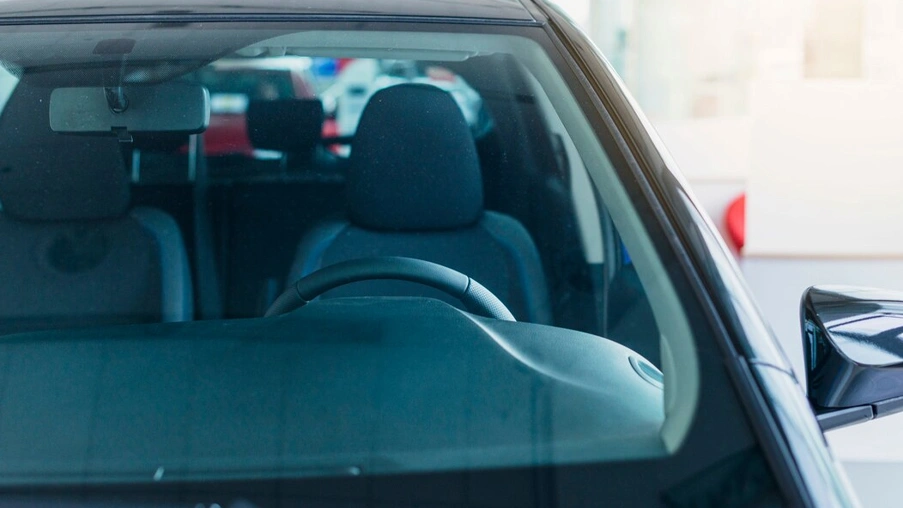
The Ghana Police Service has renewed its warning against tinting front windscreens on vehicles, saying it is illegal and compromises driver visibility. ACP Alexander Obeng, Director of Education, Research and Training at the Motor Traffic and Transport Department (MTTD), made the comments on Monday, September 28, during an interview on Joy SMS.
He said front windscreens must stay clear to ensure drivers have an unobstructed view of the road. “As for the front-looking glass, there shouldn’t be any tint on it. It is against the law,” ACP Alexander said. He added that vehicle owners cannot justify tinting their front windscreens for personal preference or based on their vehicle type. “Those who are listening to me, if you have your vehicle, it doesn’t matter. It cannot be any excuse. The standard is what we have mentioned in Ghana.”
The rule aims to guarantee that drivers can clearly see other road users and keep full control of their vehicles. “The law says clearly that anytime you are driving, you should have full visibility of traffic and full control of the vehicle,” he explained. “The eye should see and be seen. You should clearly see through the windscreen to observe all traffic that is receding or approaching.”
ACP Alexander also pointed out that clear front windscreens allow drivers to monitor traffic behind them via their mirrors. “It should also allow you to have a free view of the rear of the vehicle with the driving mirrors,” he said.
While tinting is banned on front windscreens, the police allow tinting on side and rear windows but with conditions. The tint must permit at least 70 per cent light transmission. “When you are in the vehicle, even the windows that have glass should allow 70 per cent light transmission into the vehicle,” he said. “Even if you want to put tint, it should allow anybody by the roadside, 60 metres away, to see you. So, your tint should allow 70 per cent light transmission.”
This rule also serves public security by keeping the inside of vehicles visible from outside. “It is also about ensuring that there is transparency and accountability, and also enhancing public security on our roads,” ACP Alexander said. “It cannot be all black and you cannot see anything. It is against the law.”
The police urged motorists with tinted front windscreens to remove the tint immediately to comply with the law. “Those who have put these tint materials on their vehicles, you better advise yourselves, particularly those who have also tinted their front-looking windscreen,” ACP Alexander cautioned.
This reminder comes amid ongoing efforts by the Ghana Police Service to enforce traffic regulations more strictly. The ban on front windscreen tinting remains part of their strategy to reduce accidents caused by poor driver visibility and improve road safety across the country.
According to Joy Online.