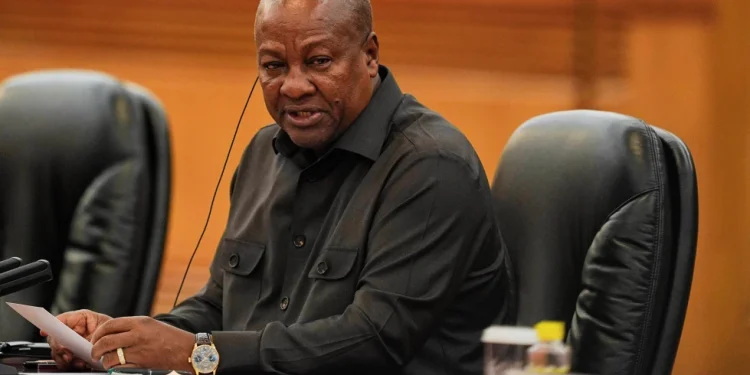
President John Dramani Mahama has rejected a proposed health compact from the United States, saying the terms were unacceptable and humiliating. The agreement was meant to replace some health funding previously provided through USAID but raised serious concerns for Ghana’s Ministry of Health and Cabinet.
Speaking at the Council on Foreign Relations in New York, Mahama said the Ministry of Health reviewed the compact before it reached Cabinet and found several problematic provisions. One required Ghana to share its pathogen profile and medical records with the United States. “Who takes another country’s medical records?” the President asked. This demand alone was enough to raise red flags.
The compact also asked Ghana to commit a certain amount of counterpart funding. More controversially, it included a clause that medicines and medical products supplied under the programme would not be subject to inspection by Ghana’s Food and Drugs Authority (FDA). This undercut Ghana’s regulatory authority over health products entering the country.
“These conditions led to Cabinet’s decision to reject the agreement,” Mahama said. “It was humiliating. I’ve never seen anything thrown out as fast as that.” The compact was rejected “in record time” after being considered.
After the decision, the Minister of Health was directed to inform the US Ambassador to Ghana. Mahama explained that Ghana would instead focus on strengthening its own health financing and production capacity, while still engaging with international partners.
The rejection follows the withdrawal of US health and development assistance, which Mahama linked to the launch of the Accra Reset initiative. He said the withdrawal created a significant funding gap for Ghana’s health sector and exposed the risks of relying too much on external funding.
Through the Accra Reset, Mahama has pushed for greater health self-reliance. This includes stronger local production of medicines and vaccines, better research capacity, and health systems less dependent on foreign aid.
At a separate Accra Reset event in New York, Mahama launched a report titled A Sovereign Future for Health. The report offers recommendations to strengthen health systems in the Global South and reduce dependence on external funding.
The President emphasized that Ghana does not want to isolate itself from international partners. Instead, it wants relationships based on more equal and sustainable terms.
The US health compact was part of a new round of bilateral health agreements following the restructuring of US foreign aid. Ghana was one of several African countries to raise concerns over aspects of these new arrangements.
Mahama’s refusal to accept the compact signals a growing push by Ghana to assert control over its health data, financing, and regulatory decisions. It also reflects frustration with conditions attached to foreign assistance that some see as infringing on national sovereignty.
The rejection comes at a time when Ghana is trying to reduce its dependence on external donors while maintaining international ties. How this balance will play out remains to be seen, but the decision shows Ghana is willing to draw firm lines.
According to Joy Online.