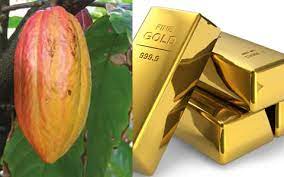
Ghana’s plan to build up its foreign reserves and gold stocks could cost the country up to 2.6% of its GDP by 2026, according to a warning from S&P Global. The US-based credit rating agency says the Ghana Accelerated National Reserves Accumulation Program (GANRAP) will push the government to spend heavily in local currency, despite the gold sector’s role in growing reserves.
S&P Global estimates the annual cost of the reserves buildup could range from 0.8% to 2.6% of Ghana’s GDP. The agency also points to the Bank of Ghana’s worsening financial position. It expects the central bank to record an operating loss of $1.25 billion in 2025, pushing its negative equity to 6.7% of GDP.
In response, the government has started a phased capital restoration plan for the Bank of Ghana, which will run until 2032. S&P Global says this recapitalisation will likely require the issuance of more government debt.
The government is also reforming the gold sector’s regulatory and tax policies. It is moving towards a dynamic sliding-scale royalty model, aiming to reduce the fiscal costs linked to gold production. However, S&P cautions that external shocks, such as rising international fuel prices caused by the Middle East war, will reduce the expected fiscal gains from these reforms.
Inflation has dropped sharply in recent years, from a peak of 54.1% in December 2022 to 5% in August 2026. But prices have started moving upward again in recent months. S&P notes that the Ghanaian economy has shown relative resilience to the economic fallout from the Middle East conflict. Still, rising input costs, mostly from higher fuel and transport prices, are beginning to have an impact.
The Bank of Ghana’s financial troubles reflect the wider challenges facing the economy. A loss of $1.25 billion in 2025 signals significant strain on the central bank’s balance sheet. The negative equity amounting to 6.7% of GDP adds pressure on the government to shore up the bank’s capital.
The GANRAP program aims to increase Ghana’s foreign reserves, which can help stabilise the currency and provide a buffer against external shocks. But S&P’s report suggests this strategy has a high price. The cost in local currency terms could erode some of the recent gains the government has made in improving public finances.
The shift to a sliding-scale royalty model for the gold sector is one way the government hopes to manage costs. The move could lower the fiscal burden from the mining industry. Still, the global rise in fuel prices, partly caused by the ongoing conflict in the Middle East, threatens to offset some of these savings.
Inflation’s sharp drop from over 54% at the end of 2022 to 5% by August 2026 is a major turnaround. Yet the recent uptick in prices shows the economy is not out of the woods. Rising fuel and transport expenses are increasing costs for businesses and consumers alike.
S&P Global’s analysis paints a picture of an economy that is weathering external shocks but facing serious challenges from its own policies. The balance between building reserves and managing fiscal health will test Ghana’s financial resilience over the coming years.
According to Joy Online.