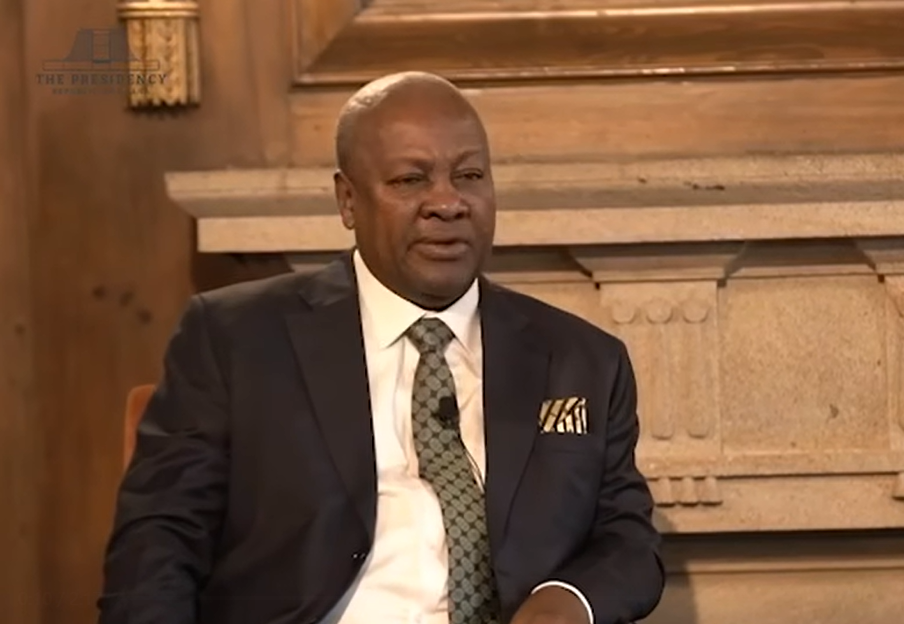
President John Dramani Mahama said Ghana’s Cabinet rejected the United States health compact almost immediately after flagging demands that were unacceptable to the government.
Speaking on September 25, 2026, at the Council on Foreign Relations in New York, Mahama explained that the compact was offered to replace funding Ghana lost when USAID support ended. But the Health Ministry’s review raised serious concerns.
The compact demanded that Ghana hand over its pathogen profile, meaning data on diseases endemic to the country. “What is the pathogen profile of a country? I’m sure there are medical experts who understand that better than me,” Mahama said. He also pointed to a requirement that Ghana provide its citizens’ medical records. “I mean, who takes another country’s medical records? And so that was strange,” he added.
Beyond data demands, the agreement required Ghana to contribute a certain amount of money to the programme. It also barred the Food and Drugs Authority from inspecting any medicines or medical products brought into Ghana under the compact’s provisions.
Mahama described these conditions as “humiliating.” “I mean, it was humiliating. And so it was the compact that was thrown out in record time in our cabinet. I’ve never seen anything thrown out as fast as that. And so, of course, we rejected it.”
Following the Cabinet’s decision, the Health Minister was tasked with informing the US Ambassador that Ghana did not need the compact.
The US health compact was meant to fill the gap left by the end of USAID support. But these demands on pathogen data, medical records, financial contributions, and inspections clearly crossed a line for the Ghanaian government.
Mahama’s remarks shed light on sensitive issues around national sovereignty and data privacy in international health agreements. The quick rejection suggests Ghana will look for other ways to support its health sector without compromising control over its own medical information.
The episode also raises questions about how donor countries structure health funding and what terms they attach. Ghana’s firm stance may influence future negotiations on similar agreements elsewhere.
According to Joy Online.