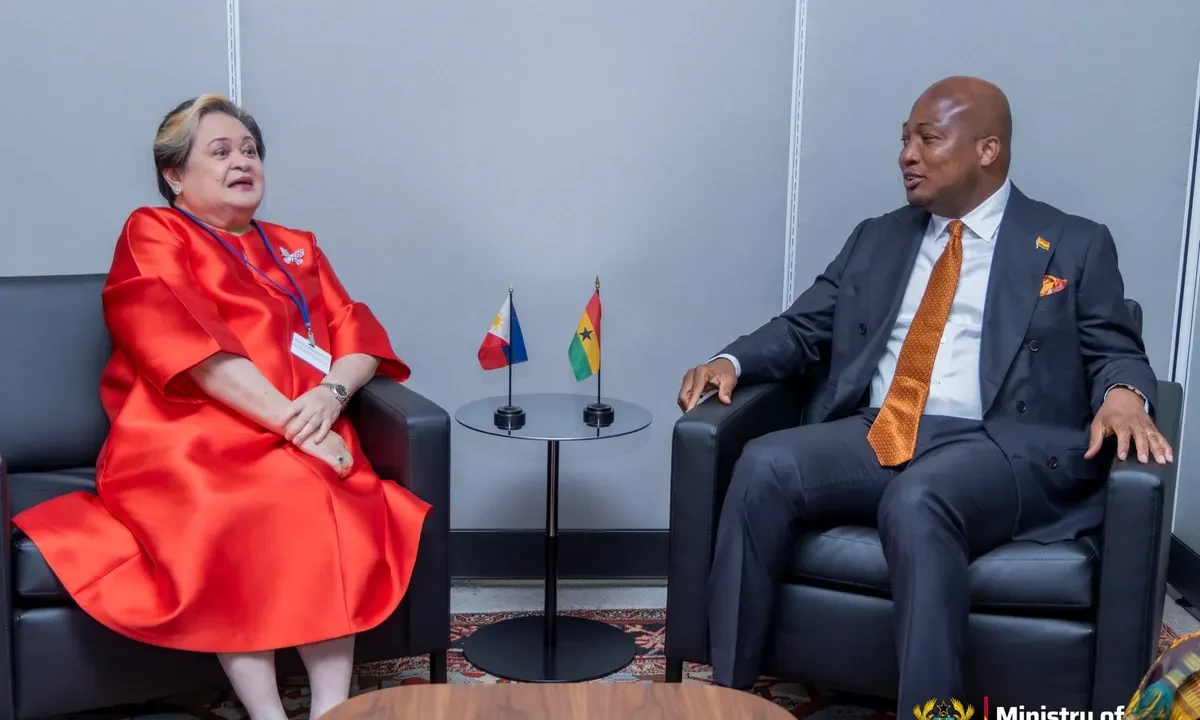
The Philippines will open its first embassy in Ghana later this year, a move that signals a new phase in relations between the two countries. This announcement came during a meeting in New York between Ghana’s Minister of Foreign Affairs, Samuel Okudzeto Ablakwa, and the Philippines’ Secretary of Foreign Affairs, Her Excellency Ma. Theresa P. Lazaro.
Mr Ablakwa expressed Ghana’s appreciation for the decision to establish an embassy in Accra, describing it as a positive development in the "cherished bilateral relations" between the two nations. The meeting took place on the sidelines of the United Nations General Assembly (UNGA) this month.
The two officials agreed to deepen cooperation in trade and investment. Plans include convening business forums in both Ghana and the Philippines and setting up a chamber of commerce to support private sector engagement. Mr Ablakwa also said they would exchange ideas and expertise on labour mobility agreements, which could affect the movement of workers between the two countries.
In a post on his X page, Mr Ablakwa wrote, "We also agreed to exchange ideas and expertise on labour mobility agreements." He invited Ms Lazaro to visit Ghana soon to advance these areas of cooperation. He said he looked forward to hosting her in Accra.
The opening of a Philippine embassy in Ghana will be the first in the country’s history. The move suggests a growing interest in strengthening diplomatic and economic ties with West Africa. Ghana, on its part, has been expanding its international partnerships to support economic growth and job creation.
Labour mobility agreements can have a significant effect on both countries’ workforces. Ghana has a large pool of skilled and unskilled workers, while the Philippines is known for its overseas workers worldwide. Cooperation on labour mobility could create new opportunities for migrants and employers in both countries.
The two countries have not specified when the embassy will open or the details of the labour arrangements. Mr Ablakwa’s remarks suggest that discussions on these matters will continue in the coming months.
Trade between Ghana and the Philippines has been limited but shows room for growth. Both governments want to encourage business contacts and investment flows. Setting up a chamber of commerce could help companies explore new markets and partnerships.
This meeting took place during the high-profile UNGA, where world leaders discuss global issues. Bilateral talks on the sidelines often result in agreements that do not get wide attention but can have concrete effects.
Mr Ablakwa’s invitation to Ms Lazaro to visit Ghana signals a desire to move quickly on these initiatives. A high-level visit could help formalise agreements on trade, investment, and labour cooperation.
Both Ghana and the Philippines are middle-income countries with growing economies. Closer ties could help each country tap into new markets and labour pools to support development goals.
The new embassy and planned agreements mark a practical step in expanding Ghana’s global connections beyond traditional partners. It shows how countries engage on multiple fronts, from trade to migration, to build new relationships.
As these plans take shape, Ghana and the Philippines could become closer partners in West Africa and Southeast Asia, respectively. The effects of these agreements will depend on how quickly both sides implement the business forums, chamber of commerce, and labour mobility cooperation they discussed in New York.
According to 3News.