

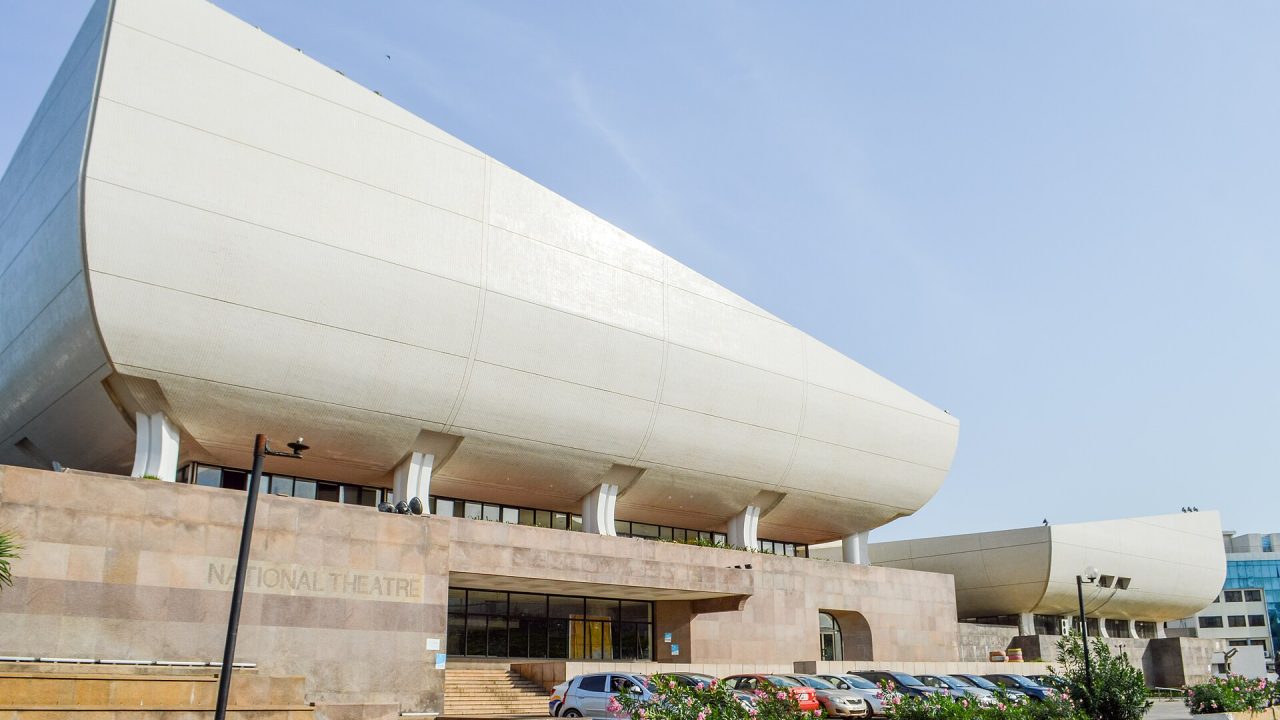
Work on Ghana’s National Theatre began on 8 March 1990. It opened on 30 December 1992, and it did not look like anything else in Accra.
The building, at the junction of Liberia Road and Independence Avenue, rises in white curves that many visitors say look like a ship under sail. It was built by China and handed to Ghana as a gift, one of the most visible symbols of Chinese-Ghanaian relations for three decades.
The design
The architects were Cheng Taining and Ye Xianghan. Their design draws on the curved roofs of Chinese architecture and adds a flowing, wave-like form. Inside, the main auditorium has stepped seating and an undulating ceiling with lighting set into its openings.
The complex includes the main hall, an exhibition hall and rehearsal spaces. It is home to the National Dance Company, the National Symphony Orchestra and the National Drama Company, and it hosts concerts, plays, award shows and cultural events.
What it gave Ghana’s arts
Before 1992, Accra had no purpose-built national venue of this scale for the performing arts. The theatre became the stage for landmark productions and for popular programmes that drew large audiences, including long-running comedy and concert series. For many Ghanaian performers, playing the National Theatre marked a career milestone.
Its forecourt and grounds also became part of city life, used for fairs, exhibitions, film screenings and gatherings, and it sits a short walk from the Arts Centre, where visitors buy crafts and artworks.
Wear and tear
Three decades of heavy use and limited maintenance took their toll. Leaks, ageing equipment and worn facilities became a regular complaint from performers and audiences. In December 2025, China committed 30 million dollars to renovate the building, and Chinese technical teams visited to assess the work needed.
A building people use as a landmark
Taxi drivers and tro-tro mates use “National Theatre” as a stop and a direction point. Couples take wedding photos against its white walls. School groups tour it. For a building meant for the arts, it has become part of everyday Accra geography.
Gifts and diplomacy
The National Theatre was part of a long pattern of Chinese-funded public buildings in Africa, from stadiums to government offices, that began in the post-independence era and grew sharply after 2000. In Ghana, other examples include sports stadiums and government buildings. Supporters see these projects as useful infrastructure that African governments could not easily fund alone. Critics point to maintenance problems once the buildings are handed over and to questions about the wider terms of Chinese lending. The theatre, built as an outright gift, has largely escaped the debt argument and become a point of shared pride.
It took 33 months to build. The renovation will decide whether it looks the way it did on opening night for the next thirty years.
.jpg)