The University of Ghana began on 11 October 1948 in a dining hall that belonged to another school.
That day, the University College of the Gold Coast was formally opened in the dining hall of the western compound of Achimota College, north of Accra. It had no campus of its own yet. Seventy-eight years later, the university it became spreads across the hills of Legon and is the oldest and largest in Ghana.
The Asquith Commission
The college grew out of wartime British planning for higher education in the colonies, led by the Asquith Commission. At one stage London favoured a single university college for British West Africa, to be based in Nigeria. People in the Gold Coast pushed back, arguing that the colony deserved its own institution. Their campaign won.
The college was linked to the University of London, which awarded its degrees in the early years.
The move to Legon
Construction on a new site at Legon Hill began in the early 1950s. Departments moved in gradually through the decade, and by 1960 all teaching was on the new campus. The architecture, with white-walled buildings and red-tiled roofs arranged around courtyards, gave Legon the look it still has.
The main library was established in 1959 and named after David Mowbray Balme, the college’s first principal, who led it from 1948 to 1957. The Balme Library remains one of the campus’s best-known buildings.
University of Ghana
In 1961, four years after independence, the college became the University of Ghana, with full university status and the power to award its own degrees. It expanded rapidly over the following decades, adding faculties, halls of residence and research institutes.
Legon today
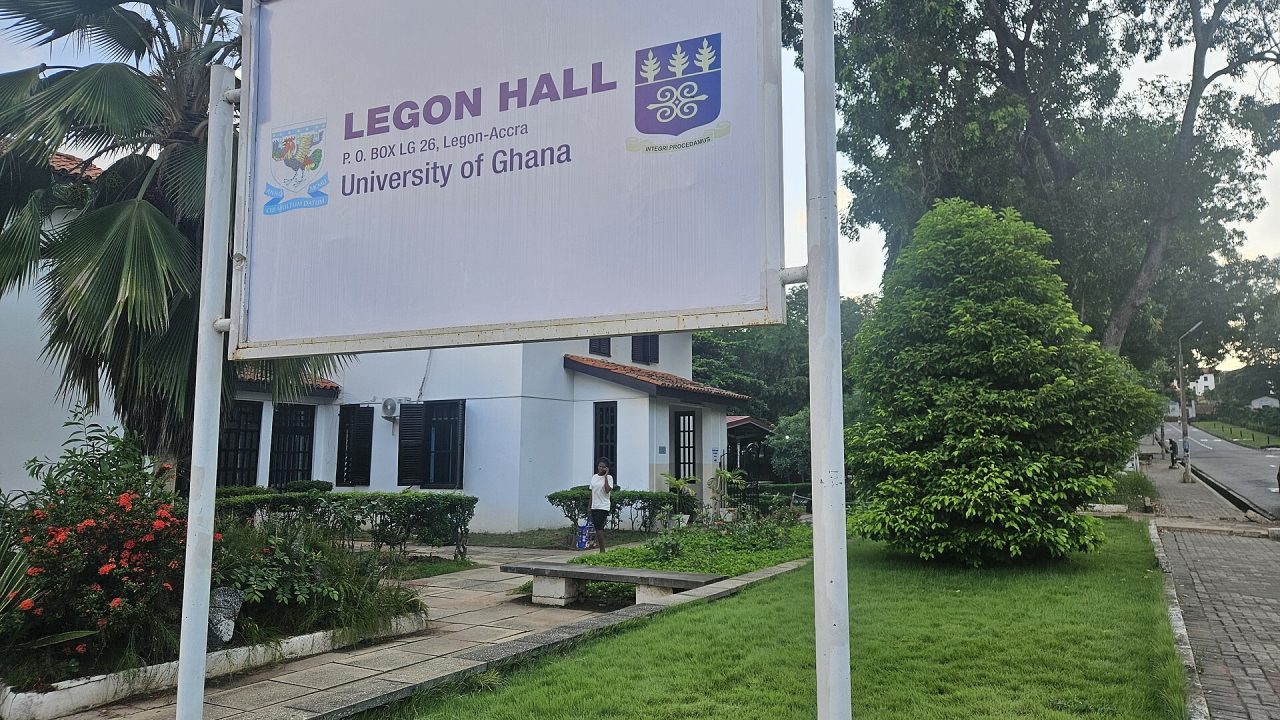
The university now enrols tens of thousands of students, runs colleges of health sciences, humanities, basic and applied sciences and education, and houses research centres including the Noguchi Memorial Institute for Medical Research. Its halls, Legon, Commonwealth, Akuafo, Volta and Mensah Sarbah among them, have their own traditions and rivalries. Commonwealth Hall’s “Vandals” are known across the country.
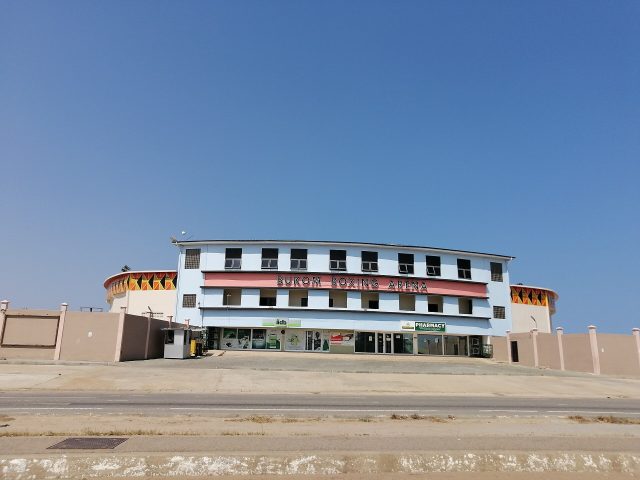
In 2024, Legon’s new sports stadium hosted the athletics and closing ceremony of the African Games.
From college to university system
The University of Ghana was the first of several public universities. The Kwame Nkrumah University of Science and Technology in Kumasi and the University of Cape Coast followed in the post-independence era, and Ghana now has a large network of public and private universities. Legon’s early graduates filled the civil service, courts and classrooms of the new state, and its alumni networks remain influential in politics and business.
Graduates of the university include presidents, chief justices, writers and scientists. The institution they graduated from began in a borrowed room at Achimota, because the colony refused to wait for a university in someone else’s country.