Drive north out of Accra for about an hour and the air changes. The road climbs onto the Akuapem ridge, and at Aburi the temperature drops enough that people pull on a jacket in the evening.
That cooler air is why the Aburi Botanical Gardens exist. The colonial government built a sanatorium on the hill in the 1870s, a place for sick officials to recover away from the heat and fevers of the coast. In 1890 the grounds around it were laid out as botanical gardens.
A garden with a job
The gardens were a working station as much as a place to walk. Colonial botanists tested crops there and raised seedlings for farmers, and the station distributed cocoa seedlings at a time when cocoa was spreading through the Akuapem hills. Cocoa went on to become the Gold Coast’s biggest export.
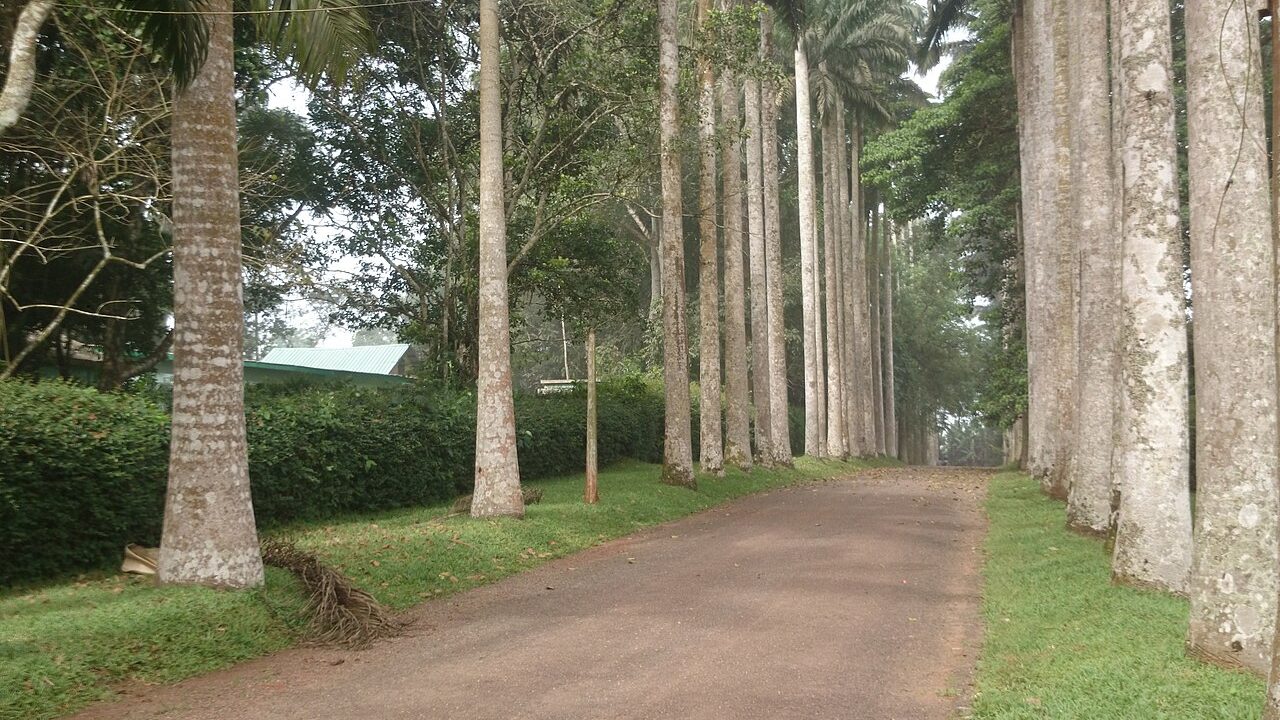
Today the gardens hold old trees, an avenue of tall palms and specimens from across the tropics. The original sanatorium building still stands at the centre. School groups, church groups and couples taking wedding photos share the lawns on most weekends.
The Aburi Accord
The town gave its name to one of the most important meetings in West African history. In January 1967, Ghana’s military leader, Lieutenant General Joseph Ankrah, hosted Nigeria’s head of state, Yakubu Gowon, and the Eastern Region’s military governor, Emeka Ojukwu, at Aburi for talks on the crisis tearing Nigeria apart.
The two sides left with an agreement, but they disputed what it meant almost at once. Ojukwu read it as a promise of a loose confederation; the federal government did not. Biafra declared secession in May 1967, and the civil war began that July. “On Aburi we stand” became a Biafran slogan.
Peduase Lodge
The talks were held at Peduase Lodge, a presidential retreat on the ridge built in Nkrumah’s time. It is still used by the presidency for meetings away from Accra.
Visiting
The gardens charge a small entry fee, with higher rates for foreign visitors. There are picnic spots, a canopy of big trees for shade and wood carvers selling along the road into town. Many visitors combine a trip with the craft village or a longer drive along the ridge to Mamfe and Akropong.
The best time to go is early in the morning, before the tour buses arrive. The mist sometimes sits in the trees until nine, and for an hour the only sound is the birds that have outlasted every government since 1890.