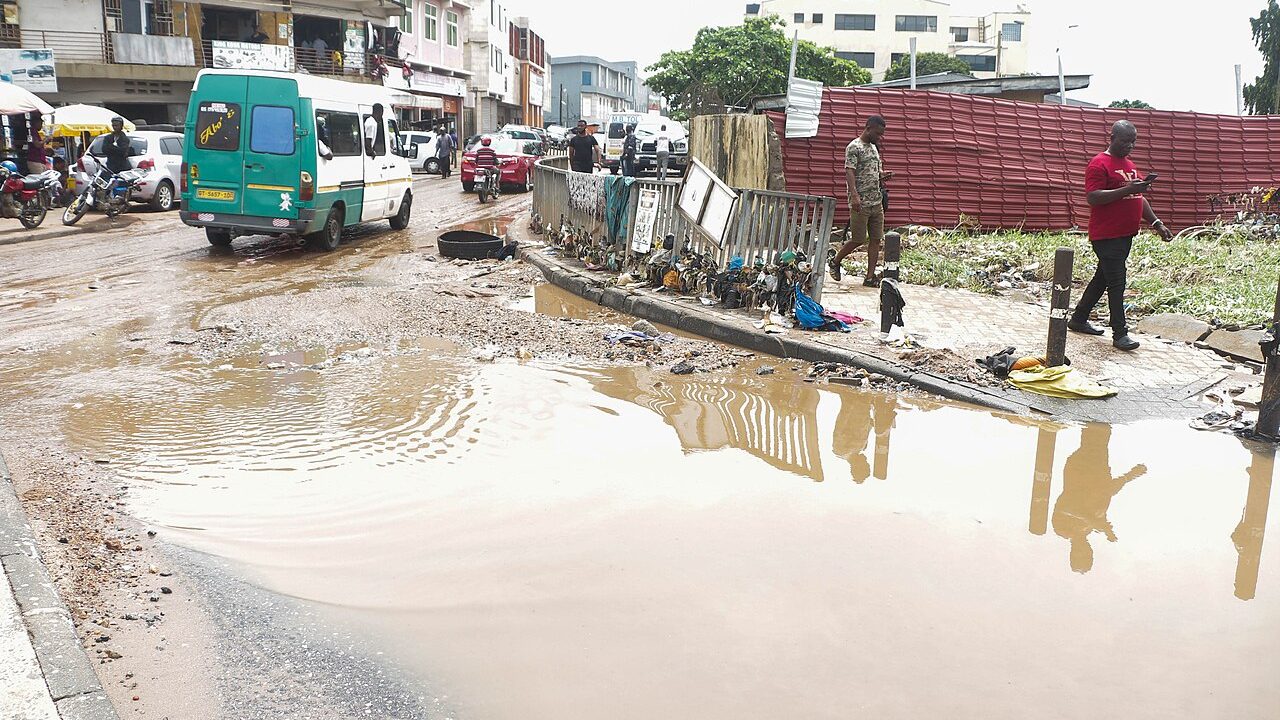
When heavy rain falls on Accra, residents of Alajo, Circle and Kaneshie watch the Odaw. If the river and its drains fill up, their streets become part of it.
The Odaw River rises in the hills to the north and flows south through the centre of the city, past the Kwame Nkrumah Interchange, into the Korle Lagoon and out to the Gulf of Guinea. Much of it has been turned into a concrete channel. For most of the year it is a slow stream. In the main rainy season, from about May to July, it can overflow within an hour.
Why the city floods
Flooding in Accra has several causes, and engineers and city officials have described them many times. The first is waste. Plastic bottles, sachet water bags and household rubbish are dumped into gutters and drains, and when the rain comes the waste blocks the flow and pushes water into streets.
The second is building. Houses, shops and kiosks have gone up on the banks of the Odaw and its tributaries and on top of drains, narrowing the channels. The third is the city’s growth: more concrete and fewer open fields mean more water runs off rather than soaking into the ground.
3 June 2015
The worst disaster linked to Accra flooding came on 3 June 2015. Heavy rain flooded the Circle area, and people sheltering at a fuel station were caught when fire broke out. More than 150 people died. The tragedy prompted promises to clear waterways and enforce building rules.
What has been tried
Governments have dredged the Odaw and the Korle Lagoon, demolished structures built on waterways and run sanitation campaigns. Each exercise brings short-term relief. Critics say the work is often done just before or during the rains, when it is already late, and that demolitions are rarely followed by lasting enforcement.
What residents do
People in flood-prone areas raise their doorsteps, build concrete barriers at their gates and move valuables onto shelves when the sky darkens. Traders at Circle store goods above floor level. Many listen to weather reports on radio and share warnings on WhatsApp.
The fix
Engineers point to a list of measures: regular dredging before the rains, better waste collection so rubbish stays out of drains, relocation of structures built on waterways and new drainage for the city’s expanding suburbs. The Korle Lagoon Ecological Restoration Project, begun decades ago, set out to fix the lagoon itself.
Accra knows what causes its floods. Each June, the city waits to see whether this year’s dredging came in time.