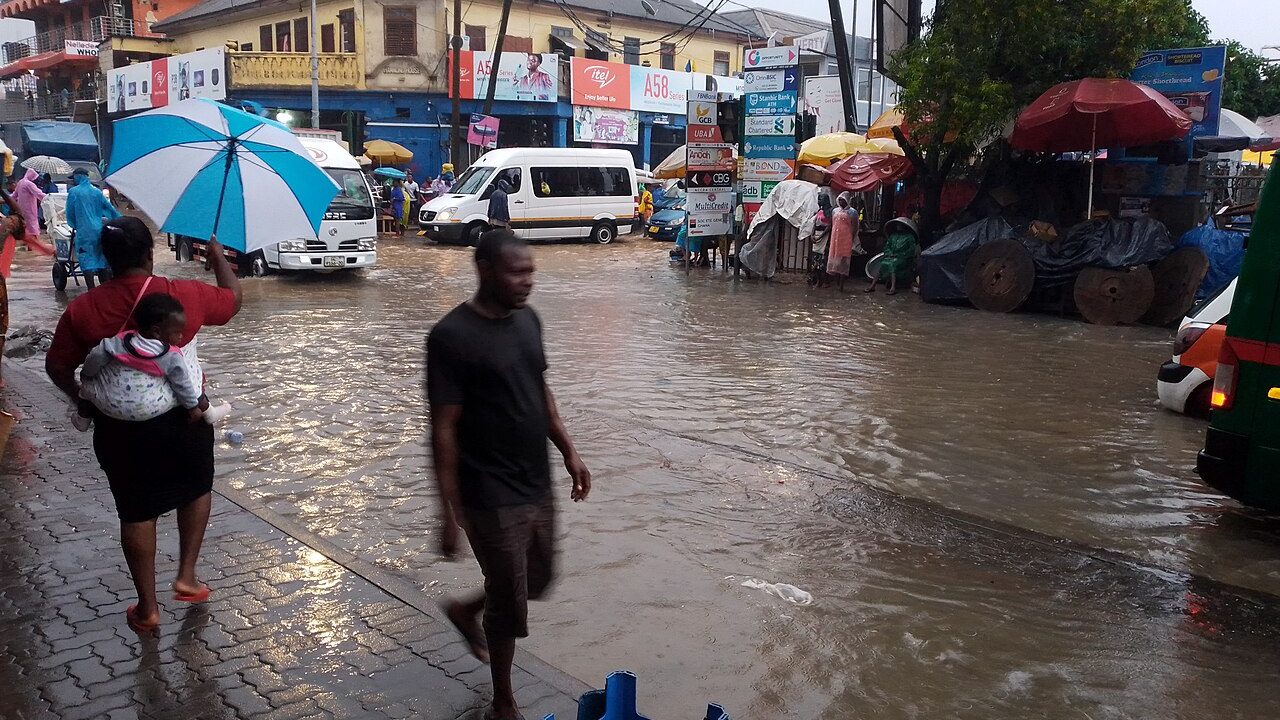
In Accra, a heavy downpour can turn roads into rivers within an hour. Drivers abandon cars, pedestrians wade through dirty water and some homes are flooded every year. Floods cannot always be prevented, but many dangers can be reduced.
Why Accra floods
Low-lying areas, blocked drains, building on waterways and waste dumped in gutters all make flooding worse. When drains such as those feeding the Odaw River are blocked, water has nowhere to go.
Before the rainy season
Clear gutters around your house and encourage neighbours to do the same. Check your roof, doors and windows. Move valuables and documents off the floor in flood-prone homes.
Know your area
Find out whether your neighbourhood has flooded before. Learn which roads flood and plan alternative routes to work, school and hospitals.
Emergency kit
Keep a small kit ready: torch, power bank, drinking water, basic medicines, copies of important documents and some cash.
During heavy rain
Stay indoors if you can. Avoid walking or driving through moving water; even shallow water can knock people over or sweep cars away. Stay away from open drains, which may be hidden under water.
Electricity
If water enters your home, switch off electricity at the main switch if it is safe to do so. Do not touch electrical equipment while standing in water.
On the road
If you are driving, pull over in a safe, high place and wait. Do not follow other cars into flooded sections. Commercial drivers may try to push through; you do not have to.
Shelter
Do not shelter at petrol stations or under structures that might be unsafe. Choose solid, raised buildings away from drains and rivers.
After the flood
Floodwater can carry sewage and disease. Clean and disinfect affected areas, throw away contaminated food and drink safe water. Watch for signs of illness such as diarrhoea and fever.
Help and reporting
Report emergencies to the National Disaster Management Organisation, the fire service or the police. Save emergency numbers on your phone before the rainy season starts.
Children and the elderly
Keep children away from drains and floodwater, which can carry them away in seconds. Check on elderly neighbours, especially those living alone in low-lying areas.
Everyone’s drain
Much of Accra’s flooding begins with a plastic bottle thrown into a gutter. The simplest flood defence is the one every household controls: keeping drains clear before the clouds gather.