
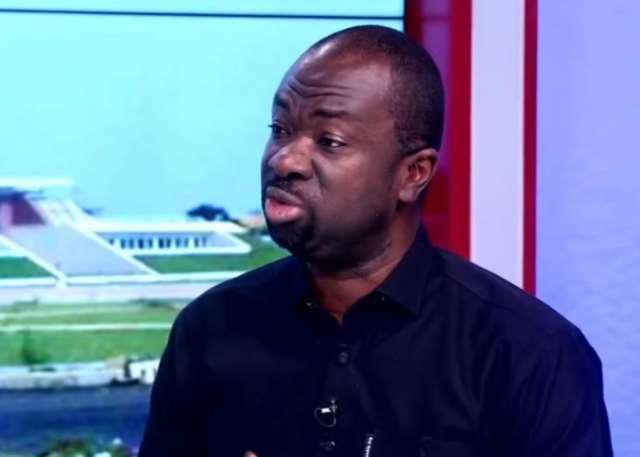
The Economic and Organised Crime Office (EOCO) does not have free rein to arrest the Manhyia South MP, Nana Agyei Baffour Awuah, anywhere despite the High Court’s issuance of an arrest warrant. Private legal practitioner Martin Kpebu clarified this on Joy FM’s Top Story on September 30, citing constitutional and parliamentary law protections.
EOCO secured the warrant after telling the Accra High Court that it had exhausted reasonable means to secure the MP’s voluntary attendance. This followed a chaotic attempt on September 23 by EOCO officers to arrest Nana Agyei Baffour Awuah at the Accra High Court itself.
Kpebu said the warrant does not override parliamentary immunity while the MP is attending, going to, or returning from Parliament. He referred to Article 117 of the 1992 Constitution and Section 21 of the Parliament Act, 1965 (Act 300), which shield MPs from arrest in those circumstances.
“No, no, no, no. Not just by themselves. They can only arrest him without going through the Speaker if the MP is not on his way to Parliament, if he is not attending Parliament, or if he is not returning from Parliament,” Kpebu said.
He recommended that EOCO follow Section 20, subsection 2 of Act 300 by sending a letter to Parliament before proceeding with the arrest. Kpebu warned that arresting the MP in sensitive settings such as at night, social events, church, or funerals could provoke further public debate.
The development comes amid a broader discussion about the limits of parliamentary immunity in Ghana. EOCO’s effort to detain the MP has generated considerable attention since the warrant was issued. The agency’s failure to secure his voluntary attendance reportedly led to the court’s decision.
The MP’s case remains active, with the dynamics between constitutional protections and law enforcement powers in focus. Kpebu’s comments underscore the legal nuances involved in arresting sitting legislators.
According to Joy Online.