Ghana’s Cabinet has approved the country’s application to join BRICS as a partner, a move that comes amid US President Donald Trump’s tariff threats targeting nations engaging with the group. Foreign Affairs Minister Samuel Okudzeto Ablakwa confirmed the decision and said he had officially informed India’s External Affairs Minister, Dr Subrahmanyam Jaishankar, seeking support from one of the bloc’s founding members.
The government intends to use the partner status as a stepping stone toward full membership. Okudzeto Ablakwa told reporters that Ghana will maintain a non-aligned foreign policy focused on national interests rather than loyalty to any bloc. He noted that Ghana’s interest in BRICS predates the current administration. A ministerial committee formed by Cabinet in 2023 had recommended joining the group.
Four of Ghana’s five largest export markets in 2025 are BRICS members: the United Arab Emirates, India, South Africa, and China. Switzerland is the only exception. The government views BRICS as a way to broaden development partnerships, attract investment, and support industrialisation.
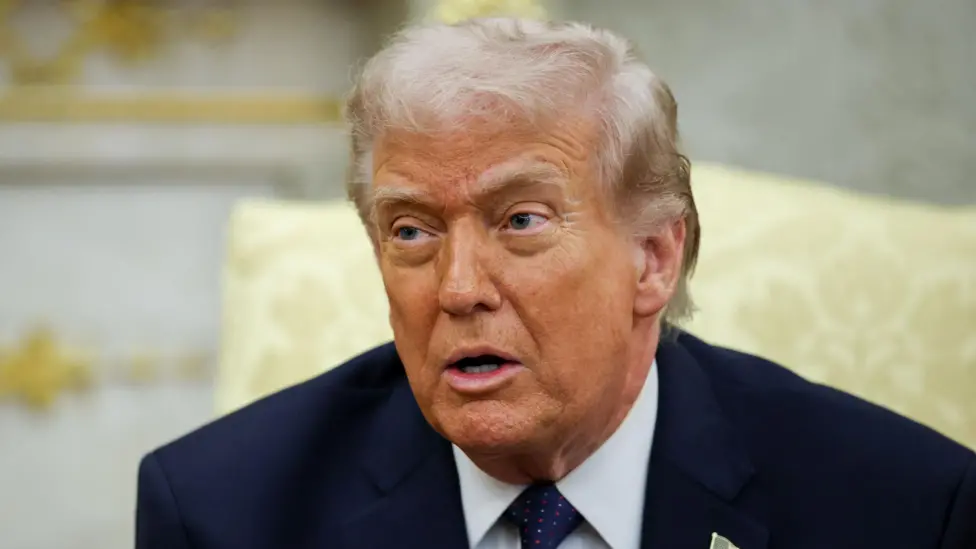
Ghana’s decision arrives amid Trump’s repeated warnings since November 2024. Before returning to office, Trump threatened 100% tariffs on BRICS countries if they created or supported a currency to replace the US dollar. He reiterated this threat on January 30, 2025, after taking office.
In July 2025, Trump added a new warning on social media: “Any country aligning themselves with the Anti-American policies of BRICS, will be charged an ADDITIONAL 10% tariff. There will be no exceptions to this policy.” Trump did not clarify what defines “anti-American” policies. A US administration source later told Reuters that the 10% tariff would depend on specific policy actions rather than apply automatically based on membership.
These two warnings have different conditions. The 100% tariff threat is linked solely to attempts to replace the dollar, while the 10% tariff is broader and tied to policies Washington deems hostile. Neither automatically applies to countries seeking BRICS partner status.
The question of currency dependence has taken on new weight in Ghana. The Bank of Ghana Governor, Dr Johnson Asiama, revealed that Stanbic Bank is piloting a new payment system allowing Ghanaian businesses to pay Chinese suppliers directly in yuan, bypassing the US dollar. GCB Bank is preparing a similar arrangement. This system uses China’s Cross-Border Interbank Payment System. Payments can be initiated from Ghana cedi accounts, with suppliers receiving yuan. Established channels for dollar payments remain available.
This new payment route could simplify trade and reduce currency conversions. Whether it lowers costs depends on exchange rates and fees. The arrangement raises questions about how Washington might interpret Ghana’s move to reduce dollar reliance alongside its BRICS bid.
Using yuan in trade does not necessarily indicate support for replacing the dollar, and no US government statement has classified Ghana’s new payment system as grounds for tariffs.
Trade concessions involving China add complexity. China offers zero tariffs on many Ghanaian exports, improving access to its market. But in October 2025, Fredrick Amissah, Technical Advisor to Ghana’s Finance Minister, said Ghana had offered to eliminate tariffs on fewer than 150 Chinese products, citing World Trade Organisation rules and reciprocity between developing countries.
It remains unclear which products Ghana has offered tariff concessions on or whether these have taken effect. The Chinese ambassador said in November 2025 that China’s zero-tariff policy does not require reciprocal concessions from Ghana, suggesting the government needs to clarify its stance.
The selection of products matters. Cheaper machinery and raw materials could help Ghanaian businesses reduce costs and expand production. Cheaper finished goods could benefit consumers but might pressure local manufacturers competing with imports. Increased imports could deepen reliance on foreign production unless investment stimulates local industry.
Ghana hopes that BRICS partner status will attract investment that benefits local firms and workers. But partnership or membership alone does not guarantee industrial growth or job creation.
For now, Ghana moves forward with BRICS partner status while maintaining its non-aligned foreign policy. Trump’s tariff threats predate the decision, and whether the US will apply them to Ghana remains unclear. The government faces the task of explaining its expectations and managing potential trade risks.
According to Joy Online.