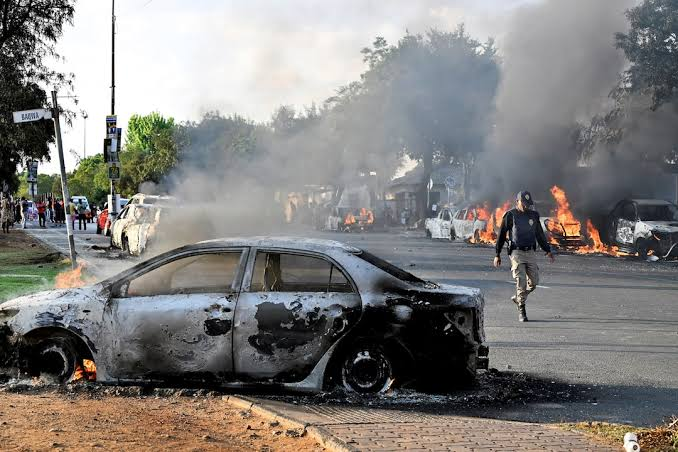
South Africa’s Department of Home Affairs reversed a recent directive on asylum applications a day after violent anti-migrant protests erupted in Johannesburg and Durban. The protests saw 14 vehicles torched in Durban and 10 in Soweto, alongside looting of foreign-owned shops. Authorities said calm had returned by Friday.
The withdrawn directive aimed to implement a July 7 Constitutional Court ruling that asylum seekers could not be refused entry to South Africa’s asylum system on procedural grounds, including illegal entry. Home Affairs described the directive as an operational measure but said its rapid implementation overwhelmed refugee reception offices and placed officials and public safety at risk.
The protests followed a surge in anti-immigrant sentiment across South Africa, where migrants are often blamed for unemployment, crime, and strained public services. The government has attributed some of the unrest to disinformation regarding the court ruling, stressing that it did not automatically grant refugee status or permanent residence to undocumented migrants.
Lieutenant General Puleng Dimpane, a senior police official, spoke at a press briefing in Soweto near the remains of the burnt vehicles. She confirmed that calm had returned to the area after the unrest on Thursday. Robert Netshiunda, a police spokesperson in Durban, said a swift police response had stabilised the situation and prevented further damage.
The violence has strained South Africa’s relations with other African countries and forced thousands of foreign nationals to flee affected areas. The government faces pressure to manage rising xenophobic tensions that have repeatedly flared up in the country’s major urban centres.
The Constitutional Court ruling challenged previous restrictions that rejected asylum seekers on procedural technicalities, widening access to the asylum system. However, the immediate operational impact proved difficult to manage, leading to the reversal of the directive within days.
The protests revealed underlying social tensions around migration and economic hardship, but South African officials remain firm that asylum seekers do not gain automatic legal rights through the court’s decision. The government continues to grapple with balancing legal obligations and public order amid growing unrest.
Authorities in Johannesburg and Durban have since increased security measures to prevent further outbreaks of violence. The situation remains tense, with communities on edge after the rapid destruction and looting that unfolded over two days.
The withdrawal of the directive signals a cautious approach by Home Affairs as it reassesses how to implement the court ruling without further destabilising public safety.
According to Joy Online.