Adabraka was planned as an escape valve. In 1908, as the colonial capital’s boundaries were pushed outwards, the authorities set aside land north of the old town as a neighbourhood for the African population, to relieve congestion in James Town and Ussher Town. More than a century later, Adabraka is one of the busiest districts in central Accra.
The name
There is no settled written history of the name. A popular local tradition traces it to the Arabic phrase “al baraka”, meaning blessing, through a story about a trader who invoked God’s blessing while bargaining over a price. It is a tale passed on in conversation rather than a documented fact, but it fits a neighbourhood that has always been a trading area with a strong Muslim presence.
A planned district
Unlike the tangled lanes of Ga Mashie, early Adabraka was laid out on a grid. Its streets ran in straight lines, and plots were allocated for houses. Over time the grid filled with family homes, shops and workshops, and the original plan became harder to see under layers of building.
Close to everything
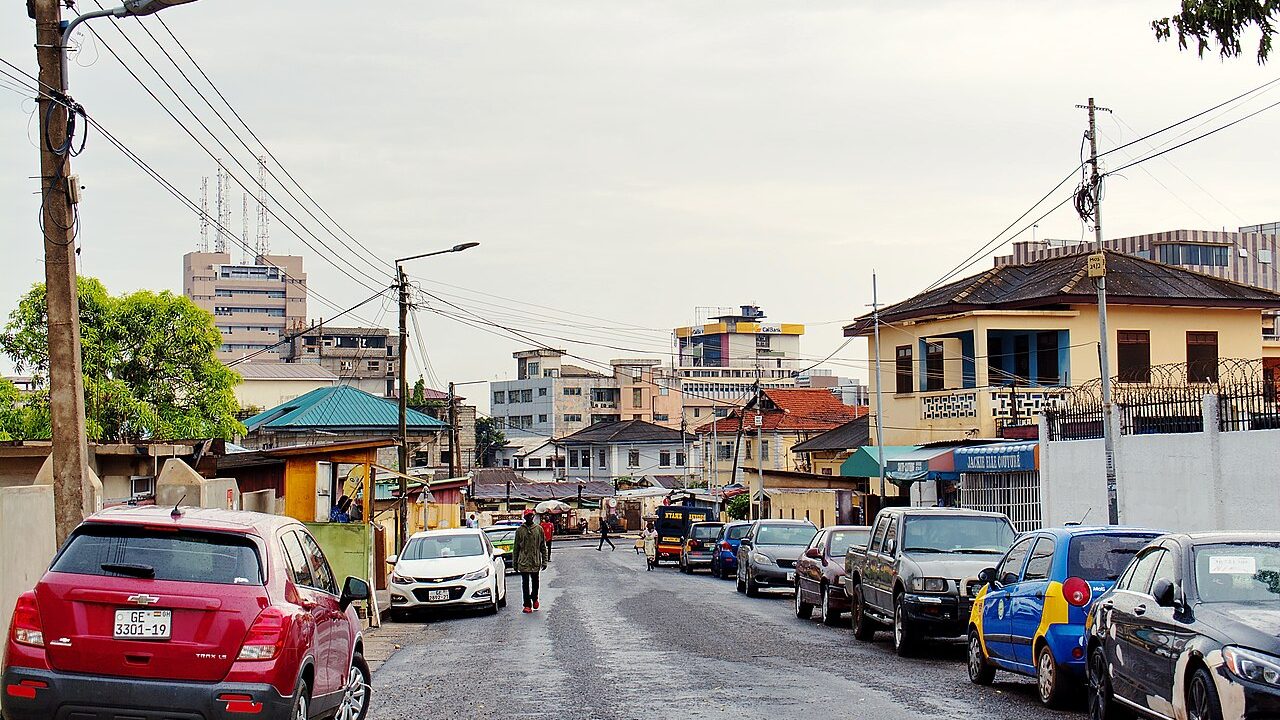
Adabraka’s position is its strength. It sits between Kwame Nkrumah Circle to the north and the central business district to the south, with Asylum Down to the east and Tudu nearby. Kojo Thompson Road, Castle Road and the roads towards Circle are lined with shops, hotels and offices.
Spare parts and signs
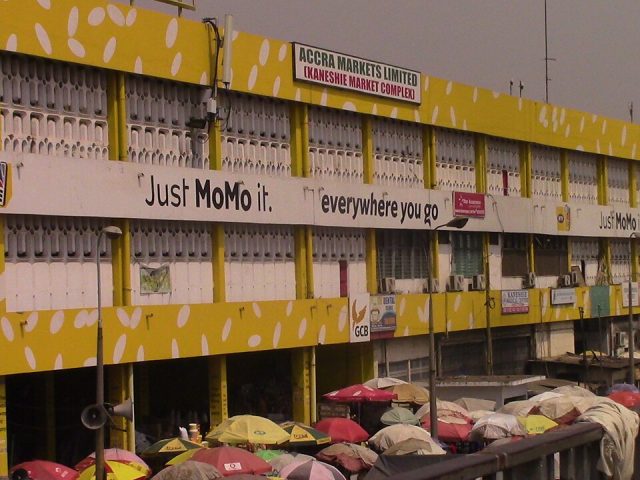
Adabraka is known for trade in electrical goods, spare parts, printing and signwriting. Many small businesses work from ground-floor shops with families living above. Hotels and guesthouses cater to visitors who want to stay near the centre of Accra.
Churches, mosques and schools
The neighbourhood has a mix of churches and mosques, reflecting its mixed population. Several schools and institutions sit in or near Adabraka, and its location has made it home to many civil servants and professionals over the years.
Night life
Adabraka also has a reputation for nightlife, with bars, chop bars and spots that stay open late. Like many central districts, it has struggled with sanitation and crowded streets, and residents complain about noise and traffic.
The old houses
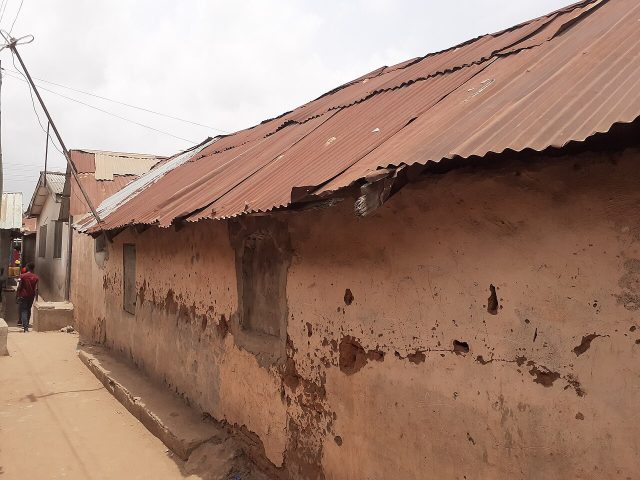
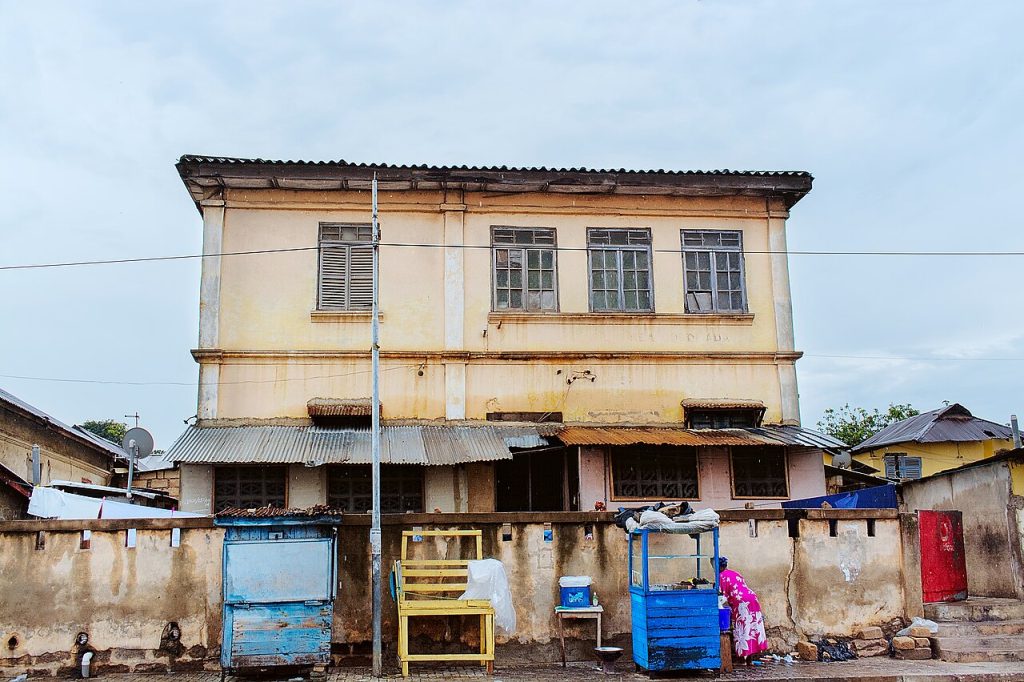
Some of Adabraka’s older buildings survive, with verandahs, wooden shutters and colonial-era features. Heritage campaigners have urged the city to protect them, as many have been demolished for new blocks.
A neighbourhood created in 1908 to take pressure off the old town has become one of the places under the most pressure itself. Adabraka has absorbed more than a century of Accra’s growth, and it is still absorbing it.